


This article has been available to Global Drinks Intel subscribers since late last year. Click here for details on how to join them
In IWSR Drinks Market Analysis‘ ‘Top 50 Spirits Brands in Global Travel Retail’ rankings for 2022, nine vodka brands featured, led by Pernod Ricard’s Absolut (at no.4 ), which was joined by Diageo’s Smirnoff (12th), Bacardi’s Grey Goose (15th) and Stoli Group’s namesake vodka (25th).
All moved up the chart, but zeroing in on the travel retail channel in Europe, and the outlook is not so bright. Here, vodka has been outshone by gin’s resurgence in recent years and is not currently among the fastest-growing categories, according to Gebr Heinemann, one of the region’s leading GTR operators.
“In general, the recovery of the European travel retail market in the liquor category is led by whisky and champagne, followed by gin,” says Heinemann’s head of liquor purchasing, Bastian-Philipp Müller. “Other spirits, such as brandy and cognac, are recovering more slowly, due to lower demand in the US, a lack of Chinese travellers and the fact that consumers are struggling with the higher costs of living.
“The return of Chinese travellers will play a key role in the recovery process.”
Vodka is still recovering steadily, says Müller. “Taking a look at the (2023) year-to-date Heinemann numbers for the vodka category as a total, there is significant growth compared to 2022, but still below the 2019 level. The influence of Covid-19 continues to be visible, but there are more factors – inflation, the Ukraine crisis and the discontinuation of Russian vodka brands, to name a few.
Travel rebound – European air passenger levels double in a year
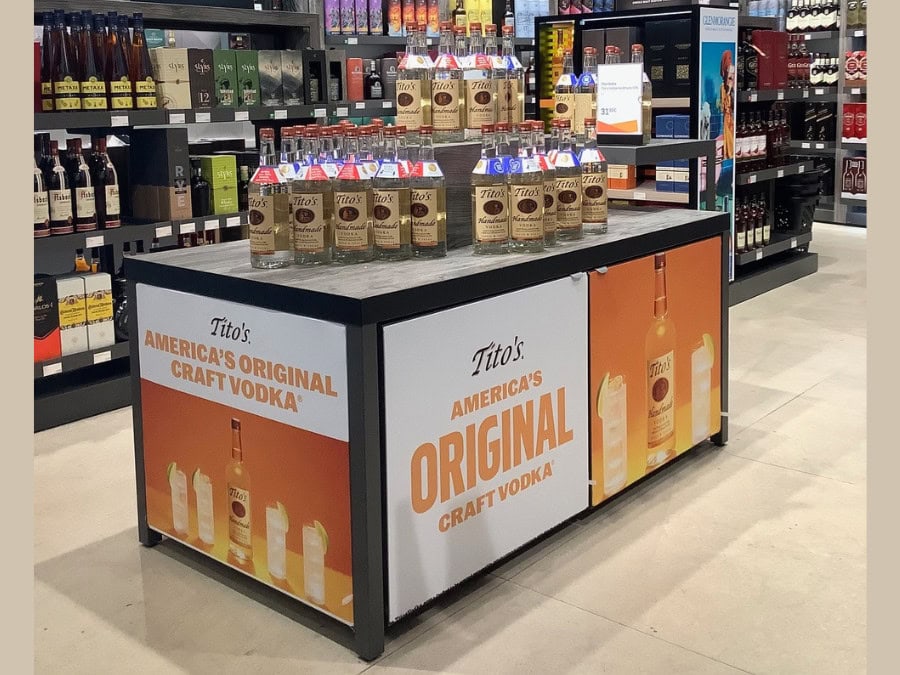
According to the MD of international operations at Tito’s Handmade Vodka, John McDonnell, the GTR channel in Europe is recovering as travel has returned post-Covid.
“Our travel retail business for Tito’s is doing better now than in 2019, so that’s a very encouraging sign that travel is rebounding,” he says. “More and more people are now able to – and are interested in – travelling to Europe.”
In 2022, according to Airports Council International, European air passenger traffic doubled compared with 2021. The CEO of Ukrainian vodka producer Nemiroff, Yuriy Sorochynskiy, says that although the recovery is ongoing, “approximately 27% of airports have fully returned to their 2019 passenger numbers”.
Of his company’s performance, Sorochynskiy says: “Amid this recovery, Nemiroff has expanded its presence in European travel retail. Notably, the brand’s cooperation with retailers Gebr Heinemann, Tallink, Viking Line, Stena Line, Fjord Line and Baltona has been a success. This expansion and rapid growth have come at a crucial time, especially considering the challenges posed by the Russian invasion of Ukraine.”
Key European GTR locations for Nemiroff include Finland, Sweden, Norway, Denmark, Germany, the Baltics and Poland. A year ago, the company announced a partnership with ferry and cruise retailer Tallink that will increase its footprint in European travel retail, says Sorochynskiy. “The collaboration with Tallink offers an excellent platform for Nemiroff to expand its market presence and tap into the growing demand for premium and flavoured spirits in the European travel retail sector,” he says.
Tito’s is also active in this channel, according to McDonnell. “Globally, the cruise sector for Tito’s Handmade Vodka has been historically very strong and that holds true for Europe as well, especially Greek cruises,” he says. “Our key travel retail locations in Europe include airports in Ireland, the Netherlands and Germany. We recently finalised new listings for Tito’s in Polish airports, and also in Montenegro.”
Stagnation as Chinese stay away from Europe
Despite the positive outlook, high-spending Chinese travellers are still giving Europe a wide berth. Chinese outbound flight bookings to Europe during March and August last year, for example, were only 32% of pre-pandemic levels, according to travel data firm ForwardKeys, and this is having an impact.
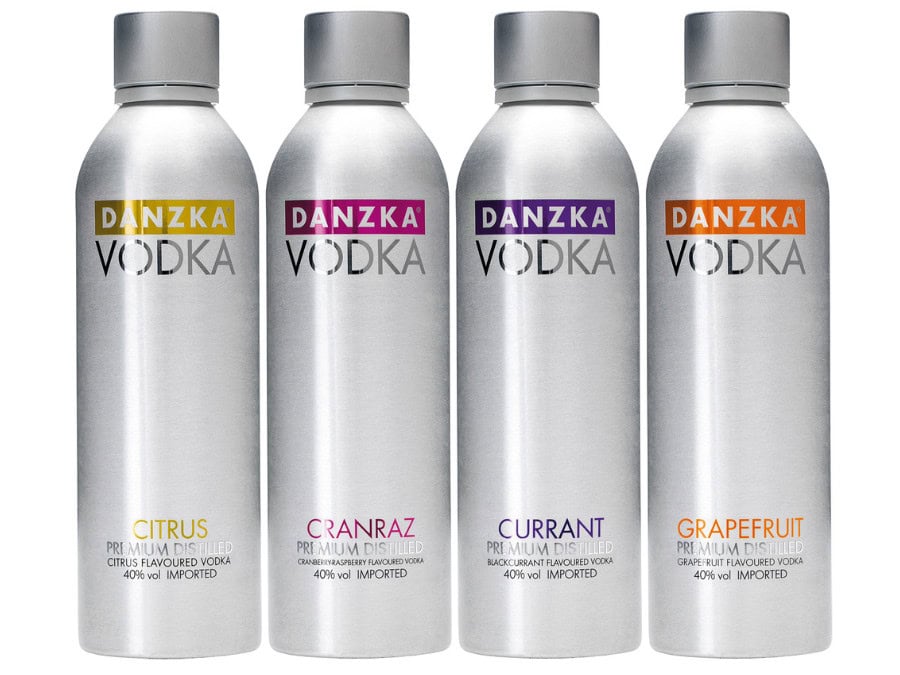
Philippe Biais, export director at Waldemar Behn, which produces Danish vodka Danzka, says: “The European market is still missing some Asian passengers, therefore it has only recovered partially.”
Danzka has a strong presence at key airports in Northern and Eastern Europe, and Biais says that although the category is not growing in European travel retail, it remains stable. He pinpoints two developments having a strong impact on the current market: the Russia-Ukraine war, which saw many European countries ban the import of Russian-produced vodka, and strong competition from gin.
Biais believes the threat from the rival spirits sector will ease soon. “Gin’s momentum is still there,” he says, “but is beginning to wane; consumers are confused by the wide range of brands on offer.”
Tito’s McDonnell is also hopeful vodka can regain GTR shelf space that may have been lost to gin brands. “Interest in the gin category is overblown,” he says. “Retailers give far too much shelf space to gin, when really only a handful of gins are driving the category.”
Nemiroff’s Sorochynskiy emphasises that vodka remains one of the biggest spirits categories in European travel retail in spite of “relatively stagnant” overall growth. “Despite facing competition from other spirits, vodka still holds a dominant position in the Nordic markets,” he says.
Moreover, he adds, “Some interesting trends are shaping the category. One significant shift is the increasing demand for premium and ultra-premium vodkas. Travellers, and consumers in general, are now willing to pay more for higher-quality options, especially when the product has a compelling backstory, uses top-notch ingredients, comes in attractive packaging and offers a VIP look.”
Gebr Heinemann’s Müller agrees that premiumisation remains as an important trend. “As with spirits in general, vodka tends to see more premium launches at the moment,” he says. “While the growth of the global vodka category as a whole has stagnated, the premium segment has developed positively with an increase in volume by 6% in comparison to the previous year and an expected volume CAGR growth between 2022 and 2027 of 3%.”
Tequila’s influence on vodka NPD
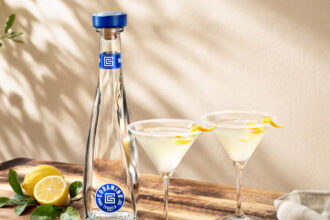
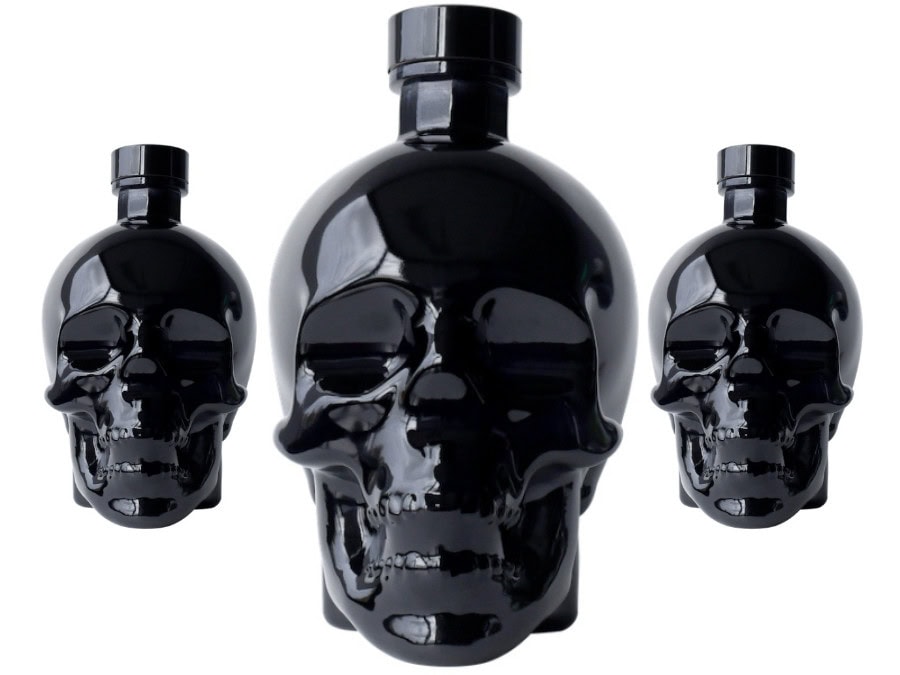
Vodka brands are “picking up on current trends such as sustainability, heritage, convenience and wellbeing”, says Müller, but are also taking inspiration from trending spirits categories like tequila. “Examples for this are Crystal Head Onyx Vodka (above), a limited edition crafted from Blue Weber agave and sourced from a single farm in Mexico, and Absolut Smoky Piña, which combines aromas of chilli and smoky pineapple to strengthen the association with tequila,” he says.
“This reflects the increasing popularity of the trend category of agave spirits.”
There is also a stronger focus on source location, sustainability and social responsibility. “More brands emphasise their place of origin and create spirits with a specific provenance,” Müller explains. “An example is Tito’s Handmade Vodka, which highlights its origins in Austin, Texas, and uses corn as a key ingredient as well as a pot-still distillation process. It’s artisanal, hand-made and transparent regarding its ingredients and its distillation.”
Tito’s McDonnell welcomes the focus on provenance and craft spirits: “It’s great to see that many retailers are finally recognising the consumer appeal and interest in craft vodka, and not just craft gin,” he says. “But some retailers are still carrying vodkas – many of the big vodka brands, frankly – that simply don’t turn.
“Smart retailers are giving more shelf space to craft vodka brands like Tito’s Handmade Vodka. Also, we’re seeing an increased interest in our smaller sizes in European travel retail, especially our 20cl bottle.”
Regional and naturally-flavoured brands secure shelf space
Müller has also noticed that interest in local vodka brands is on the rise. “We have also newly listed a number of local vodka brands at various locations in Germany as well as in Amsterdam, Budapest and Vienna,” he says. “Regional vodka is an important part of the range, though not yet comparable to the proportion of regional gin.”
Another noticeable trend, adds Nemiroff’s Sorochynskiy, is the rising popularity of pure grain-based vodkas and natural flavoured vodkas, which are seen as “more authentic and of superior quality”.
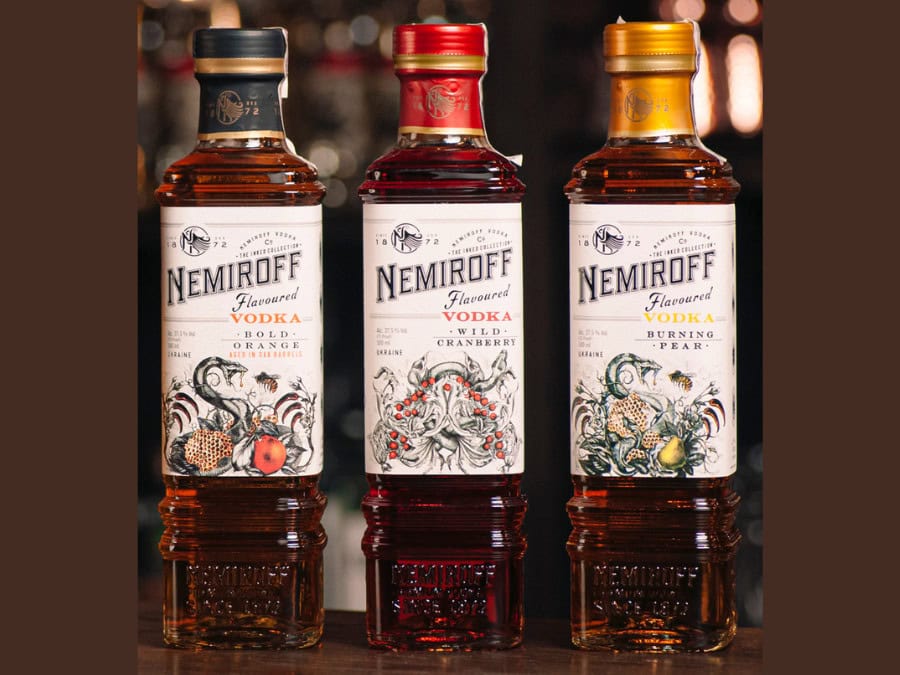
For the coming year, Nemiroff forecasts growth of 7% for its premium line in European travel retail and of 4% for its Inked Collection of flavoured vodkas (above), the launch of which in 2019, Sorochynskiy says, “aligned perfectly with the changing landscape of the flavoured category, which began to gain traction in 2018 with the introduction of botanicals”.
Müller notes that the premiumisation trend is also visible in flavoured extensions. “What’s new is that not only are the flavours present in the raw materials emphasised, but additional ingredients are highlighted as well,” he says. “They follow the gin principle of distilling botanicals to extract flavours rather than macerating or adding them. This makes the flavoured vodkas less sweet, lower in calories and more in line with the current health & wellness trend.”
Pernod Ricard’s Absolut, which has long been a big player in the flavoured segment, is helping to drive this trend with new lines, says Müller. “The new Absolut Wild Berri contains no added sugar, while Absolut Tropical Fruit has a medium alcohol content of only 20%.
“Vodka RTDs are also becoming more premium, such as Absolut Berry Vodkarita. The RTD category has grown in recent years due to growing demand for convenience. Vodka is well positioned to capitalise on these trends.”
Exotic flavours fall out of favour
More generally, Sorochynskiy says of the flavoured segment: “Flavoured vodkas continue to be significant players in the spirits market, showing a steady rise in popularity over the past few years. This trend is expected to persist, with flavoured vodka’s success spreading from the US to Europe, driven by consumer preferences for natural, herbal and fruity flavours.”
Waldemar Behn’s Biais believes consumers are starting to show less interest in exotic flavours. “Generally speaking, the trend in flavoured vodka is still there, but with ‘traditional flavours’, such as citrus.”
Sorochynskiy, meanwhile, feels a growing preference for natural flavours ties in with the wider popularity of craft spirits. “Craft distilling and the infusion of natural flavours are becoming more favoured by consumers, as consumers seek high-quality and authentic drinking experiences,” he says. “Interestingly, a substantial portion of flavoured vodka drinkers, around 25%, fall within the 35-to-40 age range, indicating its appeal to a broad range of consumers.”
Flavoured vodkas hold a “unique position in the spirits landscape, bridging the gap between gin and traditional vodka”, says Sorochynskiy. “Their appeal is further enhanced by their lower calorie content, aligning with the current health & wellness trend that resonates strongly with consumers.”
As travel continues to rebound, Sorochynskiy says Nemiroff is increasing its focus on premium and ultra-premium expressions to capitalise on growing consumer demand for higher-end products. He is also confident of the growth of flavoured vodkas.
“The flavoured segment can only increase in markets that have a more sophisticated consumption of alcohol, meaning that quality stands above volume,” says Sorochynskiy. “In the past, vodka brands focused primarily on premium cues and purity credentials over flavours.
“However, the market dynamics have shifted, and consumers now seek brands that showcase their place of origin and utilise natural ingredients.”