Mixologists have long been innovators when it comes to drinks creation, often borrowing from culinary techniques as shown by the likes of fat-washing and molecular mixology. But, today’s top bartenders are going beyond unconventional flavour combinations and homemade ingredients.
They are designing and building the systems to deliver the outcomes they desire, and rather than keeping their methods in-house as a signature of their own brand, they are sharing sharing them around the bar community, creating a sideline for their own businesses and opening up new avenues for other mixologists.
For Simone Caporale, co-owner of Barcelona’s Sips (No.1 on the World’s 50 Best Bars list 2023), it’s the latter that denotes true innovation. “In general,” he says, “people don’t know the difference between innovation and creativity. Very often, they’re confused with each other. Innovation is things that, after being created, can open new doors.
“You can be very creative by coming up with a new combination of flavours for a cocktail and that can become an RTD or a flavour for an ice cream. That combination of flavours became an innovation, because it can open new doors. So you can be innovative without being creative.”
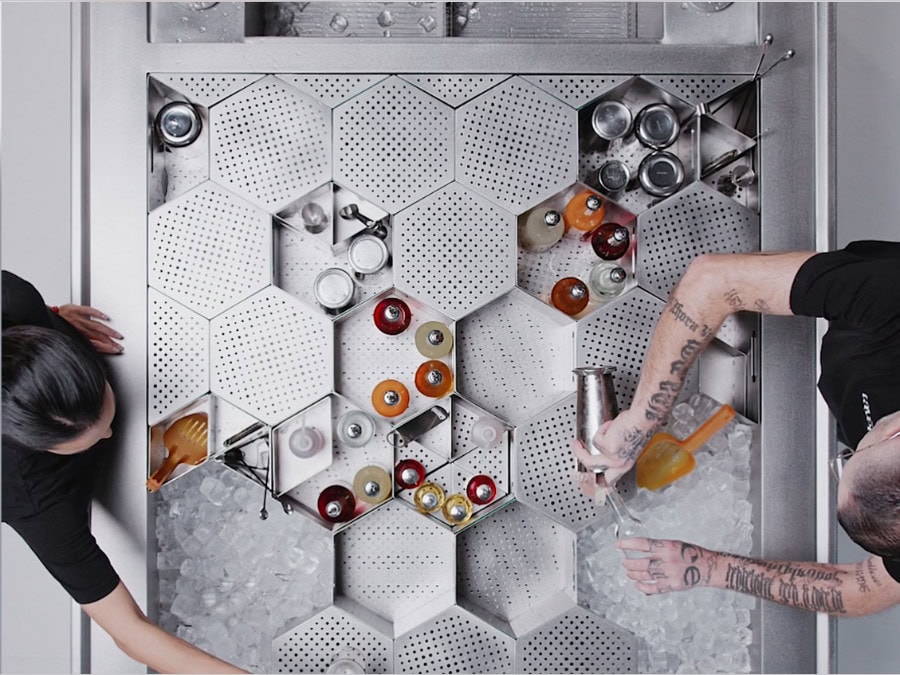
He cites as an example of both creativity and innovation the hexagon bar station designed by Alex Kratena and Monica Berg for London’s Tayēr + Elementary and brought to life by Oslo-based design & manufacturing agency Behind Bars.
Comprising moveable hexagons, the station transforms to meet the needs of the bartender (and venue) at different times. The Tayēr Series is now commercially available in two designs – The Double (below) and The Single.
“You can have your own station,” notes Caporale, “but if it becomes commercialised and anyone can get access to it, that becomes an innovative result.”
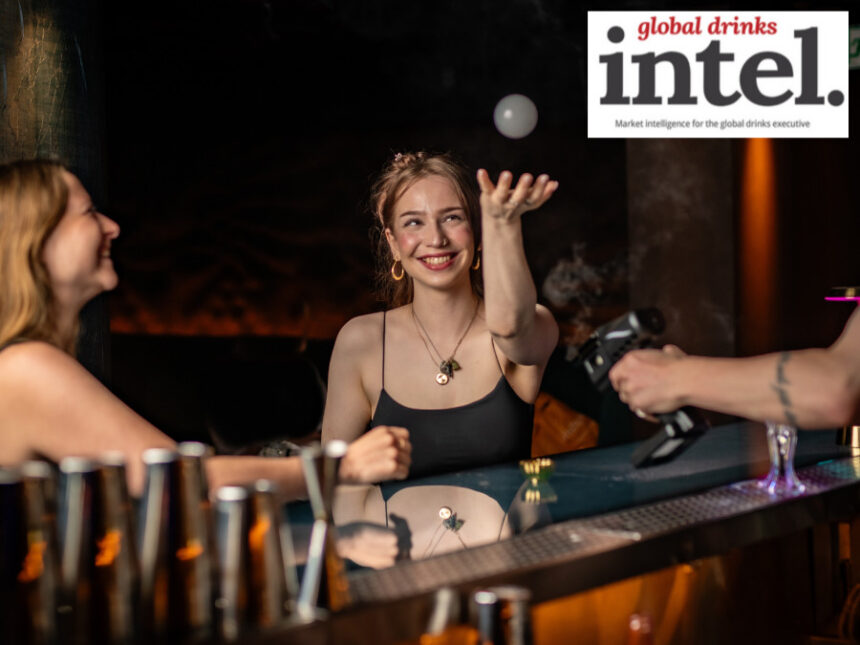
Caporale is no stranger to the concept of innovation, having created the Flavour Blaster – a ‘gun’ that applies aromas and edible bubbles over cocktails and food – with UK-based hospitality expert Colin Myers and manufacturer Robert Flunder six years ago.
“The idea started by blowing, with the mouth, inside a smoking gun,” he explains. Then, we said, ‘if we can apply pressure to it, it could make a big difference’. So, we swapped the burner of a smoking gun with a vaporiser. Then we could start to play with different aromas with no smoke or combustion anymore.”
Further development followed and today around 30,000 bars worldwide use the Flavour Blaster – this, says Caporale, it what makes the tool truly innovative. The Flavour Blaster was “an experiment, the first prototype created”, he explains. Only when “many bars” adopted it, did it become truly innovative. “Innovation is when you can monetise from the creativity as well.”
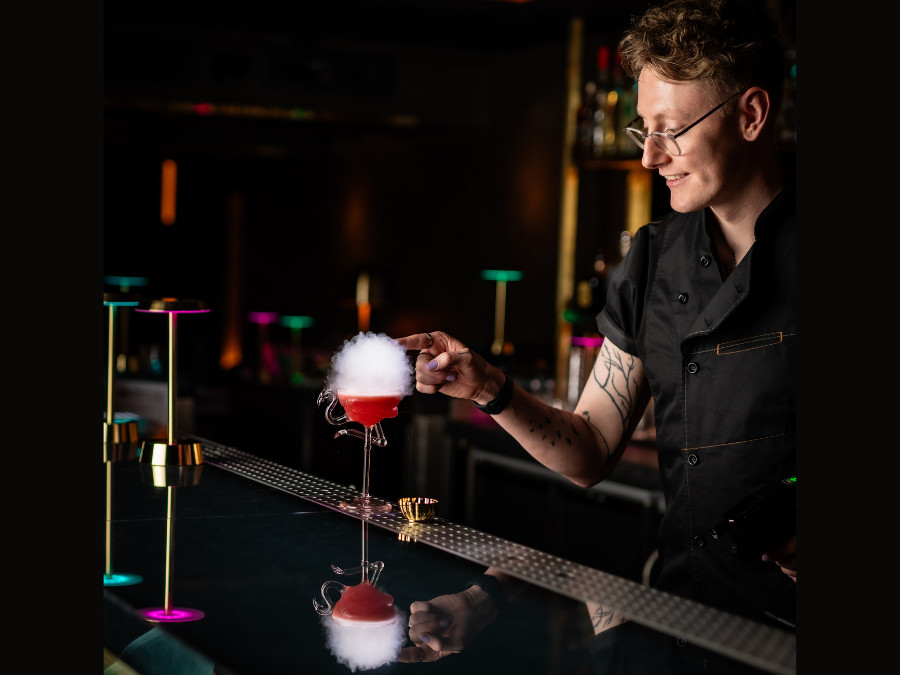
The Flavour Blaster (below) allows bartenders to blow huge bubbles that land on the drink and release an aroma cloud when popped, creating some real interactive theatre for consumers. It has been adopted by top-flight bartenders such as GN Chan, co-founder of New York’s Double Chicken Please (No.2 on the World’s 50 Best Bars list 2023), who uses it to top a ‘custard bun’ cocktail with the aromas of a Chinatown dim sum house.
Caporale acknowledges that creativity takes resources and money, and that means having “time to reflect”. In addition to its main bar, Drinkery House, at the front of the venue, Sips has a developmental area in Esencia. Caporale describes it as a space in the back “where we actually develop creativity to become innovation for the front part”.
He says: “In the back, we serve 14 people and in the front, 200 people. If you can turn those ideas for 14 people, making them available effortlessly for 200 people, that is an innovative result.”
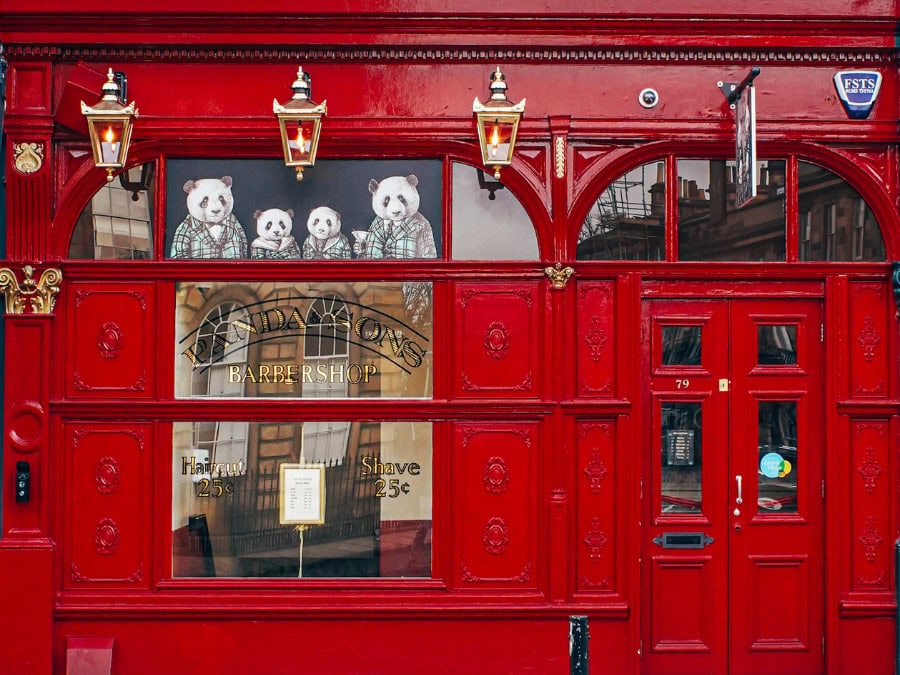
Panda & Sons’ sub-zero freezing methods
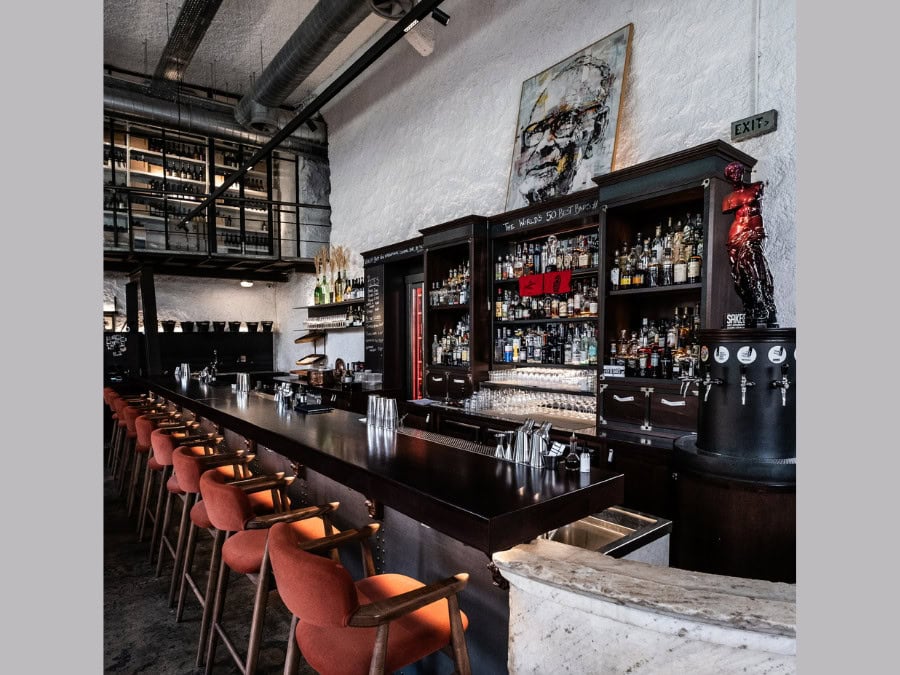
Also keen to share his ideas with the wider bar community is Iain McPherson of Scotland’s Panda & Sons (No.39 on the 2023 Worlds 50 Best Bars list). And he has a lot of knowledge to pass on — the Edinburgh speakeasy-style bar (above) has garnered plaudits for its sub-zero freezing techniques.
“I’m always about knowledge sharing,’ says McPherson. “I think that’s the best way to really grow as a community, as a bar industry. Back in the day, it was like, ‘Here’s my secret recipe’. We’re not really like that. We’re very much transparent with our research. I realised people were using our techniques, but I wasn’t blind to the fact there was a financial barrier.”
Some of McPherson’s techniques require special freezers that not all bars can afford. This was a factor in his latest foray, Sous Pression, which launched last year along with the bar’s Transcend menu of sub-zero cocktails. “I really wanted to develop a technique that wasn’t going to cost a lot of money,” he says. “They could potentially use the freezers they already have.”
The method was developed in Panda & Sons’ creative space, the Brain Melting Society, while looking at alternatives to heat techniques.
“We wanted to create a freezing version of sous vide, which means ‘under vacuum’,” explains McPherson. “Sous vide is broken down to two main parts: the vacuum chamber, which gets rid of the air and creates the infusion process, and the water bath, which is the marrying process.”
Recreating these processes became the ‘goals’ for the Sous Pression method of freezing. McPherson was interested in how very low temperatures lead to burst water pipes because when liquid freezes, it expands. He considered how much energy is generated from water freezing and whether there was a way to harness that energy in the freezer.
His team was looking for a vessel that was strong enough not to burst when liquid expanded as it froze, and came across some small stainless-steel kegs. The bar’s technique allows all ingredients of a batch cocktail to be combined in a keg and undergo a freezing force up to 20 times stronger than that required to burst a household water pipe. “Sous Pression harnesses that power to extract the flavour from fresh produce into a fusion with the other ingredients,” according to the bar’s website.
“We launched [Sous Pression] in February last year and I was … humbled and amazed by how quickly it spread,” says McPherson. “We were utilising really good social media, like cocktail bartenders to explain the technique on their accounts with us. During the World’s 50 Best Bars [event] last year, I think more than half of those bars had that technique being used on their menus.”
Panda & Sons’ other freezing techniques are: ‘switching’, using ultra-low freezers to freeze large quantities of water from spirits, then ‘switching’ the frozen part for another flavour; freeze drying, which extracts moisture, leaving “a dried product that maintains all the fresh flavour in a highly concentrated form”; and cryo concentration, which ripens fruit by freezing water and extracting it from the juice.
McPherson’s team usually dedicates three months – December to February – to developing new ideas, he reveals, and is currently looking into the idea of ‘freeze grilling’. “I was thinking, if you touch something really hot, you’ll get a blister; if you touch something really cold, you’ll get a blister,” McPherson explains. “So you’re kind of freeze cooking.”
He isn’t yet sure where this will go – or if it will offer much difference – but says he likes to research all the possible freezing techniques he can imagine. And he has a lot of admiration for other cocktail bars that truly innovate and establish an identity.
When McPherson gives seminars, he asks bartenders: “What is your passion? What is your thing? You must have a clear identity for your bar.” He says more bars seem to be taking risks. “Going off the beaten track is what I’m trying to encourage.”
He is a big fan of Röda Huset in Stockholm, where co-owner Hampus Thunholm utilises his experience at the now-shuttered two-Michelin-starred restaurant Fäviken in cocktail creations that celebrate Scandinavia’s high-grade native ingredients. McPherson also highly rates Line in Athens (below), where Vasilis Kyritsis and Nikos Bakoulis, formerly of The Clumsies, are doing interesting things with fruit wine.
Line’s Why Ins
The goal of Line (No.12 on the 2023 World’s 50 Best Bars list), explains Kyritsis, is to always think sustainably, which means the bar is constantly searching for ways to help the community grow.
“When we talk about the community, we mean not only the bartending community, but also other industries such as fruit farmers, coffee makers, artists, etc,” says Kyritsis. “We invest a lot in the macro economy, which means we buy large amounts of seasonal and organic fruits from all over Greece to make our fruit wines, called Why Ins. This helps farmers invest more and produce better products for the community, while also securing significant funds for their improvement.”
Line’s Why Ins are created in collaboration with the bar’s R&D team – Giannis Vavadakis, Angelos Zeimpekis and “one of the most important winemakers in Greece”, Thanos Georgilas. Georgilas is responsible for the production of T-Oinos and “very selective and special wines, 80% of which go directly to Alain Ducasse restaurants”, reveals Kyritsis.
There are two categories of Why Ins: Classic, inspired by the grape wine process, and Fancy, influenced by the bartending process.
“For the Classic category, we ferment fruit, and the flavour profile and identity come directly from the fruit,” says Kyritsis. “We maintain all the correct processes, such as controlling temperature, using the right type of yeast, feeding and inoculating the yeast correctly, managing the right amount of different gases (CO2, N2) depending on the profile, and ensuring the proper resting period at the end.
“With Fancy, we follow the same process, but we create the desired profile in our tanks by adding different ingredients such as distillates, fresh fruit and aromas for a few days or hours,” he explains. “We experiment with different macerations and techniques to achieve the desired profile, similar to making a cocktail – [the process] can last one to four months.
“One example is our Fancy Fig Why In, inspired by the profile of aged champagne. We ferment dried figs – sourced from a biological [organic] farm in the Evoia region called Askada – in a controlled environment with the right amount of neutral oxygen, running a reverse pasteurisation to prevent acetic bacteria from working.
“After a few days, we add a basket of homemade pistachio brioche for a couple of days, and then remove it. In another stage of fermentation, we add half-sliced oranges for a couple of hours. We create the profile we want and add the right amount of carbonation. We rest about two months and our Fancy Fig Why In is ready.”
It’s a complex process with impressively complex results. “In my mind, making fruit wine is like making mezcal, and making grape wine is like making tequila – similar processes, but so different at the same time,” says Kyritsis.
“One of the latest techniques we developed, which was simply amazing, was the controlled oxidation during the fermentation process of our plum wine, creating a profile similar to that of an amontillado sherry. We experiment extensively with different approaches in our Why Ins, so expect more complex results from us.”
Sustainability nurtures flavour experimentation
A sustainable approach to cocktails is increasingly being adopted across the world, with many bars embracing a ‘circular-making’ philosophy. Much of the focus is on being anti-waste, explains Absolut global brand ambassador Ricardo Dynan.
“If [bartenders] are juicing a lime, they will also look to do something with the zest by making a tincture,” he says. “At Absolut, we worked on Green Hustle, a project that took place some years ago to encourage bartenders to think in more circular ways. It included a seminar where we encouraged bartenders to try our sustainable ‘hacks’ - making lime stock from leftover limes, for instance.”
Hugo Togni, co-owner of Toronto’s Bar Pompette (No.29 on North America’s 50 Best Bars list 2024), agrees that sustainability is currently a major focus. “Many bars are adopting zero-waste practices, prioritising eco-friendly methods and using locally sourced ingredients,” he says. “This commitment to sustainability reflects a broader movement towards environmental responsibility within the food and beverage sector.”
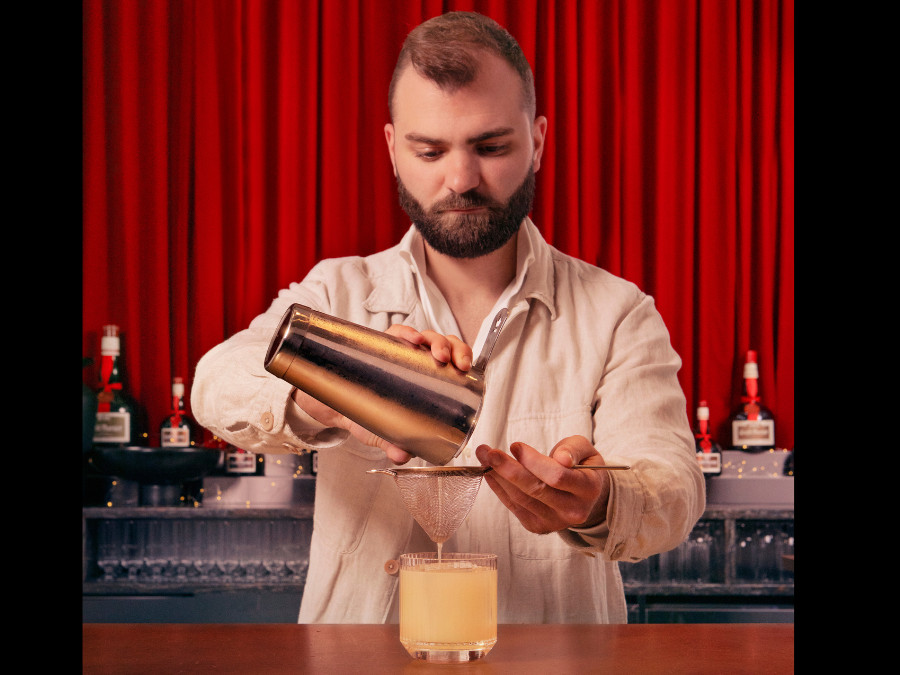
Togni (below) says Bar Pompette takes “pride in the art of combining unexpected ingredients and cultural influences to craft truly unique cocktails”. He adds: “Inspired by my experiences with Grand Marnier and ‘The Grand Encounter: Behind the Bar’ video series we worked on, we’re continuously exploring unconventional ingredient pairings.
“Recently, we’ve been fascinated by the origins of classic dishes and their unexpected connections. For instance, we learned that the Hawaiian pizza, a dish often perceived as exotic, was actually created just two hours away from Toronto. This insight inspired us to experiment with a pairing of tomato and pineapple, but in a way that goes beyond traditional pizza.”
Thoughtful sourcing is also a key component of making cocktails sustainably, says Togni. “We’re excited to integrate locally sourced tomatoes into our cocktails, working with the best varieties available in our region to ensure exceptional quality. By blending these local tomatoes with pineapple, we aim to create a cocktail that celebrates the unique flavours of both ingredients in a refined and innovative manner.
“This approach not only highlights our commitment to using the finest local produce, but also underscores our dedication to innovation.”
The ‘competitive socialising’ opportunity
‘Competitive socialising’ is a concept that has been gaining ground for some time, but new players are constantly joining in and cocktails often feature as part of the experience.
Red Engine is the company behind darts-based Flight Club and shuffleboard-based Electric Shuffle. It started ten years ago, has 24 sites across the UK, the US and Australia, and is one of a growing band of such organisations serving an increasing consumer appetite for experiential bars. From axe-throwing to bingo, golf to table tennis or F1- and stock market-themed nights, there’s an activity for everyone.
In the US 20% of on-premise consumers visit experiential bars, according to CGA by NIQ 2023 data, representing “a huge opportunity for brands to capitalise on consumers who are highly engaged with the on-premise – 66% of experiential bar-goers visit monthly and 42% visit weekly”.
It’s a similar story in other countries. “Venues providing entertainment and other experiences are increasingly attractive to Italian consumers who want to get full value from their out-of-home visits,” says CGA by NIQ’s Italy on-premise sales leader, Daniela Cardaciotto. “Interest in this channel is likely to grow further, so brands that can identify consumers’ unique needs now can help craft effective channel strategies for growth in the future.”
With on-premise venues still feeling the effects of the cost of living crisis, competitive socialising could be a way to improve the channel’s overall fortunes.
Kate Nicholls, chief executive at UKHospitality, says: “There’s no doubt we have seen an increase in the number of bars focusing on different leisure experiences or competitive socialising as venues look to create new income streams and consumers demand new experiences from hospitality. As long as that consumer demand remains strong, it’s likely we’ll continue to see this type of venue cement its place in the market.
“Hospitality has always been incredibly responsive and innovative, whether that’s operators or drink suppliers, and a relatively new market like competitive socialising provides plenty of opportunities for existing and new entrants to reach new audiences.”
Syrups, liqueurs lead the charge in no- & low-alcohol
With innovation clearly rife in some areas of mixology, one sector has yet to live up to its potential. No- & low-alcohol cocktails may have become a staple in cocktail bars quite quickly, but two leading syrup and liqueur makers feel it needs to pick up the pace in terms of innovation.
“In general,” says Monin advocacy brand manager Mišel Posavac, “the bartender world has changed quite a lot in terms of using new techniques and trying to go beyond the usual way of making drinks.
“Regarding no/low cocktails, I was expecting much more from bartenders, especially if we talk about high-level cocktail bars. But it’s moving, and it will develop more and more.”
Over at fellow syrup & liqueur producer Giffard, UK, Northern Europe & Baltics brand ambassador Alex Robin is also unimpressed by progress so far, but is a little more positive.
“There is more ‘innovation’ in low than in no at the moment,” he says. “Top bars are taking the trend more seriously and are trying harder to propose standalone drinks to their customers, whereas high-volume/smaller venues are only starting to consider non-alcs since last year, really.”
Robin anticipates that a growing trend in no/low next year will be on the non-alcoholic vermouth side, adding that non-alcoholic wine “is definitely a thing now and people know how to play with flavours, so innovation will start to focus on new areas”.
For now, he says, Giffard leads the no/low innovation charge with four alcohol-free liqueurs – Elderflower, Grapefruit, Ginger and Pineapple – produced using pasteurisation to create a long-life product with no need for refrigeration. “This kind of innovation in the category is what’s needed to inspire and invigorate the industry, and keep up with customer demand for no/low-alcohol cocktails that are complex and taste as good as their alcoholic counterparts.”
Monin is also on the case. Posavac says its Paragon by Monin Mystic Collection of premium cordials is made using “the most innovative acid blend and extraction methods to create flavours never before used in the beverage industry”. He claims the company’s Pure range is a “game changer” when it comes to no/low-sugar, no/low-ABV products. “Pure is a range of five flavours with a very powerful aroma, but with no added sugar and completely natural,” he says.
“To give you an example, adding 1cl of Pure Passion Mango to your margarita will give you a taste of passion fruit and mango without changing the balance of the drink; 1cl of Pure has less than 0.1g of sugar and only 2 calories, so is perfectly made for skinny cocktails.”
This article is available to Global Drinks Intel members only.
Click below for details on how to join the Global Drinks Intel community.
Already a member?
Log in here to read the article in full.
If you work for any of the following corporate subscribers to Global Drinks Intel, head here to activate your access.
- AB InBev
- Bacardi
- Campari Group
- Diageo
- Moët Hennessy
- Pernod Ricard
- Proximo Spirits
- Suntory Global Spirits
- William Grant & Sons