

Think about words to describe India and ‘big’, ‘emerging’, ‘vibrant’ and ‘opportunity’ spring to mind. For alcohol beverage brands, ‘complexity’ is no doubt also on the list. So what do spirits brand owners need to know and consider to successfully navigate through the complexity and take advantage of the opportunities this emerging market has to offer?
Complexity begins with how spirits are classified, mainly because the terms are specific to India. Legitimate spirits start with Country Liquor — cheap spirits commonly made from fermented sugars with styles and flavours varying locally and regionally. By far the largest category is called Indian Made
Foreign Liquor (IMFL). These are Western-style spirits such as whisky, rum and vodka, produced in India and with the bulk of sales in the value segment. Two more categories are Bottled in India (BII), spirits shipped in bulk to India and bottled there either as international brands or blended spirits; and Bottled in Origin (BIO), spirits that are produced and bottled outside of India and imported into the country. India’s spirits market is still recovering from the Covid-19 lockdowns in 2020, but remains a massive market for sales. According to IWSR Drinks Market Analysis, more than 275m nine-litre cases of spirits were sold in India in 2020, and this will almost certainly grow to 300m nine-litre cases by the end of 2021.
By some distance, India is the largest market globally for whisky — the IWSR recorded sales of 185m nine-litre cases in 2020, down from 220m nine-litre cases in 2019. Most whisky sales, well over 95%, are low-priced IMFL. However, up-trading by consumers is evident across most spirits categories and both BIO and premium-and-above local spirits are seeing strong growth. In the last decade, BIO whiskies took the sales-growth limelight, but other categories, such as gin and vodka, are now also performing well.
It would be a mistake to think of India as one country; it is a federation of 28 states and eight union territories. Brand owners need to think of India as 36 different countries because each state has its own policies with regards to the production, price, sale and taxation of alcohol beverages.

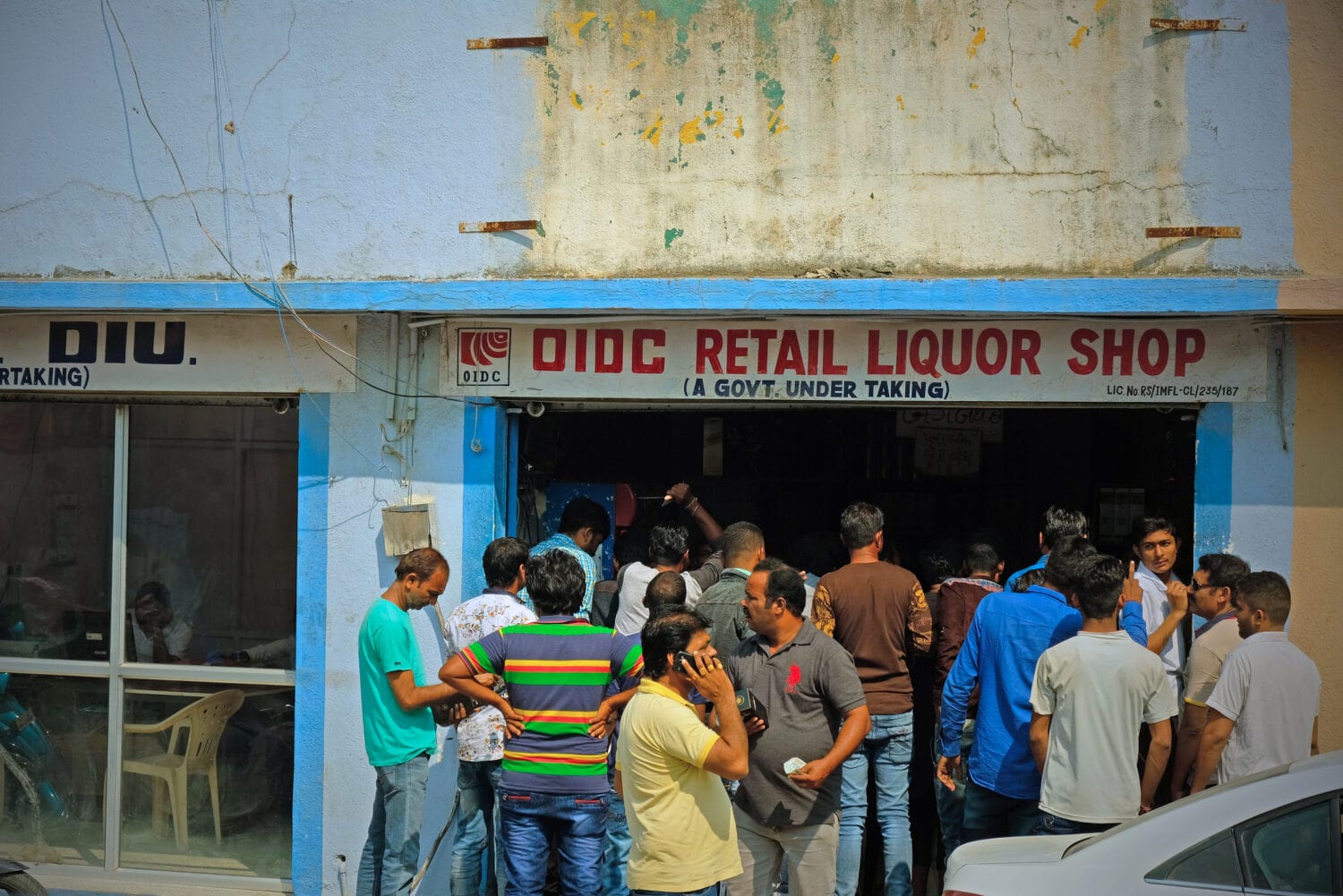
Understanding the route-to-market is critical in each state since structures vary and are also complex. In some states, for example Karnataka and Tamil Nadu, brand owners’ distributors sell to state government-operated wholesalers and retail shops. In other states, such as Haryana and Punjab, the government auctions a limited number of licences to sell alcohol to wholesalers and retailers. States like Maharashtra and Goa operate in a less controlled way, with distributors selling direct to private wholesalers and retailers. Currently, there are six states where the sale of alcohol is prohibited. Bihar is the largest and is currently reviewing its prohibition, so this is something for brand owners to keep a watchful eye on.
Alcohol beverage sales in India are highly regulated and there is great deal of bureaucracy and complexity. Labelling is an example of this. For BIO spirits imported into India, back labels need to show ingredients, date of manufacture and place of production. In addition, individual state labelling requirements may prescribe information, such as health warnings, in the local language and distributor details. Labels must be registered in each state every year.
Taxes and duties in India are high compared with most markets. A customs duty of 150% applies to all imported spirits. Additional taxes vary state by state for all spirits classifications. Indian states also like the concept of cess, an additional tax for a specific purpose and time period. An example of this was a 70% special corona cess applied to alcohol by the Delhi government in May 2020. These different state taxes result in prices varying state by state; prices are higher in a city like Bangalore (where state taxes are higher) than in a city like Delhi.
One consequence of the high domestic prices for imported spirits is that Indian consumers who travel internationally are prolific duty-free shoppers. Arrive in any Indian airport on an international flight and after immigration, you will see an arrivals duty-free store. Indian nationals have an allowance of 2L of spirits and invariably it is used. The choice and savings are big and therefore this is a channel to be considered in any brand owners’ India route-to-market strategy.
India is a dark market from an advertising point of view. Television and out-of-home advertising of spirits brands are not permitted, therefore brands need to look to social media to drive awareness and availability. Visibility in the off and on-premise is extremely important. The legal drinking age for alcohol varies from 18 to 25 depending on the state, so is another factor to be considered.
Despite its complexity, India is a very attractive market for spirits brand owners with its scale, a growing number of middle-class consumers and increasing willingness to consider buying alcohol. Rather than adopt a blanket approach to India, brand owners who focus by state will find navigating the complexity of the Indian alcohol beverage market easier and more rewarding.
Global travel-retail veteran and emerging markets spirits business specialist Tim Young heads a beverage consultancy in London called Young Spirit Consulting. Contact him at: [email protected]