The spirits category may be struggling in the US, but soju has combined the country’s appetite for Korean cuisine and K-pop music with its lower-strength and approachable flavours to register impressive growth.
If you’ve ever wondered why, no matter where you go in the world, there seems to be at least one Thai restaurant, the answer is quite simple: gastrodiplomacy!
Around the turn of the Millennium, the Government of Thailand decided to promote the South-East Asian nation by training chefs and sending them into the world, resulting in an explosion in the number of Thai restaurants around the globe, most with more or less the same menu.
The programme was a massive success, as evidenced by the current ubiquity of Thai restaurants, and its efficacy was noted by at least one other Asian nation.
Beginning in 2008, the Korean Government followed the Thai lead with a programme designed to elevate the country’s cuisine in the eyes of the world, standardising the spelling of such key ingredients as kimchi (as opposed to kimchee or gimchi) and training chefs to carry the Korean culinary flag far and wide. The result was a near quadrupling of Korean restaurants globally, from 9,253 in 2009 to 33,499 in 2017.
In the US today, Korean restaurants number in the thousands – as many as 7,000, according to some estimates – and the spin-off cultural impact has been substantial. One such effect has been the phenomenal growth of the market for Korea’s national spirit, soju.
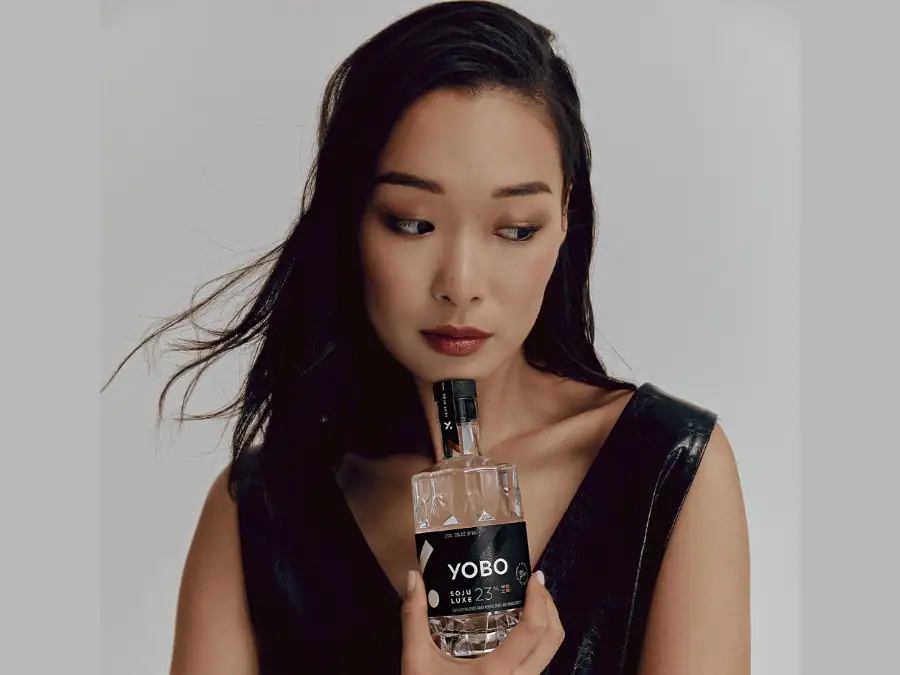
The growing popularity of soju is “definitely” tied to the rise of Korean cuisine, according to the founder of New York Finger Lakes district soju producer Yobo Spirit House (namesake soju brand, below), Carolyn Kim.
“Food and drink have always been a natural pairing,” she says, “and as more people discover Korean cuisine – whether it’s barbecue, fried chicken or more traditional fare – they naturally become curious about what people in Korea are drinking with those meals. Soju is central to that experience.”
A versatile ancient spirit
A clear, colourless spirit, soju has existed in Korea in one form or another for over a thousand years. Although originally distilled from rice, a rice famine in the 1960s resulted in the widespread use of other starches, including tapioca, sweet potato and eventually, wheat.
The common element shared by all sojus, however, was a pre-distillation fermentation with nuruk, a type of mould, in place of the more conventional yeast.
Soju today appears in two forms: table strength, usually found at between 16% and 25% ABV, and spirit strength, at an alcohol level comparable to vodka (40% ABV and above). The former is by far the most popular and the base of sojus flavoured with everything from peach to pomegranate to yoghurt.
As a category, all forms of soju battle baijiu for the title of the world’s most popular spirit in terms of volume, despite the fact that sales of both have traditionally been largely restricted to a single market, respectively South Korea and China.
Estimates put domestic consumption of soju at 3.5bn bottles annually, while South Korean Government figures show exports reached 340m bottles in 2024 (+3.9% year on year), with almost a quarter (24.3%) shipped to the US.
Hallyu drives US growth
While estimates of the actual value of the American soju market vary widely, the majority place it at close to US$255m, and the consensus is that CAGR over the next decade will hit between 5.2% and 5.5%.
So, while soju is still small in comparison with other spirits, including US market leader vodka’s estimated $7.5bn in sales, growth of any sort in the current climate is notable, and a predicted CAGR of over 5% is borderline remarkable.
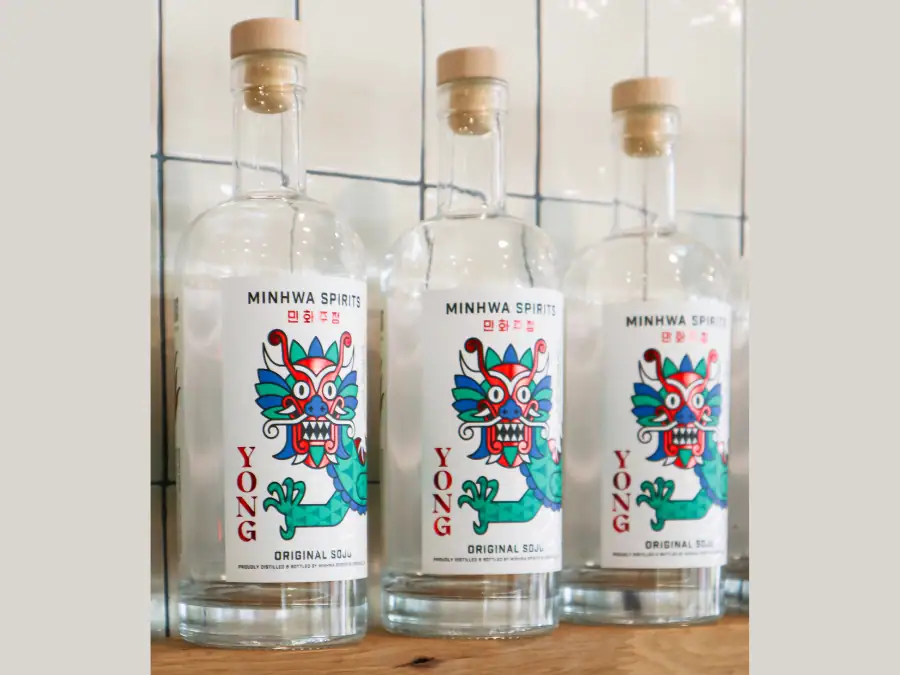
The instigator for this emerging interest in Korea’s national spirit is a phenomenon known as hallyu, according to the co-founder of Georgia-based soju producer Minhwa Spirits (namesake soju brand, above), James Kim.
“Hallyu is what we call the wave of Korean culture sweeping the country in the form of bands like BTS, TV shows like Squid Game and movies like [the Oscar-winning] KPop Demon Hunters,” says Kim. “It has all raised the profile of Korean culture in general, and soju is very much a part of that.”
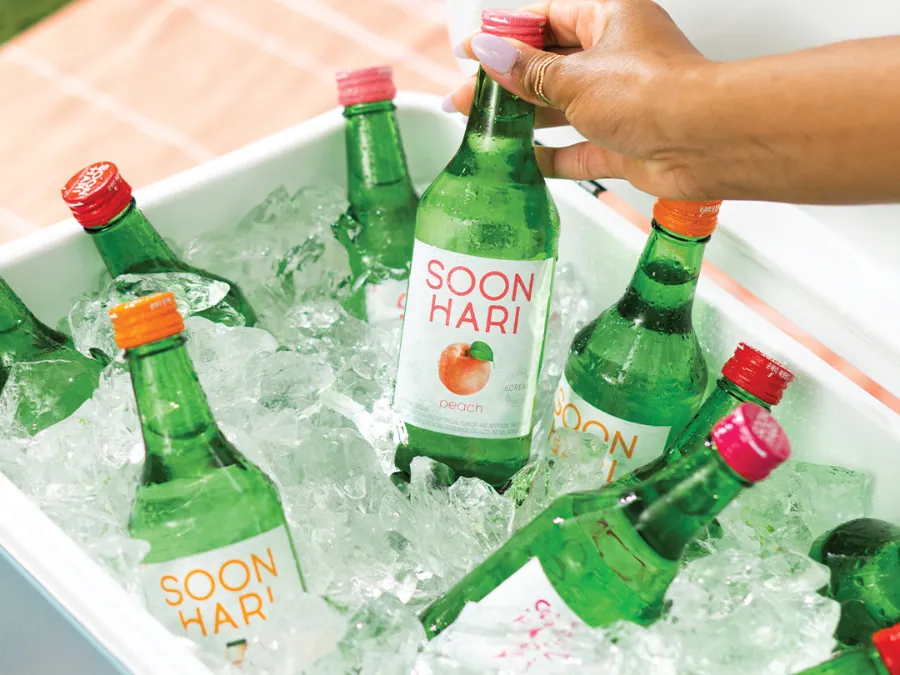
Capitalising on hallyu is not only a new generation of American soju producers, but also Korean market leaders like Hite-Jinro, which regularly ranks among the top spirits producers in the world, and Lotte Chilsung Beverage Co, makers of the Chum Churum and Soonhari (below) brands, which signed a distribution deal with Spirit of Gallo at the start of 2024.
“Over the past five years, the soju category doubled in the US, driven by accelerating consumer demand,” said Spirit of Gallo senior VP Britt West at the time. “The newest generation of drinkers has been driving the growth and is turning over the soju category due to its variety, convenience and accessible price point.”
Twelve months ago, Lotte revealed that its soju brands skyrocketed by 700% in volume in the 12 months after signing the US distribution deal with Gallo.
Leveraging the interest of Millennial and LDA Gen Z consumers is also top of mind for Elisabeth Baron, CEO of Hello Soju. The fast-rising soju brand was co-created by Taylor Jones, the founder & CEO of Los Angeles-based multimedia concern The Hello Group, known for specialising heavily in the K-pop market.
“What K-pop has done exceptionally well is export not just music, but a lifestyle and cultural context (which) includes how people gather, celebrate and connect,” Baron says. “Coming from a music background, at Hello Soju we don’t think about the product in isolation. We think about the moments it lives in. Whether it’s concerts, nightlife or fan-driven communities, we’re meeting consumers where culture is already happening.”
Low-alcohol opportunities
Table-strength soju also aligns well with the oft-noted predilection of Generation Z for lower-alcohol beverages. Typically packaged in green glass bottles, although increasingly seen in cans and in sparkling form, and often flavoured, table-strength soju sits somewhere between full-strength spirits and spirits-based RTDs.
This, points out Hello Soju’s Baron, gives it a distinct profile in the marketplace. “As consumers shift toward more sessionable, flavour-forward options, formats like sparkling and flavoured soju align naturally with where the market is going,” she says.
“So, rather than competing purely within the RTD space, we see ourselves as helping to expand it by introducing something different to consumers.”
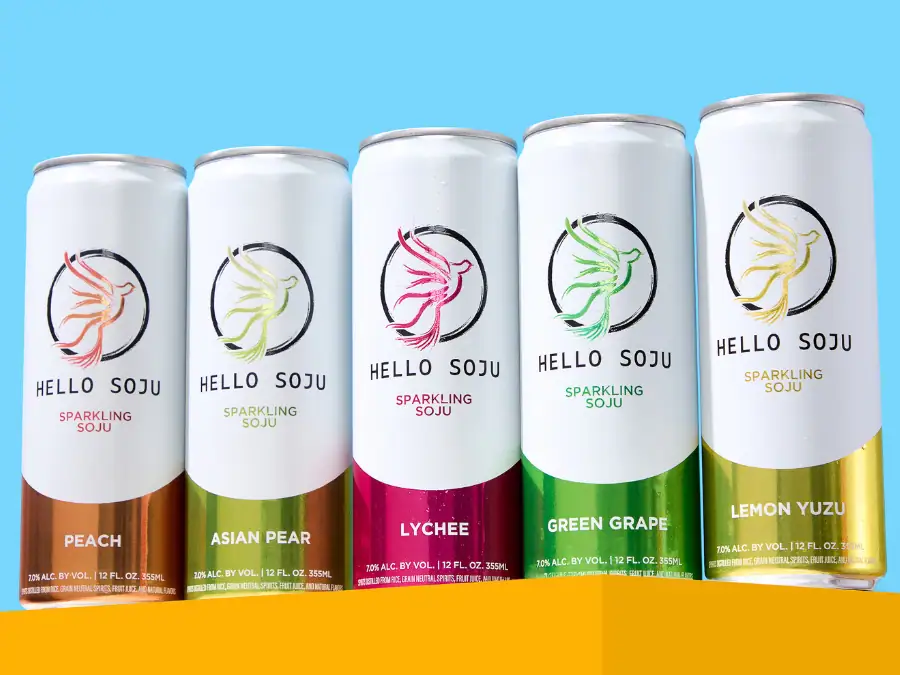
Hello Soju (below) launched in 2023 as a canned RTD sparkling soju in five flavours – Lemon Yuzu, Green Grape, Lychee, Asian Pear and Peach – before releasing its first premium soju, made from sticky rice grown in Northern California, in 2025.
Room for premium expansion
Even so, some, like Minhwa’s Kim, argue that greater room for market expansion may well lie in the premium sector. Citing his table-strength Dokkaebi and spirit-strength Yong, the latter a 2025 San Francisco Spirits Competition double gold medal winner, he notes that there are different levels of soju appreciation.
“As we explored the landscape of Korean alcohol in general, we saw all of these flavoured, low-alcohol sojus and thought it was a bit of a shame that people didn’t know real, authentic soju,” he says. “There’s nothing wrong with flavoured soju. It’s well-suited to many occasions, especially because Koreans tend to make drinking a very social, communal event, but there’s more to soju than just that.”
To illustrate the possible course premium soju might take, Kim points to the recent transformation of tequila from mixto to 100% blue agave spirit.
“I look at how tequila has evolved over the years, from being seen as a rough alcohol for shooting to a more refined, premium spirit, and that’s the track we really want to follow,” he says, “It can feel like a Sisyphean task at times, since the No.1 question we still get in the tasting room is whether soju is the same as sake, but that’s really where we want to go.”
With a portfolio that includes both the much-lauded ultra-premium Luxe and premium flavoured Ktown (main picture) line of sojus, Yobo’s Kim is very much of the same view.
“We’re still at the very beginning of understanding what ‘premium’ can mean for soju, especially in the American market,” she says. “As consumers become more interested in provenance, ingredients and production methods, there’s definitely room for higher-end expressions.
“In Korea, premium soju has existed for many years, and I believe the same can happen here.”
Socially shareable experiences
Assisting in the popularisation of soju in the US is the rise of shareable, group-based social rituals and games that elevate casual dining into a theatrical event.
A quick internet search reveals a wealth of articles, videos and TikToks covering everything from conjuring a tornado – shaking the bottle to create a ‘tornado’ of bubbles in the neck, then flicking the top once opened (the latter a habit dating back to when cork closures were used and bits of the cork needed to be expunged) – to the somaek, also known as the soju bomb, a twist on a whisky-and-beer boilermaker.
It’s not all about creating Instagrammable moments, of course. Traditional rituals – such as always pouring soju for others before yourself and using two hands when pouring for someone senior to yourself as a sign of deference and respect – are also capturing the attention of American drinkers eager to experience a unique aspect of Korean social life.
Emblem of unity and connection
Soju’s rise in the US results from a convergence of factors that would be difficult for other national spirits to emulate. The category’s success involves not just approachability in terms of flavour, relatively low ABV and socially shareable drinking experiences, but also several cultural elements, including culinary and multimedia prominence.
Last year, California – home to the largest Korean American population in the US – officially designated 20 September as ‘Soju Day’ to celebrate the spirit’s growing cultural significance in the US.
“Soju is about Korean heritage, culture and community bonds,” California Senator Steven Choi said at the time. “It has become an emblem of unity for Korean Americans, serving as a bridge of cultural exchange and enhancing cross-cultural understanding.”
For both domestically produced and imported soju in the US, the sky may well be the limit.
“For us, entering the drinks space wasn’t about chasing a category; it was about extending a cultural platform,” says Hello Soju’s Baron. “We saw an opportunity to build a brand that sits at the intersection of entertainment, sports, culinary and social connection.
“Soju is uniquely positioned for that, given its global popularity and social nature.”