- The collapse of the official banquet channel has compounded a shift away from public display towards consumption in semi-private settings
- Traditional baijiu operators are courting younger demographics through low-ABV innovations, lifestyle-led collaborations and D2C digital platforms
- Scotch whisky is benefiting from a new 5% tariff reduction, while cognac faces significant pressure from minimum pricing regulations
- The guochao movement is fuelling a domestic craft revolution as patriotic younger consumers increasingly favour high-quality, locally made spirits
The removal of the banqueting consumption occasion, rising pride in domestically-produced alcohol and a worsening international trade outlook are the main factors shaping China’s complex, multilayered market for spirits.
The Chinese Government’s tightening of its anti-corruption drive last May – 13 years after President Xi Jinping first moved to curb lavish banqueting and extravagant gifting – still casts a long shadow on the country’s overall spirits business. AT the same time, trade tensions, shifting consumption habits and higher-quality domestic producers add to a subdued trading climate.
Last year’s Beijing directive banned alcohol at all official government events, receptions and training sessions, leading to the collapse of the previously lucrative official banquet channel, a crucial outlet for sales of both high-end baijiu and Bordeaux wine.
Major baijiu players, such as Moutai and Wuliangye, have tried to pivot their business models towards private consumption, but the loss of the banquet market has still been keenly felt. According to recently released IWSR figures, the poor performance of the baijiu-dominated ‘national spirits’ category was the main culprit behind a 12% plunge in the value of China’s total beverage alcohol market in 2025.
Baijiu brands change tack
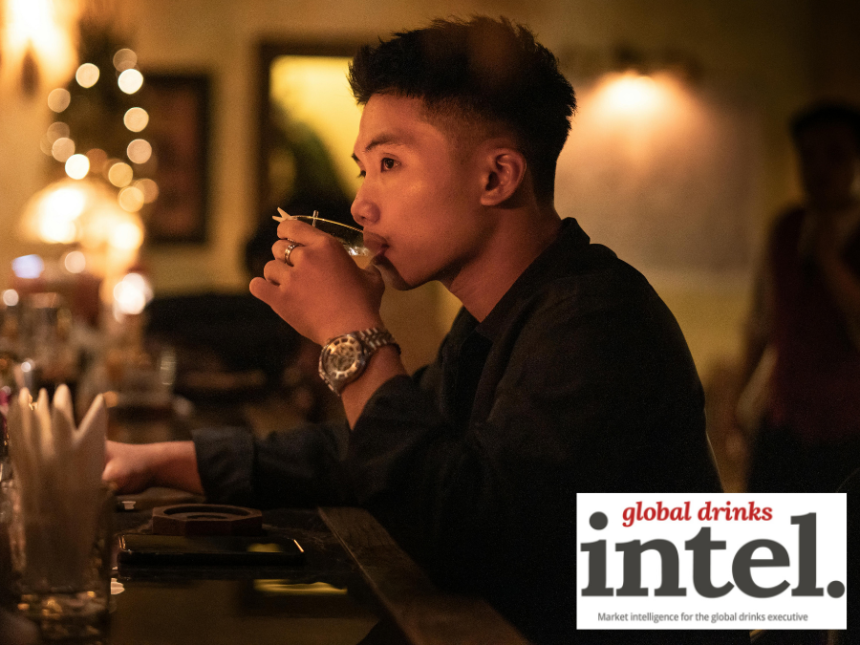
High-end baijiu consumption has moved to “discreet, semi-private settings”, according to China Trading Desk, a Singapore-based marketing technology firm working with brands targeting China. “There’s been a broader migration from formal banquet culture toward smaller, lifestyle-led occasions such as home gatherings, casual social occasions and emotionally oriented consumption,” says CEO Subramania Bhatt.
“Private villas, boutique tea rooms with private dining, members-only clubs, home entertaining and discreet direct delivery are where premium consumption is moving,” he adds. “It’s less ‘banquet replacement’ than ‘privacy replacement’. The common thread is lower visibility, tighter guest lists and spending framed as personal hospitality rather than official display.”
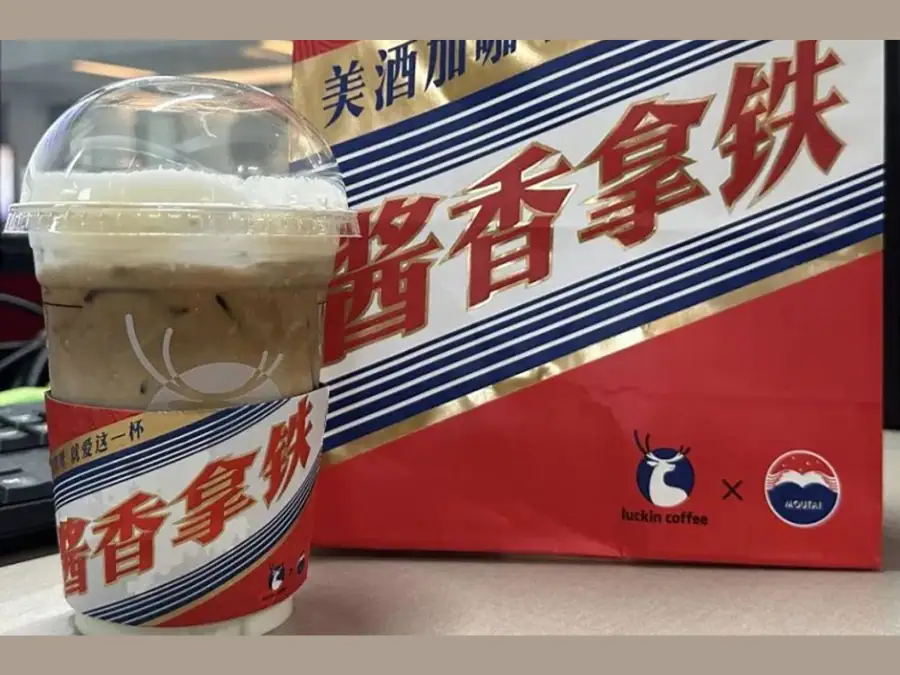
Producers and brand owners have started targeting younger LDA consumers at lower price points. In 2023, for example, Moutai launched the Moutai Latte (below) – a very low-ABV mix of Kweichow Moutai with cream and espresso coffee from popular national café chain Luckin Coffee. The baijiu-laced latte became a massive cultural, social media and commercial success across China, allowing younger consumers to taste the prestigious, often expensive, Moutai brand at an affordable price point.
Moutai chases digital natives
Last year, Moutai took a bold step into China’s advanced digital arena by launching its own digital and marketing e-commerce app, iMoutai, to streamline the sales process, combat scalping and connect the brand directly with a younger generation of consumers.
Users can enter a digital lottery to win the opportunity to purchase high-demand releases at official SRPs. Moutai has built a digital world in the metaverse called Xunfeng, where users can try their hand at virtual brewing and explore digitally reconstructed ancient distilleries in Guizhou, the historic birthplace of Moutai.
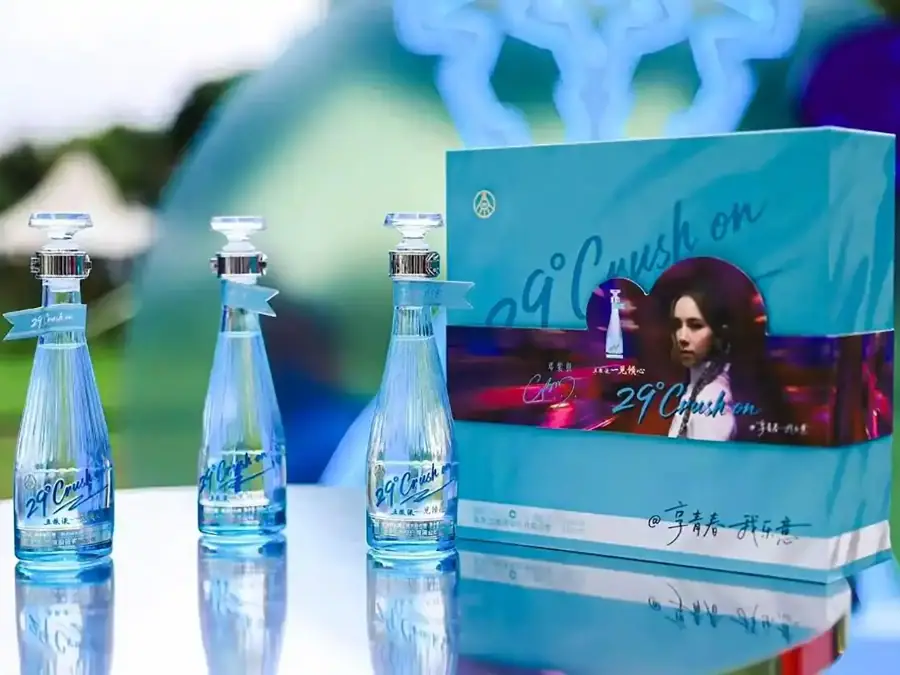
With the traditional 50%-plus ABV of full-strength baijiu perceived as a turn-off for younger consumers, producers have turned to lower-ABV, fruit-infused and sparkling line extensions. Recent releases include Wuliangye’s Crush On (below), a lower-priced 29%-ABV variant launched in October and promoted by Hong Kong pop star G.E.M. Tang, and Moutai’s UMEET Blueberry Sparkling Wine, a 6%-ABV innovation targeted at women.
Quality over strength
As China’s traditional banqueting occasion recedes, a more relaxed, diversified and mindful style of alcohol consumption is replacing it, a trend reflected in the growth of not only the no- & low-alcohol category, but also of RTDs and cocktail culture.
“Driven by a desire for more mindful engagement, younger professionals are stepping back from the intense rituals of the baijiu table in favour of more versatile spirits,” maintains the founder of Hong Kong-based The Porcelain Gin Distillery, Hubert Tse.
“Porcelain Gin has become a natural fit for this era; it maintains the high-end status required for networking while flourishing in the more approachable environment of a cocktail bar or lounge. For this generation, the shift toward gin aligns prestige with lifestyle, turning a business interaction into a modern, curated experience.”
It’s a trend also seen by The Copenhagen Distillery, which has had success building distribution in the Chinese special administrative islands of Macao and Hong Kong.
“Consumers are drinking more selectively, but with much greater intent,” says master blender Lasse Öznek. “When they choose to drink, they want it to feel meaningful, whether that’s through flavour, provenance or the overall experience. That plays directly into what we do. We’re not producing everyday whisky, we’re creating something designed to be explored and appreciated.”
Cognac’s new normal
The outlook for cognac in China in 2026 remains mixed following the conclusion of China’s long-running anti-dumping investigation in July last year. To avoid crippling duties, which were set between 27.7% and 34.9%, many major EU brand owners, including giants such as Moet Hennessy (with Hennessy), Pernod Ricard (with Martell) and Rémy Cointreau (with Rémy Martin), agreed to proposed price undertakings by China’s Ministry of Commerce. Producers committed to selling their brands at or above a specific minimum import price in China, restricting their ability to run aggressive promotions.
These big three cognac houses have certainly taken a financial hit from the current trading conditions. In its fiscal first-half results, announced in February, Pernod Ricard was candid about the damage, revealing Martell’s sales in China dropped 17% in six months to the end of December.
Meanwhile, in its fiscal third-quarter results, Rémy Cointreau admitted “challenging conditions” in China, especially in the “high-end segment”. However, the company did point to an excellent e-commerce performance during the Double Eleven shopping festival, China’s version of Black Friday, as well as the normalisation of the global travel retail channel in the country, following disruption to supply last year caused by the anti-dumping investigation.
China Trading Desk’s Bhatt believes the higher price floor of cognac has resulted in a sizeable knock for the category in the “mid-premium” price segment. “In the CNY300–CNY1,000 [US$44–$146] retail window,” he says, “cognac has lost some of its historical price advantage, so younger consumers are more willing to trade into single malts or premium Japanese-style whisky occasions.
“However, ultra-premium cognac still retains strong equity in gifting, legacy business relationships and prestige-led consumption.”
Hennessy, Martell and Rémy Martin have all leaned harder into China-related promotional activity this year, with numerous high-end ‘Year of the Horse’ releases leaving the stables, their strategy being to zero in on the upper tiers where price sensitivity is much lower.
However, storm clouds are once again gathering. Earlier this year, Chinese state-affiliated media floated the idea of French wine or dairy products being targeted with higher duties if the EU continues to push for higher tariffs on Chinese electronic vehicles. So if EU-China relations worsen, brandy could once again find itself part of a wider trade spat.
Trade deal boosts scotch whisky
In contrast, the prospects for scotch look considerably brighter. Last year, according to the Scotch Whisky Association, the category enjoyed a 14% volume uplift in exports to China, amounting to 34m 70cl bottles.
More positive still, in January this year, London and Beijing signed a trade deal which cuts the import tariffs on whisky from the UK from 10% to 5%, worth an estimated GBP250m ($336m) over the next five years.
Leading whisky asset management firm Speyside Capital said the development was significant. “While a 5% swing may sound relatively modest to some, in premium spirits even small tariff reductions can have a significant impact on pricing, distribution appetite and long-term market confidence,” said CEO Paul Kopec. “Lower tariffs make it easier for brands to invest, build presence and commit to the market over the long term.”
While further opportunities may beckon scotch whisky distillers, the ongoing war in the Gulf between the US–Israel and Iran has made the logistics of supplying Asia from Europe far more costly.
More than 80% of China–Europe container shipping now reroutes around the Cape of Good Hope, adding ten to 14 days of transit time and pushing up costs 30% to 50%. Logistics experts warn that if the disruptions continue through the Northern Hemisphere’s summer, stock levels in China are set to fall dangerously low.
China’s swelling craft wave
While the conflict in the Middle East threatens trouble for exporters to China, the volatility is a potential boon to the country’s growing number of premium craft spirits producers.
This trend is aligned to a broader, patriotic cultural movement known as guochao, or ‘national wave’, that has shifted how Chinese-made premium goods are perceived at home – they are now seen as equal to, or even better than, their Western counterparts. The guochao influence has led younger consumers, particularly Gen Z and Millennials, to prioritise domestic brands, especially those that successfully incorporate Chinese cultural elements.
In terms of craft spirits, gin, in particular, has benefited from guochao because it allows for the infusion of traditional Chinese medicine and local botanicals.
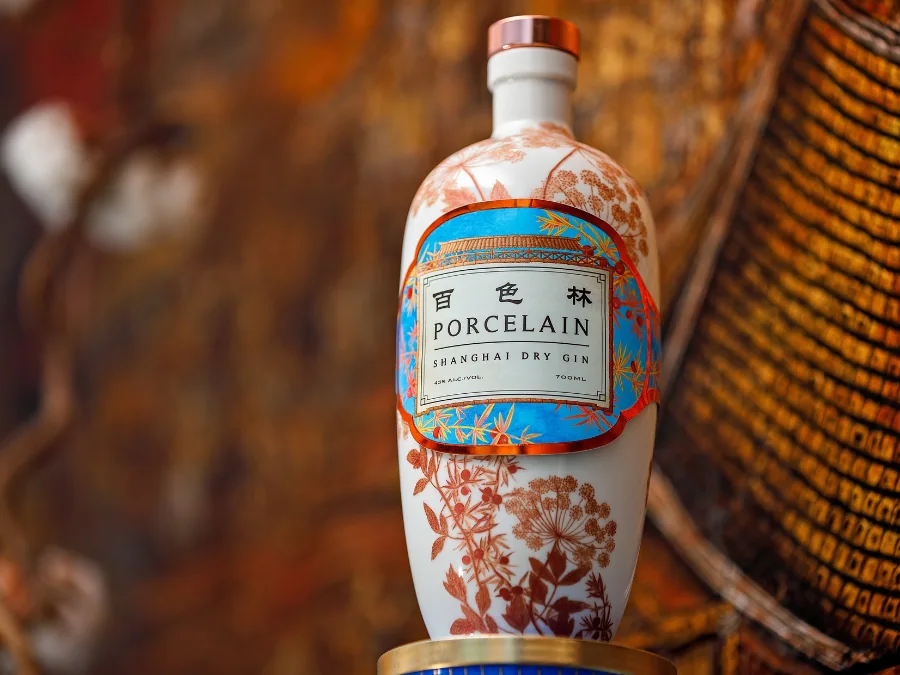
“We created the ‘Shanghai Dry’ classification (above) to define what authentic Chinese gin should be,” says Porcelain Gin’s Tse. “By utilising 90% or more Chinese botanicals, we aren’t just distilling, we’re preserving a sense of place.
“Our goal isn’t necessarily to trigger new regulations, but to inspire a movement where Chinese distillers prioritise local ingredients. The heart of our gin is the Inner Mongolian juniper, a botanical that gives us a flavour profile unlike anything else on the market.”
Similarly, Peddlers Gin Co – which exports to around 20 countries – attributes its “outstanding” domestic sales results not to the brand’s overseas expansion, but to recognition of its quality at home.
COO Rio Liu says: “China is our home market. We have been deeply engaged in it and have achieved excellent results. It is undeniable that our international influence has provided some assistance to our business in China, but this is limited. We believe that the key lies in producing products locally and maintaining the quality and brand influence.”
As China’s spirits landscape shifts from the glare of official banquets to the privacy of lifestyle-led consumption, the industry is entering a definitive era of diversification and guochao pride. Whether through the digital evolution of legacy baijiu, or the rising tide of domestic craft gins, the market is being driven by younger generations seeking more meaningful, personal and localised drinking experiences.