

Innovation incorporating craft cues and consumer trends is helping to drive interest and premiumisation in the category, reports Richard Woodard
The brandy category — like so much of the beverage alcohol industry — had reason to be grateful for the US market amid the huge disruption that the Covid-19 pandemic brought in 2020.
A glance at IWSR Drinks Market Analysis figures for the year is enough to make a brand manager wince: global volumes down by more than -15%, meaning that some 26.2m cases were wiped off brandy sales in the space of 12 months. The vast markets of India and the Philippines were worst-hit, with volume declines of -24.8% and -12.6% respectively, accounting for about 21.5m out of that 26.2m-case slump.
In that context, the US holding firm at 7.8m cases was a more than creditable performance, as the retail and e-commerce channels tapped into at-home consumption and picked up the slack from the beleaguered on-premise, hugely affected by enforced closures and severe restrictions.
Bardinet surfs both craft and flavour trends
La Martiniquaise-Bardinet-owned Bardinet Brandy aims to tap into consumer trends around craft and coffee culture with the launch of two new variants: Bardinet Single Distillery and Bardinet Coffee.

Bardinet Single Distillery is produced at the Distillerie Traditionnelle de la Seugne in south-west France, and double distilled in traditional Charentais copper pot stills in an effort to preserve the grapes’ fruity aromas of peach and pear before maturation in oak.
According to international brand manager Léna Rusek, the new product is likely to appeal to brandy novices and connoisseurs alike.
She says: “At Bardinet, we like to constantly innovate, but always respect the traditions of brandy-making pioneered by our founders. We think this new Single Distillery will be very popular.”
Meanwhile, Bardinet Coffee combines aged Bardinet Brandy with fruity Arabica and bitter Robust coffee to create “a truly aromatic blend” that aims to exploit the rise of coffee culture.
“We saw an opportunity to create a delicious spirit that caters to the growing love of coffee-flavoured items,” says Rusek.
Both new products feature new, craft-inspired packaging with textured labels, and are released after the introduction of Bardinet’s new bottle shape and marketing campaign under the tagline ‘Crafted with French Passion’.
Rémy Cointreau isn’t all about Cognac
Rémy Cointreau-owned St-Rémy brandy enjoyed an “excellent” 2020 in the US, according to international marketing director Hervé Buzon, who adds: “Even if the beginning of 2021 does not show the same double-digit growth that we had in 2020, the growth versus 2019 is still impressive. There is a real trend to premiumisation and diversification. New brands and variants, driving more value to the market, are developing on craft cues and home cocktail trends.”

He highlights St-Rémy’s status as the fastest-growing of the top 10 brands in the brandy category in the US (MAT Nielsen to 17 July 2021), noting that St-Rémy XO
is the “growth engine” for the brand in the US. “Our strategy is really to develop value in the category and communicate our uniqueness: we are 100% French from grapes to bottling,” Buzon says.
“We invest a lot in sampling programmes in-store and push our hitchhiker promotion (St-Rémy XO miniature on St-Rémy VSOP bottles).” That VSOP variant continues to grow on the back of the French sangria programme that was first deployed in the brand’s leading market of Canada.
The theme of a difficult year brightened by a positive performance in the US is taken up by Beveland, which sells Suau — a ‘boutique’ brandy from Mallorca with a long history — through Illinois-based Stoller Imports. “They are doing a great job, and this year we will grow thanks to our key SKUs like Suau 8yo and Suau Orange (an orange brandy liqueur),” says Jordi Xifra Keysper, Beveland marketing director and sales manager US and Canada.
“Brandy was one of the most affected categories in our portfolio, with the exception of the US market, which increased. What we are doing is focusing on where it is performing well, and pushing and pulling into the channels that work well, mainly in the off-premise.”
As with other spirits categories, trends around origin and craft are increasingly important for brandy. This creates fresh potential for a quality-oriented, provenance-rich product like Spain’s Brandy de Jerez — but consumer communication and education is vital.
“We still need to make the consumer aware of the quality of this spirit,” says Alfonso Roldán, international sales manager at Bodegas Williams & Humbert, owner of the Gran Duque de Alba and Alfonso brands. “In this sense, the Brandy de Jerez sector is undergoing a moment of change as we work to establish strategic lines and reposition the category.”

Williams & Humbert sells Gran Duque de Alba’s Classic, XO and Oro expressions (aged for 12, 18 and 23/25 years, respectively) in more than 20 states and control states in the US. Promotional activities, such as gift packs with brandy glasses, help to add value and cement the brand’s place as the best-selling Brandy de Jerez Gran Reserva imported into the US in 2020.
According to Roldán, Florida — a traditional Brandy de Jerez hotspot — was a key focus, along with New York and New Jersey. A redesign of Gran Duque de Alba also helped to drive interest, and now the company plans to introduce global brand Alfonso’s Solera and Solera Reserva variants to the US as well.
If the US has remained robust during difficult times, it’s worthwhile to remember that, as Osborne communications director Rocio Osborne points out, the brandy category there is still made up of 98% Cognac and domestic brandy. “Although it is showing positive
figures for the Spanish category (+50%), the volume is quite small,” he says. “We don’t have a specific strategy for the US market due to the size of our business there, but our global strategies also help us to have a good performance in this market.”
For Osborne, that means a greater focus on other international markets, such as Germany, where — despite a difficult 2020 for the overall category, when sales volumes fell by -9.1% — current trends are positive, with the company’s strategic premium product, Carlos I, seeing sales increase by 39%.
Similarly, Williams & Humbert’s leading brandy market remains the Philippines, followed by the UAE and Germany with Gran Duque de Alba. The past year has seen a targeting of the at home consumption opportunity with on pack promotions mainly aimed at Spanish wholesalers, says Roldán.
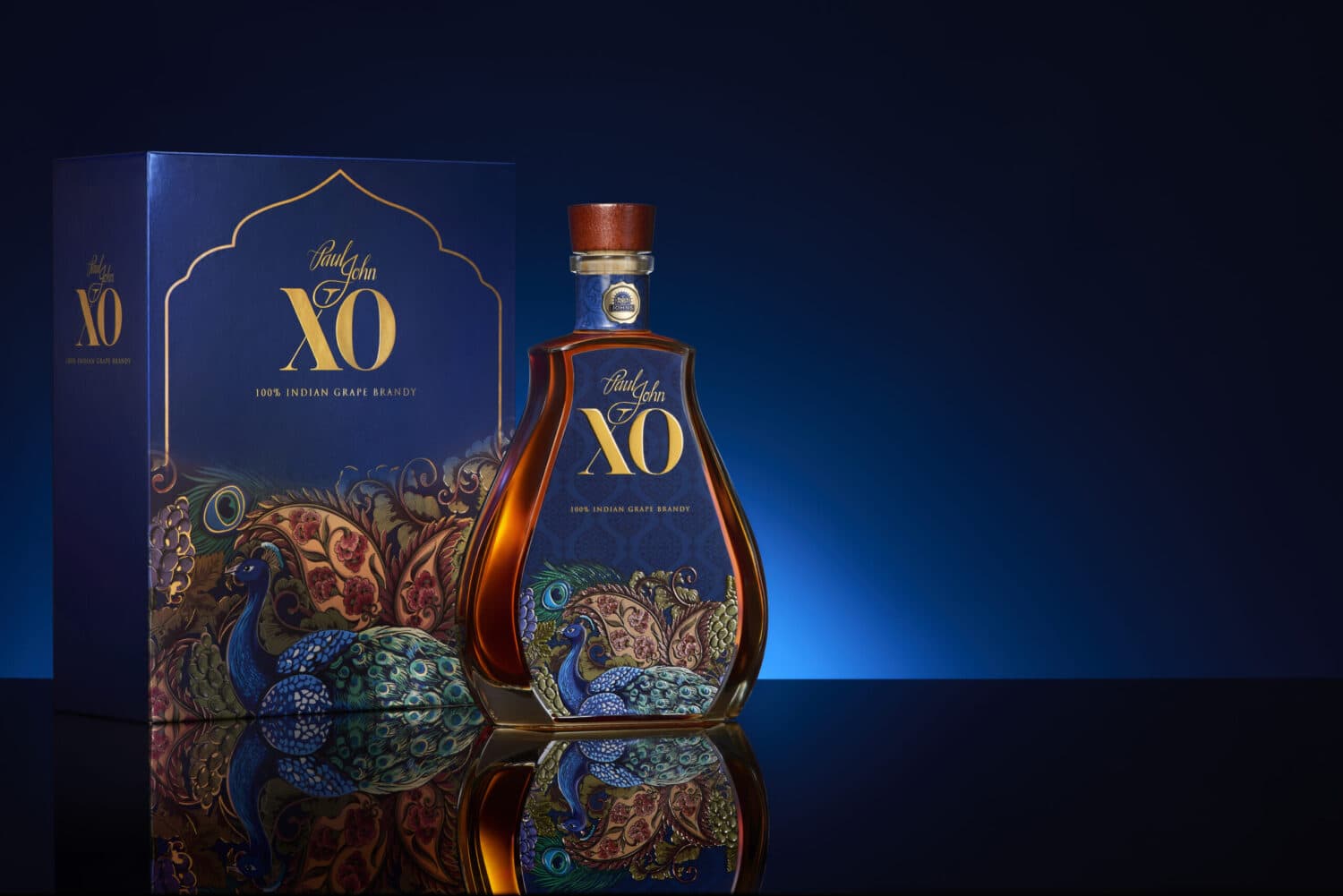
Nowhere has been more drastically affected by the downturn in brandy sales than India, but quality-focused brands from the subcontinent continue to target overseas opportunities in the longer term. Paul John XO is poised to launch into the US — the company’s much-praised malt whiskies, including Paul John Select Cask Oloroso and PX, are already present in the market — with a USP that combines the traditional Cognac grape, Ugni Blanc, with local variety Bangalore Purple.
Meanwhile, Radico Khaitan sees much potential in Greater China, especially for premium brandy Morpheus, and has started local bottling operations in Malaysia to target healthy consumption trends across Asia-Pacific. Africa is another target region — and the company has high hopes for newly-launched super-premium expression Morpheus Blue in international markets.
Whether hailing from France, Spain, India or elsewhere, brandy is learning to tap into the craft/provenance trends that are so influential in today’s marketplace.
Innovations such as St-Rémy’s annual release of limited-edition Cask Finishes— this year including a Sauternes Cask Finish and a Batch 2 Barbados Dark Rum Cask — are helping to drive interest and premiumisation for the category.
Such products, says Buzon, aim to fulfil the potential for exploration and creativity within brandy — areas that have traditionally been underexploited by players in the industry, but which are now firmly on everyone’s radar.●