


This article was initially published in the November issue of Global Drinks Intel magazine. For details on how to subscribe, click here.
Over the last two decades, Japanese whisky has emerged as a high-quality spirits category with international appeal, mopping up awards across Europe and America. Since then, the demand for the likes of Yamazaki, Hakushu, Yoichi and Hibiki – not to mention the ‘ghost’ distilleries of Karuizawa and Hanyu – has reached dizzying levels, ushering in a period of shortage and aged liquid withdrawals as supplies failed to keep up. This imbalance is beginning to ease, and a host of new whisky distilleries is springing up, including a reborn Karuizawa.
But Japan’s spirits exports are about much more than whisky now, with gin, vodka, rum and liqueurs all aiming to carve out an export niche for themselves. At the same time, whisky has become more diverse beyond the dominant duo of Suntory and Nikka.
Beyond whisky: From rum and gin to liqueurs, sake and shochu
“Japanese spirits are BBC Spirits’ DNA,” says BBC Spirits marketing director Cécile Frapsauce. “We offer an extensive portfolio of premium Japanese spirits, ranging from Kurayoshi and Hekinan distillery whiskies to Helios Distillery rums from Okinawa, and Japanese liqueurs that are perfect for cocktails (La Tomato, La Yuzu).”
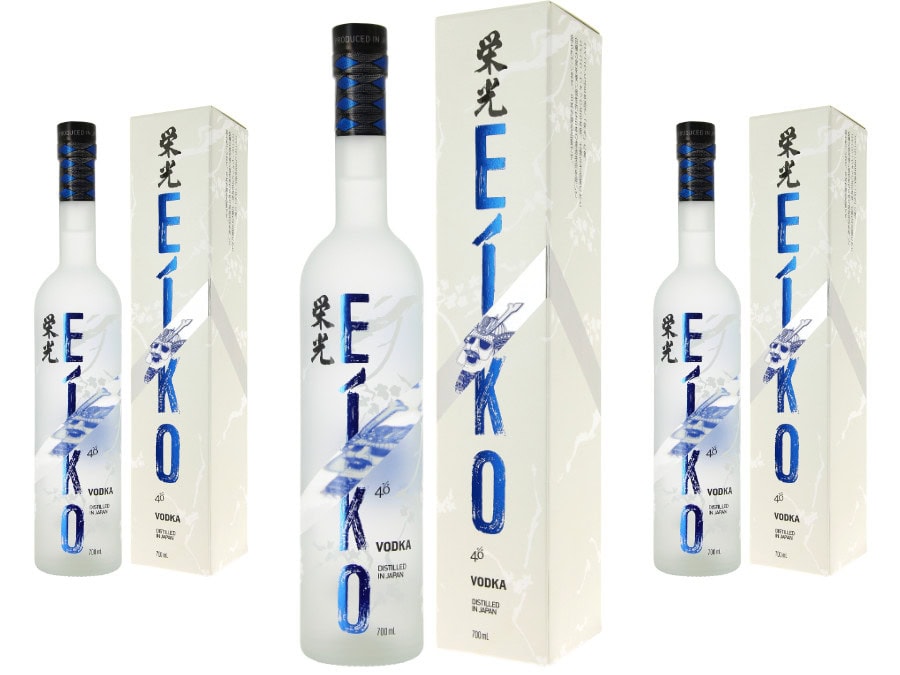
The company also offers Eiko Vodka as well as flagship brand Etsu, which features four Japanese gins, plus a mix of sake (rice wine), awamori (Okinawa rice spirit), shochu (white spirit) and umeshu (plum liqueur). “We have rapidly emerged as the European leaders in the Japanese spirits segment,” claims Frapsauce. More products – rice whiskies and new liqueurs – are due to join the BBC line-up this year.
Nor is BBC Spirits alone in offering an ever-broader selection of Japanese products internationally. Marussia, for example, offers 135o East Gin and Hatozaki whiskies, exporting the pair to more than 40 overseas markets. Last year, the company launched Hatozaki 12-year-old Umeshu Cask Finish in several markets – a marriage of single malts aged for 12 years in American oak, before spending six months in umeshu (plum liqueur) barrels.
At the end of 2023, Marussia released 135o East Gin in a limited-edition gift box. The gin combines five Japanese botanicals – yuzu, sencha, ume, shiso and sancho pepper, all locally sourced from farmers in Hyōgo Prefecture and separately vacuum-distilled, with an added ‘splash’ of Junmai sake distillate. The name is derived from the meridian that runs through the city where the Kaikyo Distillery, which produces the gin, is located.
Growing interest for Japanese spirits in North America and Europe
The appetite for Japanese products manifests itself not only in other Asian markets – China and Hong Kong are obvious examples, along with South Korea – but also across Europe and North America.
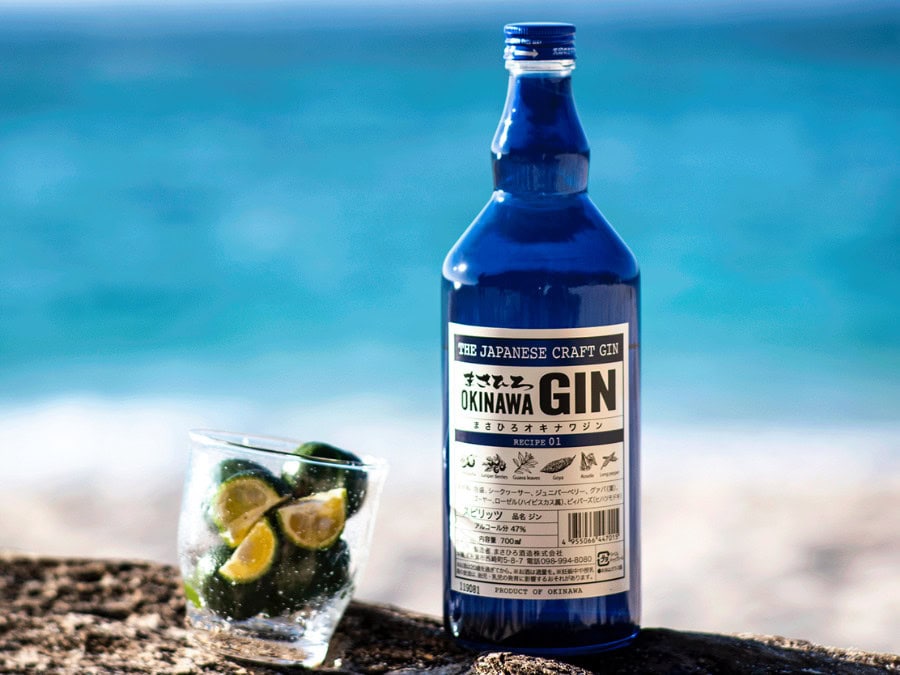
In the US, for example, CNS Imports is a specialist business offering a broad range of Japanese (and other Asian) products. The company imports Masahiro Okinawa Craft Gin, a rice-based, twice-distilled gin produced at Masahiro Shuzo, along with a range of whiskies: Hayashi Ryukyu and Kujira Ryukyu – both made using indica rice and black koji in Okinawa – and Shinobu, from Niigata and aged in Japanese mizunara oak.
“We like to preserve history and authenticity in our new products, while still giving them modern appeal,” says CNS Imports principal Steaven Chen. “Our whiskies all include traditional Japanese methods that have been used for hundreds of years in their production processes.”
There’s controversy about the production methods used for Hayashi Ryukyu and Kujira, because of the presence of koji – the fungus used to saccharify rice for sake brewing. Such ‘whiskies’ cannot be labelled as such in Japan, but are permitted in the US thanks to historical precedent.
Another US business, ImpEx Beverages, currently works with four independently owned whiskies – Fukano (Fukano Distillery), Ohishi (Ohishi Distillery), Ikikko (Ikinokura Distillery) and Hakata (Hikari Distillery). All four are produced with locally grown grains from Kyushu and use koji during fermentation, bringing what ImpEx VP Chris Uhde describes as a “powerful umami” flavour. “Fukano and Ohishi hover on the delicate side of expressiveness,” he adds. “Hakata is the polar opposite and brings a massive savoury style palate to their whisky.”
Uhde believes these are authentic products with a long history. “With Hakata, one could argue that everything we have done has had one foot in innovation and one foot in tradition,” he says. “While over 100 years old, Koji whisky isn’t really something that consumers have ever really explored before. It can be very diverse from a flavour standpoint. Our intention is to push that diversity as far as we can.”
New definitions come at ‘critical time’ for Japanese whisky
The debate over what is and isn’t Japanese whisky comes at a sensitive time, with industry definitions due to be implemented this year. The MD of the House of Suntory, Jon Potter, maintains that the introduction of the new regulations comes “at a critical time” for the category.
“The House of Suntory actively addresses authenticity in Japanese whisky production through various measures,” he says. “We’re very clear about our whisky portfolio and clearly identify what is Japanese whisky and what isn’t. Raising awareness and educating consumers about the unique qualities and production methods of Japanese whisky is crucial.”
However, Uhde has concerns that the new rules may stifle creativity. “We worry that, if regulations that are too strict are put into place, it will actually hinder innovation in the category,” he says. “We love transparency, but we feel everyone deserves a seat at the table, and barriers to entry should not be too high. It prohibits smaller enterprises from being able to participate.”
Generally, the move to tighten what have historically been incredibly lax rules on whisky making in Japan has been welcomed by the industry – even if some may have reservations either about the details, or the lack of proper legal enforcement.
Marussia marketing director Marc Torterat observes: “As a member of the Japanese Spirits & Liqueurs Makers Association, the Kaikyo Distillery welcomes the new regulation that will come into force in April. We are happy to provide consumers and the trade with greater clarity.”
Whisky paves the way for other categories to build exports
Beyond the controversy, the success of the Japanese whisky more broadly is helping other spirits categories – such as gin, vodka and rum – to establish themselves on export markets.
“The success of Japanese whiskies has allowed consumers to become acquainted with the distinct Japanese style, characterised by a smoothness and balance,” says BBC Spirits’ Frapsauce. “Consumers already familiar with Japanese whiskies are also drawn to other types of spirits, such as Japanese gin.
“France is a market where Japanese spirits perform exceptionally well,” she continues. “In fact, France is the second-largest consumer of manga in the world, following Japan. We also observe this attraction in other European countries, such as Italy, as well as in the UK and the US.”
Across the Atlantic in the US, Uhde at ImpEx Beverages agrees. “We feel that the rise of Japanese whisky has helped build awareness of the diversity and quality of distillation in Japan across all distillation types,” he says. “We now have started to hear consumers talk about shochu with some real awareness. Ten years ago, most people thought shochu and soju were the same thing.”
Interest driven by desire for ‘more meaningful culinary life’
Importantly, this consumer interest is being detected in an ever-larger spread of markets around the world – and, in turn, this may breathe new life into the domestic Japanese scene as well. “The US, the UK, France and Australia are showing great interest,” says Torterat, “and this is where we are focusing our resources, alongside a few other European markets where the Japanese whisky and gin categories are dynamic, and where we have our own distribution companies.
“Not to forget our own domestic market, Japan, where we will soon strengthen our sales structure. These countries show an appetite for Japanese culture and food, and they consider Japan to be a new, trendy destination for tourism. This is very helpful.”
There’s little doubt that this consumer interest transcends Japanese whisky and spirits – and indeed Japanese culture as a whole, says Uhde. “We think there’s a general curiosity to explore new things beyond just Japanese, and we benefit from that,” he explains.
“The consumers who are getting more into Japanese spirits are the same people that are exploring natural wines and crazy liqueurs. The rich history of Japanese culture and cuisine definitely helps, but the driving force is folks looking to live a more diverse and meaningful culinary life.”
This article was initially published in the November issue of Global Drinks Intel magazine. For details on how to subscribe, click here.