



As a start-up. how does one grow a gin brand in the UK, where the gin category is very crowded, and consumers are starting to look elsewhere?
Libby Wilding, head of marketing at Cygnet Gin: As with any spirit, growing a gin brand in a crowded category requires a deep understanding of the broader market dynamics and consumer trends. While the gin category has matured when we entered the market the ultra-premium segment was exhibiting double-digit growth. By 2027, IWSR predicts the segment will grow +50% by 2027, driven by consumers trading up and seeking quality over quantity – as such. we knew this was the area we wanted to focus on within the category.
It’s important to embed the brand in rich consumer insights, offering clear and compelling reasons to believe, and ensuring the product’s quality matches – or exceeds – its positioning. Building strong relationships across the industry is critical. Start-ups need to work really closely with retailers across the on- & off-trade to achieve listings & scale up. At the end of the day, communicating how your product answers consumer needs and will grow value is critical for their business.
Beyond understanding the consumer & category, to succeed as a start-up you need to be incredibly agile – there’s a fair amount of test, learn, optimise with any start-up.

What do you believe is the price ceiling for premium gin? How does one move gin drinkers up the price ladder?
LW: Moving gin drinkers up the price ladder is feasible given the current consumer trend toward premiumisation across the spirits industry. As per IWSR, 42% of UK consumers are now buying more premium spirits than they were five years ago, a trend driven by a desire for quality and unique experiences. Cygnet’s position in the ultra-premium segment is well-timed, as this segment of the category is expected to grow by over 50% annually in the next few years.
The ceiling for premium gin is largely dictated by perceived value. Consumers are willing to pay more when there’s a clear justification for the higher price – whether it’s superior ingredients, artisanal production methods or award-winning taste profiles. The trend of ‘less but better’ aligns with Cygnet’s strategy, where the focus on creating a gin that can be sipped neat places it in direct competition with luxury spirits outside of the category like single malt whisky or ultra-premium tequila. The key is to ensure that the price reflects the quality and to communicate this effectively to both trade partners and consumers. Our success in garnering gold medals across industry competitions reinforces the value proposition and assists in convincing consumers to trade up.
How do you see the gin category – as well as the prospects for Cygnet – outside the UK?
LW: Globally, the category continues to evolve, with ultra-premium gin showing strong potential outside traditional markets. In Europe, countries like Spain, Germany and Italy are seeing renewed interest in gin, often linked to the ongoing rise of cocktail culture and the influence of the craft spirits movement.
In Asia, gin is experiencing a renaissance, especially in markets like Japan and Singapore, where a sophisticated bar culture is driving demand for high-quality, innovative products. The UAE also presents a lucrative opportunity, with its distinguished luxury market and an increasing number of high-end bars and restaurants seeking unique spirits for their affluent clientele.
We’ll be planning our global expansion based on where the global demand for ultra-premium spirits is rising. As a luxury sipping gin, Cygnet resonates in markets where consumers are already accustomed to paying a premium for quality and are seeking new and exciting spirits to explore.
Who is Cygnet’s main competition, not only in gin?
LW: Cygnet’s main competition extends beyond the category. In ultra-premium spirits, we’re competing with a broader range of high-quality sipping spirits, such as aged tequilas, single malt whiskies and cognacs. Brands playing in these categories have seen significant growth and have established themselves as the drink of choice for celebratory moments (beyond champagne).
The shift towards neat, high-end spirits reflects a broader consumer trend towards mindful consumption, where quality, craftsmanship and authenticity are paramount. Cygnet’s focus on creating a gin that can be enjoyed neat places it squarely in this competitive set. The brand’s ethos of ‘less but better’ resonates with consumers seeking a luxury experience from their spirit of choice.
Where do you see the main competition for super- and ultra-premium gin?
LW: In the UK, the main competition is increasingly coming from other premium spirits categories that appeal to the same discerning consumer base. Premium tequila is seeing substantial growth, with a 15% increase in value over the past year in the UK, driven by the popularity of luxury brands.
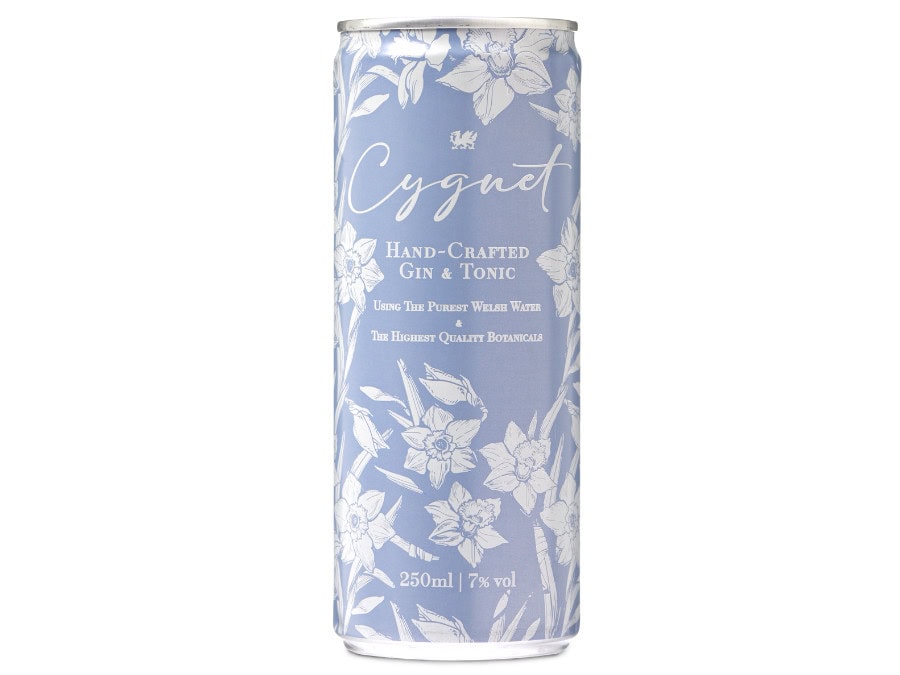
Another area of growing competition is the ready-to-drink (RTD) segment, which is appealing to consumers looking for convenience without sacrificing quality. IWSR reports that premium RTDs are projected to grow by over 20% in the UK over the next few years, presenting a new form of competition, especially in on-the-go occasions. As the RTD category grows, ensuring that the Cygnet G&T is the convenient quality cocktail of choice is critical.
The overall trend toward premiumisation is beneficial for Cygnet, as it aligns with the broader consumer shift towards quality over quantity. Key for us at Cygnet is continuing to communicate our unique positioning as a luxury sipping gin, differentiating from other spirits through our exceptional smoothness and superior craftsmanship.