


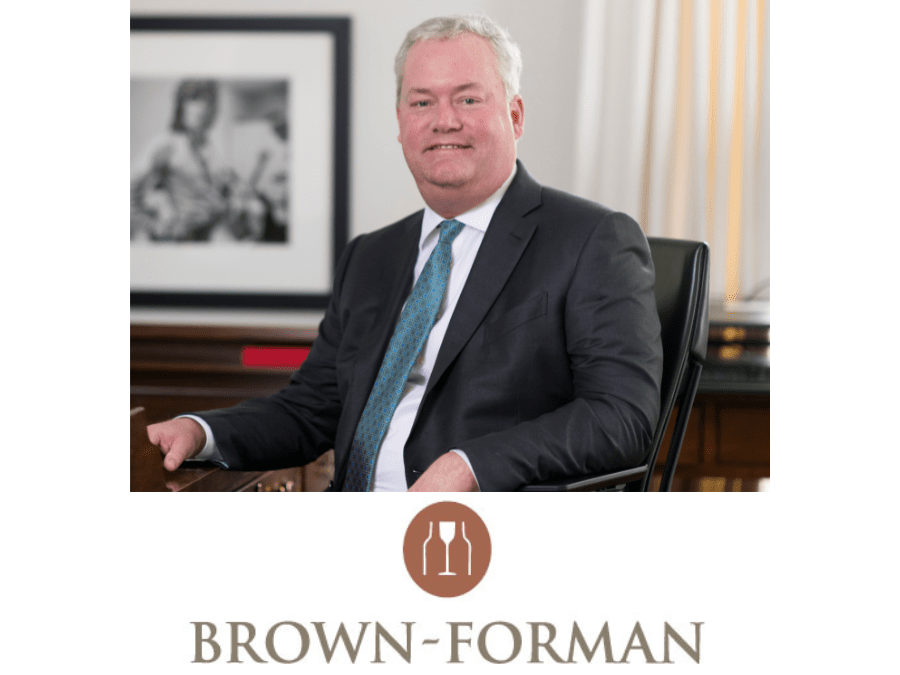
The senior management team at Brown-Forman has voiced optimism about the group’s ability to weather rising costs, as expansion plans have been laid out for the longer term.
On a conference call yesterday, following the announcement of a 17% rise in 12-month sales, CEO Lawson Whiting and CFO Leanne Cunningham painted a positive picture of the Jack Daniel’s brand owner in the months and years ahead. As consumer packaged goods companies continue to raise their prices due to increased energy and raw materials costs, Whiting highlighted Brown-Forman’s +27% sales showing in the final quarter as a good indication of the company’s current healthy position.
“We are not seeing pressure on the consumer in terms of spending on spirits yet,” Whiting told the analysts on the call. “I mean, we obviously had a very strong fourth quarter [to the end of April]. From the consumer, we’re not seeing them trade down yet.
“I’m not saying that may not happen if gas prices stay elevated like they are right now and that continues for the rest of the year. But, so far, so good. The business is still in a pretty good state.”
While admitting the company is “closely monitoring the impact of inflation and energy prices on our consumers”, CFO Cunningham highlighted Brown-Forman’s “portfolio of premium and super-premium brands that’s well-positioned to stand the impact of inflation”.
Cunningham added that, while expansion of its American whiskey distilleries has been a priority in recent years, “we also said last year that we are expanding our single malt Scotch distillery.
“We will also begin to expand our Tequila distilleries because of the strong long-term demand we see, well out into the future”.
Following up, Whiting concluded: “Our problems have been around for four or five years, and that’s what has hurt our gross margin over that period. I hesitate to use the words ‘it’s in our rear-view mirror’, but it largely is.
“Where we’re seeing much of the cost inflation these days – in fuel, in real estate, in commodities – these are not particularly heavy input costs for us. We’re simply not seeing the input inflation to the same extent that others are.”