

It was a Thursday evening and a cohort of marketers gathered in a dark basement at the Charlotte Street Hotel in London to discuss the shared topic of why brands are getting it wrong when marketing to women.
We saw a swathe of ads aimed at women that were stuck in stereotypes and one-dimensional views of society, trying to portray women rather than reflect them. Mostly, these ads showed women through a male gaze instead of how women feel and wanted to be represented.
The meeting somehow felt like a secret subset of Illuminati members that wanted to infiltrate society with a new way of thinking. But it shouldn’t feel like that – understanding gender in advertising should not be a secret. However, it’s not surprising that the male gaze is so rife when you look at who attends Cannes Lions and notice how many white, privileged, middle-aged men are involved in the creative industry.
During the event, I had an interesting conversation with a client about the role of different categories in reflecting modern gender dynamics, and how brands that typically have targeted men or women, such as beauty, fashion and, of course, alcohol, have a bigger role to play.
It struck me then how little progress has been made in the alcohol category versus others. We still make beer ads for men, whisky ads for men and hard seltzer ads for women.
The male gaze is everywhere. Earlier this year, for example, Heineken sponsored the UEFA Women’s Euro 2022. At face value, this looks like a strong commitment to women. Contrast women’s football with women’s netball, though. Netball is the second-largest women’s team sport and is played by 680,000 women each week, while the England netball squad is ranked No.3 in the world. What’s interesting is that not a single alcohol brand sponsors netball. Instead, the sponsor list is made up of other progressive category brands, such as Nike and Redbull.
Why? The brutal truth is most men don’t understand netball. It’s far more comfortable to interpret women’s football from a male perspective than try to understand a sport most men have never played.
The intersectional understanding of gender fluidity is, more often than not, understood in marketing terms, with gender or age being the defying factor, rather than seeing more multi-faceted aspects of women’s lives.
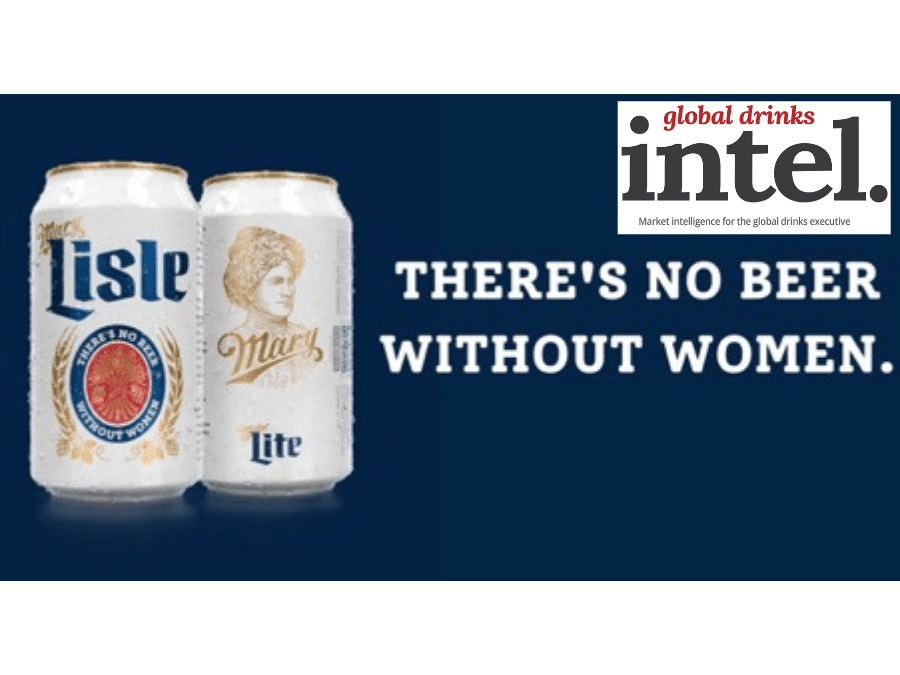
Most people don’t know the first US brewers were women. The country’s first known female brewer, Mary Lisle from Philadelphia, was recently honoured by Miller Lite in a campaign featuring the tagline ‘there’s no beer without women’ along with a promotional can to mark Independence Day on 4 July.
It’s a powerful insight, but the idea fails to deliver any real emotion or sentiment. Much as I’m sure the brand’s intentions were meant to be progressive, the concept of using women to help sell beer to men strikes me as a little backwards.
Of course, the original idea may have been watered down; it’s no surprise to learn that recent research from Unstereotype Alliance found that 64% of marketers are scared of getting gender-based marketing wrong. Brands need to go way beyond featuring female stereotypes to speak to women.
The presumption that women are delicate flowers that need something light in calories, that’s zesty, soft, served in a stemmed, dainty glass that won’t make them look too bloated afterwards is deeply rooted in sexism. A UK study in 2021 found that 27% of women are put off beer by ‘male-oriented’ advertising and 17% don’t drink it for fear of being judged. By comparison, in the US, Australia and New Zealand, nearly a third of whisky is consumed by females.
As a white, privileged, middle-aged man, I’m in a difficult position to be calling bullsh*t on the drinks industry, but I’ve decided it’s better to be an ally and use my privilege to influence the boardroom to press for more progressive gender messages.
It’s not going to be easy, but the commercial opportunity might grab a few ears – 16% of consumers view inclusivity as the most important dimension of a brand.
So there are a few actions worth considering.
First, decide if you want to be allied. It’s not for everyone, but I believe with enough support, we can ensure powerful and diverse voices are heard in the boardroom. And if you're a white, middle-aged man like me, you can use your privilege for greater good.
Secondly, if you’d like to get a further understanding of gender dynamics in advertising I'd be happy to share the research we presented at the Charlotte Street Hotel. Ping me an email at [email protected].
Chris Tyas is chief strategy officer at independent creative agency Impero - the creative agency for impatient brands.
This article was initially published in the September issue of Global Drinks Intel magazine. For details on how to subscribe, click here.