

Sign In
  • News
    • Beer
    • Spirits
    • Wine
    • Environmental, Social & Governance
    • Financial Results
    • Marketing
    • Mergers & Acquisitions
    • New Product Development
    • From the Industry
  • Intel
    • Comment
    • Interview
    • Category Intel
    • Consumer Intel
    • Market Intel
  • Awards
    • Global Drinks Awards
    • New Product Awards
    • ESG Awards
  • Magazine
  • Newsletter
  • Subscribe
  • Contact
  • News
    • Beer
    • Spirits
    • Wine
    • Environmental, Social & Governance
    • Financial Results
    • Marketing
    • Mergers & Acquisitions
    • New Product Development
    • From the Industry
  • Intel
    • Comment
    • Interview
    • Category Intel
    • Consumer Intel
    • Market Intel
  • Awards
    • Global Drinks Awards
    • New Product Awards
    • ESG Awards
  • Magazine
  • Newsletter
  • Subscribe
  • Contact
Search
Banner for Le Tribute Pink Grapefruit - https://letribute.com/en-gb?srsltid=AfmBOooXoAFSrBVrsVtLnlySLXXjT62LG4oJ5imdqTABCraYG_SULm5V


The bad – and good – of climate change for vineyards – Market Intel

Richard Woodard
Last updated: 11/11/2022 at 9:23 AM
By Richard Woodard
7 November 2022
9 Min Read

From lighting candles and heating wires to experimenting with varieties and altitude, vineyard owners are working overtime to maintain quality and yield.


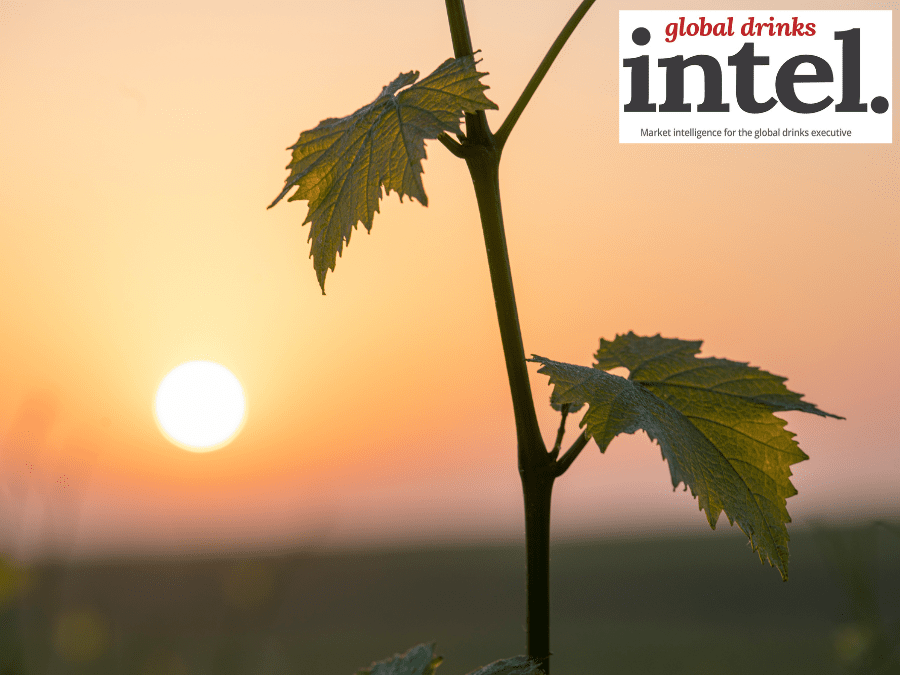
Vineyards in sunset
Credit: Ruinart
SHARE

From lighting candles and heating wires to experimenting with varieties and altitude, vineyard owners are working overtime to maintain quality and yield. Richard Woodard reports.

Climate change deniers should probably look away now. “There’s a real evolution of the wine style in Chablis,” says Simonnet-Febvre GM & winemaker Paul Espitalié. “Fifty years ago, the wine was a bit acid and not as rich as it is today. We really have an impact of the weather changing in Chablis — much more balanced wines, much more fruit.”

If that doesn’t sound so bad, there’s a flipside: devastating and increasingly regular spring frosts, exacerbated by higher temperatures in February and March, which kickstarted the vines’ vegetative cycle, leaving them vulnerable to cold snaps in April. Remedies include sprinkling water, lighting candles or using heating wires to protect the buds, but now research is looking at new clones of Chardonnay that start their production cycle later in the year.

Chablis is one example of the complexity of the impact of climate change on the world’s vineyards — and how that impact can be both positive and negative, at least in the short term. Some regions, such as Margaret River in Australia, may even become cooler if Antarctic ice melts, lowering sea temperatures and thus making maritime breezes cooler.

Nor is the world of spirits unaffected by these issues. “We are seeing tangible impacts on our vineyard concerning the vegetative cycle,” says Cognac Frapin communications manager Thomas Soret. “We harvest earlier in the year. We also noticed the phenomenon of extreme weather — hail — becoming more regular, and with more intensity.”

Warmer summers mean higher sugar levels in the grapes, and higher alcohol. For Cognac, says Rémy Martin cellar master Baptiste Loiseau, that’s a problem, creating difficulties with fermentation as yeasts struggle to convert all the sugar to alcohol. What’s more, lower levels of natural acidity raise the threat of bacterial infection, as sulphur cannot be used during winemaking.

“We are harvesting much sooner to keep the acidity and lower the level of alcohol,” Loiseau explains. “Winemakers are told to focus not just on sugar and alcohol, but acidity and grape health too.”

How the past can help solve the problems of the future

In the longer term, more proactive measures will be needed — either growing dominant Cognac grape variety Ugni Blanc in a different way, for instance, with more leaves to slow ripening, or exploring alternative cultivars.

One such example is Monbadon, a cross of Ugni Blanc and Folle Blanche that was abandoned in Cognac decades ago because of its late ripening. Now, Loiseau and others are experimenting with the variety — which as yet cannot legally be used to make Cognac — with promising results. “It’s doing really well in Grande Champagne,” he says.

Climate change isn’t a problem limited only to those who own vineyards. Champagne Gosset has almost no vines of its own, but still has to confront the effects of rising temperatures when it comes to winemaking.

For Gosset, lees maturation is a keystone to its house style — more so than the maturity of grapes per se, says cellar master Odilon de Varine. “The main threatening impact of climate change to us is the high level of maturity of the grapes, because it comes with a lower level of malic acid, which is quintessential to the Gosset style,” he explains. “As a consequence, we try to aim for relatively early grape-picking in the hot years, in order to keep the balance we are looking for.” De Varine also closely monitors the acidity level in the musts, and rejects any that are too low in malic acid.

From the early 1990s to about 2010, climate change was generally viewed as a positive force for Champagne, with greater bunch weights leading to increases in yields, plus better-quality wines thanks to greater ripeness at harvest time. Today, however, there are signs that things are changing, and not for the better.

Pommery chef de cave Clément Pierlot highlights earlier budburst as increasing the risk of spring frost damage (similar to Chablis), as well as more intense bad weather, coupled with higher temperatures, driving a greater incidence of problems such as mildew. The net result, he says, is still greater quality, but a reduction in agronomic yields — something the region is now trying to address through changes to production rules.

As the biggest business by some distance in both Champagne and Cognac, Moët Hennessy is only too aware of the challenges of climate change — as evidenced by the company’s ‘Living Soils Living Together’ sustainability programme, and the opening in 2021 of its EUR20m (US$20.5m) Robert-Jean de Vogüé Research Centre, devoted to scientific research into sustainability.

Average temperatures in Champagne have risen by 1.1°C over the past three decades, points out a spokesperson for Moët Hennessy’s sustainability team, bringing earlier harvests (by 15 to 20 days) and a string of “exceptional” vintages. But, adds the spokesperson, “we are profoundly aware that these conditions are only temporary, and that the wider impacts of climate change are already being felt. The Champagne region is already experiencing increasingly unstable climatic conditions, with more extreme weather events, such as intense hail and frosts during the growing seasons”.

As a result, the company is working on a broad range of measures, from experimenting with new varieties to planting cover crops between the rows and exploring the potential of agroforestry to prevent erosion and encourage biodiversity.

A similar tune, with local variations, is playing out in the vineyards of the Iberian peninsula, home to Zamora Co-owned Rioja winery Ramón Bilbao, and Portuguese wine giant Sogrape. More consistent ripening, yes, but at what long-term cost?

Remedies vary from the granular to the more philosophical. Ramón Bilbao R&D manager & winemaker Rosana Lisa outlines a long list of possible measures in the vineyard, such as late pruning, canopy management and shifts in the orientation of the vines, as well as planting at higher altitudes.

Winemaking techniques include yeast selection to suppress the production of ethanol, cooler fermentations and shorter macerations conducted prior to fermentation — all aiming to preserve the wine’s freshness and aromatic qualities. For António Graça, head of R&D at Sogrape, “close monitoring and a timely, adaptive business strategy” are key, along with managing short- and long-term options and processes. With these tools, he argues, “there should be no locations or subregions with reasons to fear the future”.

That doesn’t mean there won’t be problems — just that the company will be equipped to tackle them when they arise.

“Within 50 years,” says Lisa, “the wine map of our country will have changed. In the first place, to areas of higher altitude and cooler temperatures — especially in areas with greater Atlantic influence. We already have clear examples of balanced red wines in Galicia.

“There may be opportunities for hybrids, such as PIWIs [new fungus-resistant grape varieties], but we mustn’t forget the old vines, consolidated in the ground, resistant and with a complex root structure capable of rescuing the hidden humidity that our soils present.”

Sometimes we have to look to the past to address the problems of the future — and climate change is no exception.

This article appeared in the September issue of Global Drinks Intel magazine. For details on how to subscribe, click here.
Richard Woodard
ByRichard Woodard
Former newspaper journalist Richard Woodard has been writing about the global wine and spirits industry for nearly 20 years, and is a regular contributor to a number of magazines and websites.
Previous Article Starward whisky Vitalis bottle This week’s new spirits launches – 31 October-4 November 2022
Next Article US flag on blue sky background Republic National Distributing Co heads west with Young’s Market Co takeover in US
OKI MPU - https://www.oki.com/uk/printing/label-printer/?utm_source=OKI+Web+Chat&utm_medium=Bing&utm_campaign=Global+Drinks+Awards&utm_content=ACTFUND-1070&activity_code=ACTFUND-1070

The Newsletter

Sign up to receive our newsletter email

  • The very latest news from across the world's beverage alcohol industry
  • Cutting-edge intel from our in-depth category & market analyses, backed by benchmark industry data
  • The best insight on your competitors from our interviews with the industry’s leaders

This field is for validation purposes and should be left unchanged.

Follow on Social

Linkedin Twitter
Short Tower for Le Tribute Pink Grapefruit - https://letribute.com/en-gb?srsltid=AfmBOooXoAFSrBVrsVtLnlySLXXjT62LG4oJ5imdqTABCraYG_SULm5V
Banner for Bayou Rum - https://bayourum.com/

You Might Also Like

Two bartenders preparing cocktails behind a bar

What’s driving cocktail choices in the US on-premise in 2026? – Consumer Intel

24 July 2026
Drinkers with balls of BuzzBallz

Drinks brands must identify category codes before embarking on search for sales – Comment

24 July 2026
Brown-Forman logo and CEO 2022

Another Covid vet heads for the exit as Brown-Forman CEO prepares to retire – Comment

24 July 2026
Vineyards in Champagne at daybreak

Champagne harvest cap reduced for fourth consecutive year

24 July 2026
Linkedin Instagram

What next?

  • Sign up to our FREE newsletter
  • Subscribe
  • My Account
  • Sign up to our FREE newsletter
  • Subscribe
  • My Account

About

  • Contact
  • Privacy Policy
  • Cookie Policy
  • Terms & Conditions
  • Contact
  • Privacy Policy
  • Cookie Policy
  • Terms & Conditions

Copyright © 2025 Global Drinks Intelligence Limited. All Rights Reserved

Built and Managed by Kukoo Creative

This website uses cookies to improve your experience. Read our privacy policy | Cookie settings | ACCEPT
Privacy & Cookies Policy

Privacy Overview

This website uses cookies to improve your experience while you navigate through the website. Out of these cookies, the cookies that are categorized as necessary are stored on your browser as they are as essential for the working of basic functionalities of the website. We also use third-party cookies that help us analyse and understand how you use this website. These cookies will be stored in your browser only with your consent. You also have the option to opt-out of these cookies. But opting out of some of these cookies may have an effect on your browsing experience.
Necessary
Always Enabled
Necessary cookies are absolutely essential for the website to function properly. This category only includes cookies that ensures basic functionalities and security features of the website. These cookies do not store any personal information.
Non-necessary
Any cookies that may not be particularly necessary for the website to function and is used specifically to collect user personal data via analytics, ads, other embedded contents are termed as non-necessary cookies. It is mandatory to procure user consent prior to running these cookies on your website.
Functional
Functional cookies help to perform certain functionalities like sharing the content of the website on social media platforms, collect feedbacks, and other third-party features.
CookieDurationDescription
li_gc6 monthsLinkedin set this cookie for storing visitor's consent regarding using cookies for non-essential purposes.
lidc1 dayLinkedIn sets the lidc cookie to facilitate data center selection.
VISITOR_INFO1_LIVE6 monthsA cookie set by YouTube to measure bandwidth that determines whether the user gets the new or old player interface.
yt-remote-cast-availablesessionThe yt-remote-cast-available cookie is used to store the user's preferences regarding whether casting is available on their YouTube video player.
yt-remote-cast-installedsessionThe yt-remote-cast-installed cookie is used to store the user's video player preferences using embedded YouTube video.
yt-remote-connected-devicesneverYouTube sets this cookie to store the user's video preferences using embedded YouTube videos.
yt-remote-device-idneverYouTube sets this cookie to store the user's video preferences using embedded YouTube videos.
yt-remote-fast-check-periodsessionThe yt-remote-fast-check-period cookie is used by YouTube to store the user's video player preferences for embedded YouTube videos.
yt-remote-session-appsessionThe yt-remote-session-app cookie is used by YouTube to store user preferences and information about the interface of the embedded YouTube video player.
yt-remote-session-namesessionThe yt-remote-session-name cookie is used by YouTube to store the user's video player preferences using embedded YouTube video.
ytidb::LAST_RESULT_ENTRY_KEYneverThe cookie ytidb::LAST_RESULT_ENTRY_KEY is used by YouTube to store the last search result entry that was clicked by the user. This information is used to improve the user experience by providing more relevant search results in the future.
Performance
Performance cookies are used to understand and analyze the key performance indexes of the website which helps in delivering a better user experience for the visitors.
Analytics
Analytical cookies are used to understand how visitors interact with the website. These cookies help provide information on metrics the number of visitors, bounce rate, traffic source, etc.
CookieDurationDescription
_ga1 year 1 month 4 daysGoogle Analytics sets this cookie to calculate visitor, session and campaign data and track site usage for the site's analytics report. The cookie stores information anonymously and assigns a randomly generated number to recognise unique visitors.
_ga_*1 year 1 month 4 daysGoogle Analytics sets this cookie to store and count page views.
YSCsessionYSC cookie is set by Youtube and is used to track the views of embedded videos on Youtube pages.
Advertisement
Advertisement cookies are used to provide visitors with relevant ads and marketing campaigns. These cookies track visitors across websites and collect information to provide customized ads.
CookieDurationDescription
__Secure-ROLLOUT_TOKEN6 monthsYouTube sets this cookie to manage feature rollout and experimentation. It helps Google control which new features or interface changes are shown to users as part of testing and staged rollouts, ensuring consistent experience for a given user during an experiment.
__Secure-YNID6 monthsGoogle cookie used to protect user security and prevent fraud, especially during the login process.
_fbp3 monthsFacebook sets this cookie to store and track interactions.
bcookie1 yearLinkedIn sets this cookie from LinkedIn share buttons and ad tags to recognize browser IDs.
yt.innertube::nextIdneverYouTube sets this cookie to register a unique ID to store data on what videos from YouTube the user has seen.
yt.innertube::requestsneverYouTube sets this cookie to register a unique ID to store data on what videos from YouTube the user has seen.
Others
Other uncategorized cookies are those that are being analyzed and have not been classified into a category as yet.
CookieDurationDescription
__Secure-YECpastYouTube sets this cookie to stores the user's video player preferences using embedded YouTube video
advanced_ads_visitor1 monthDescription is currently not available.
personalize_sync1 dayDescription is currently not available.
RBUUID2 monthsDescription is currently not available.
stackprotect1 hourDescription is currently not available.
syncTimeout12 hoursDescription is currently not available.
unique_session_id1 yearDescription is currently not available.
SAVE & ACCEPT
Powered by CookieYes Logo