

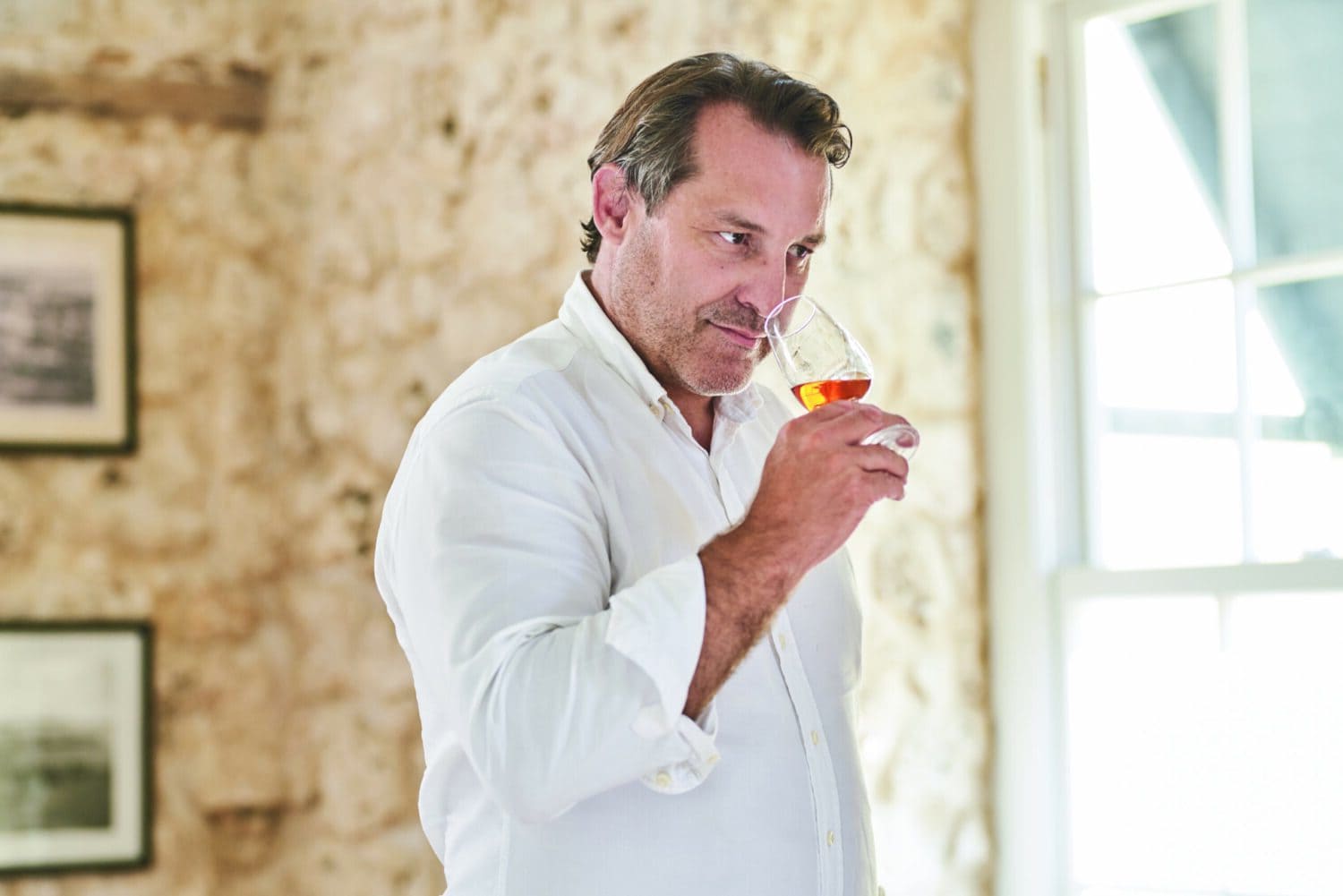
For Barbados distillery Mount Gay, owned by French drinks group Rémy Cointreau, it’s critical to do more than simply pay lip service to sustainability. According to managing director Raphaël Grisoni: “Sustainability is at the heart of everything we do. This is dominated by the fact that we are on a small island, so in everything you do, you feel an impact on the community, on the direct environment.” While sustainability has always been important, “the recent trend forced us to structure and formalise our approach,” adds Grisoni.
In 2019-20, Mount Gay’s corporate and social responsibility (CSR) initiatives related to fuel, electricity, waste, biodiversity, social responsibility, education and government assistance. Looking ahead, the distillery hopes to drive its sustainability plan further with a more ambitious set of directives, including achieving 100% sustainable agriculture by 2025.
Grisoni stresses the inherent link between agriculture and the spirits industry, a connection that consumers are becoming aware of. “The consumer wants to know where the raw material is from,” he explains. “What’s the impact of the way you are planting your sugarcane? The availability of information is becoming more important.”

Sugarcane from Barbados comprises 20% of Mount Gay’s supply, which includes crops from the distillery’s own 350-acre estate. The rest of the supply is imported, but Mount Gay takes steps to ensure environmental and ethical standards are adhered to. “We are very careful about where the molasses comes from,” says Grisoni. “Quality is the first prerequisite, but also how the molasses is produced.” As such, Mount Gay only uses molasses that has been certified as sustainable by the not-for-profit group Bonsucro.
On its own plantation, Mount Gay grows local cultivars of sugarcane and works with a local breeding station. It also enhances biodiversity through crop rotation, establishing beehives and planting trees.
Since it is on a small island, it is important for Mount Gay to implement improved water and waste management practices, says Grisoni. For many years, the distillery has chosen not to irrigate its sugarcane, instead digging a pond to collect water. It also spreads the nutrient-rich spent wash from distillation on its sugarcane fields. “We don’t have the luck of a volcanic island, where you have rivers and lakes; it’s quite dry,” says Grisoni.
Another major goal of the brand is to become carbon neutral by 2030, not an easy feat for an operation that has to import so many essentials. “This part of CO2 impact is very difficult to reduce, meaning we need to find other ways to compensate,” says Grisoni.
As such, Mount Gay aims to use 100% renewable electricity by 2030 and last year switched to natural gas to fuel its stills. Two years ago, the distillery fitted solar panels onto its roof, while next year, it will start work on building a 30-acre solar farm. “We are lucky because we have lots of sun, around 350 days per year. So we can transform it into an engine,” says Grisoni.
The brand is also exploring ways to make its designs more ecological, reducing the weight of its bottles and using recycled materials. “It will become a competitive advantage for brands to be serious about sustainability and not greenwashing,” explains Grisoni. “Communication will be key to explaining how you are doing something for real. It will be difficult to show on packaging, so it’s about how you link your information through QR codes and website videos — I believe in information and I believe consumers want to know more. We need to talk to their palates and their brains.”