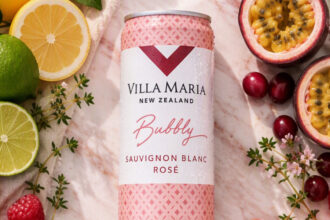



With rosé seen as a serious contender in wine, there has been impressive growth in other quality pink drinks, such as blush Champagne and flavour-led spirits. Richard Woodard reports.
Endlessly Instagrammable and evoking sun-filled summer days, the ‘pink drink’ trend among consumers shows no sign of diminishing. From the pale blush of Provence rosé wine to the massed ranks of candy-pink flavoured gins, the options for the rosé-loving consumer have never been more numerous – and, increasingly, sales are becoming less reliant on seasonal demand.
It’s a thoroughly modern trend that has deep roots, with Provence rosé wine boasting many decades of history. Even relatively recent boarders of the pink drink bandwagon, such as gin and Port, have been fixtures of the beverage alcohol scene for some time.
“For many years, the rosé rollercoaster has had its ups and downs,” says Richard Ryan, co-founder of liquid development at Drinksology Kirker Greer, owner of the Jawbox and Ginato gins. “It once was regarded as a super-sweet wine for those who didn’t actually like wine. But now, there are more variations of great-quality rosé wines readily available to consumers. Not only that, rosé is a midpoint between the freshness of whites and the depth of reds. Its ability to pair with an array of cuisines makes it one of the most versatile food wines around.”
Interest in Provence rosé, in particular, has been fuelled by the buzz surrounding wines such as Miraval (aided by the media soap opera revolving around former joint owners Brad Pitt and Angelina Jolie – Jolie sold her 50% stake in Château Miraval to a subsidiary of the Stoli Group last year; Pitt is contesting the sale) and Whispering Angel, the latter now majority controlled by Moët Hennessy following its 2019 acquisition of 55% of Château d’Esclans. Pernod Ricard, too, moved into the segment earlier this year, buying a controlling stake in Château Sainte Marguerite.
That’s gratifying for a winery owner like Eric Kurver, whose family established Maison Saint Aix in the hills north-east of Aix-en-Provence in 2009, working to maintain and increase the reputation of the region’s rosé wines. Those efforts are now being rewarded.
“Rosé is not just about the hype anymore and has earned its place on the wine menu,” Kurver says. “Nowadays, you don’t just have one rosé on a decent wine menu, you have a lot more choice.”
This feeling of rosé being de-trivialised cuts across the industry into the explosive recent growth of rosé Champagne and spirits. “It’s interesting how increasingly seriously rosé is taken, where previously it may have been seen as lesser than white or red wines,” says Seb Heeley, master distiller at The Spirit of Manchester Distillery. “That respect can definitely filter down through distilleries, but it’s reliant on producers creating quality, flavour-led spirits.”
Spirit of Manchester’s raspberry-infused gin “just so happens” to have a pink hue because it is infused with raspberries following distillation, Heeley notes. “The important thing is to be led by flavour though – ‘pink’ is not a flavour and shouldn’t be the goal.” In other words, losing sight of the quality imperative could risk sacrificing the newly-found premium status of all things rosé. “I see many new creations on the market that I don’t believe in,” adds Kurver. “Several pink gins, pink sparkling wines – and not all are quality.
“It’s not because it’s pink that we can talk about quality. We need to keep investing in the quality of the product and we can’t fool around. Stick to your own strength and think on the long term.”
Nonetheless, there’s a balance to be struck here. Part of the attraction of pink drinks is their informality and positive lifestyle associations, which demand no in-depth knowledge or expertise about wine or spirits production. In turn, this accessibility has enabled established segments like Port and gin to recruit new consumers to their cause.
“Pink drinks existed before the arrival of [our] pink Port in 2009 and pink gin in 2018,” says Constance Descamps, international marketing manager at La Martiniquaise, owner of, Porto Cruz and Gibson’s Gin. “Pink drinks represent an opportunity to open the target, enlarge a range and offer new experiences.”
The most popular drinks served on the rooftop of the Espaço Porto Cruz in Vila Nova de Gaia, for instance, are Cruz Pink-based cocktails, such as the Cruz Fresco, which combines Cruz Pink, tonic, ice and a garnish of red pepper or mint in a wine glass. These types of serve, says Descamps, have helped to “modernise and dynamise” the rather traditional Port category.
Port’s rosé segment was created with the launch of Croft Pink back in 2005 – it took brand owner The Fladgate Partnership three years to get the concept approved by generic body the IVDP, and at one point the company even registered ‘Pink’ as a trademark in the EU (it has since relinquished it).
“Croft Pink brought new consumers and consumption occasions to the Port category,” says Fladgate CEO Adrian Bridge. The company has since moved into the premix segment with the launch of a Croft Pink & Tonic RTD last summer. For Bridge, rosé is simply more accessible than red or white wine.
“Those require people to talk about grape variety, fermentation, the winemaker,” he says. “When you get a rosé, it’s a lifestyle drink. Once you get into rosé, the barriers come down and consumers are not so worried about location, which year it was, the vineyards. Is it a nice drink? Is it fun? Wine can and should be fun.”
As the consumer love of all things rosé expands and diversifies, the scale and breadth of the market are also nailing two historic myths about pink drinks: That they’re predominantly enjoyed by female consumers and are heavily skewed to seasonal summer consumption.
“In the past, it was thought of as a female drink,” says Bridge. “That simply isn’t the case anymore. I think that it has a lot of Millennial reach because it’s easy and you don’t need a lot of wine knowledge to enjoy rosé. It’s very consumer-friendly – there’s no tannin, and less acidity.”
It’s clear that the advent of pink gin and gin liqueurs has helped to de-seasonalise the appeal of rosé drinks further, according to Descamps. “Pink gin is less seasonal. There’s no particular timing to enjoy a Gibson’s ‘Pink & Tonic’ – it’s a good alternative to the traditional Gin & Tonic.”
This is further illustrated by the success of Gordon’s Premium Pink, launched in 2017 by Diageo, which claims the brand extension has been the most successful new spirits product launch in the UK in the past decade – with other significant markets now including Australia, Germany and Ireland.
“The pink phenomenon is especially prevalent in markets where the colour pink has cultural significance,” observes Mark Jarman, global head of Gordon’s, “but potential spans across the globe, as ‘Millennial pink’ has become a trend in fashion and design for both genders, as well as a signal of female empowerment.”
On seasonality, Jarman adds: “The tradition of enjoying pink drinks in the summer is mainly due to the way it is served – e.g. with ice cubes and appetising berry fruit garnishes – rather than because of the colour. We believe there will continue to be a desire for people to enjoy pink Gin & Tonic and spritz serves all year round, as they have consumer appeal and lend themselves to a range of different occasions and moments.”
This growth is leading to increasing segmentation, even within what was previously a relatively narrow product segment, such as pink gin. For instance, Drinksology Kirker Greer’s portfolio includes Jawbox Rhubarb & Ginger – a gin liqueur, lower in ABV and with a sweeter flavour profile – and Ginato Pompelmo, a bittersweet pink gin combining a Sangiovese grape-based gin spirit with Sicilian pink grapefruit and juniper berries.
These products have found success in markets as diverse as Israel, Germany, South Africa and Singapore, and Ryan adds: “We see great future potential for these brands in New Zealand and China, where consumers are starting to embrace new innovations in gin.”
Back at The Spirit of Manchester Distillery, Heeley agrees that consumers “are definitely ready for new flavours”, although he notes the UK flavoured gin market is two to three years ahead of the rest of the world. “The trends tend to start in the UK and then filter over there [to the US and Canada] a few years later,” he says.
Heeley’s also keen to dismiss the notion that pink drinks are only suited to sunny days. “I believe flavoured gins can be enjoyed as a year-round thing, especially in the UK where we’re only blessed with good weather for a month or two if we’re lucky,” he says. “When you find a drink you like, I don’t see any reason why you wouldn’t enjoy that drink all year round, rather than just on a sunny day.”
This article was initially published in July/August’s issue of Global Drinks Intel magazine. For details on how to subscribe, click here.