- Prosecco is still flying off Europe’s shelves, and the trade is confident the tank-method sparkler is not yet at its zenith
- Price sensitivity in the region is driving consumers to champagne alternatives made in the traditional method – although there is still work to be done on building brands here
- NPD is gaining importance through no/low offerings and spritz-led innovations
- Producers are leveraging sporting partnerships to increase brand awareness and provide champagne-alternative toasts
As we head into the heart of 2026, sparkling wine’s sales in Europe can best be described as a mixed bag. While economic pressures are shaping the market landscape, champagne sales continue to fall amid a rising tide of alternatives.
Prosecco still leads the way across the continent, and opportunity abounds for those with NPD budgets, as both the spritz movement and zero-alcohol demand have increased consumption ‘moments’.
Peak prosecco?
When the wine industry talks about declining wine sales globally, there should be a permanent asterisk: *except for prosecco. And, unlike other pockets of growth in the sparkling sector, prosecco is not small fry.
In 2025, according to the Prosecco DOC Consortium, the region sold 667m bottles, a 1.1% rise on 2024. Champagne, meanwhile, continued a three-year decline, dropping 2% to 266m bottles (Comité Champagne).
But could prosecco plateau?
Henkell Freixenet says the “booming” category “is far from having reached its zenith”. Head of communications Vanessa Lehmann points to the still-snowballing spritz trend and the rise of aperitivo culture “fuelling relevance”.
She adds that non‑alcoholic alternatives provide an “additional growth component” that “will play an important role for Henkell Freixenet in the future”. The German group produces non-alcoholic Mionetto and Freixenet lines, and last year launched the Mionetto Aperitivo Kit in full-strength and zero-alc options.
La Martiniquaise-Bardinet’s (LMB) Italy sales manager for Perlino Prosecco, Montse Portela, is a little more coy. “There’s a risk of consumer fatigue in mature markets due to economic pressure, pricing and competition from alternative beverages,” she says.
Portela also warns of prosecco’s dependence on exports for growth, which can “make the sector more sensitive to geopolitical tensions, trade tariffs and changes in global consumption”.
“However,” she caveats, “prosecco continues to benefit from strong brand recognition and its ability to fit many occasions. These keep the category attractive.”
Prosecco’s French ascent
Last year, France overtook Germany to become prosecco’s third-largest market in volume terms, buying 372,000 bottles (+21.1% YOY, Prosecco DOC Consortium).
“France is experiencing the same behavioural shift we see in many markets internationally,” says Lehmann. “Sparkling wine is becoming less tied to fixed occasions and more integrated into everyday social life.”
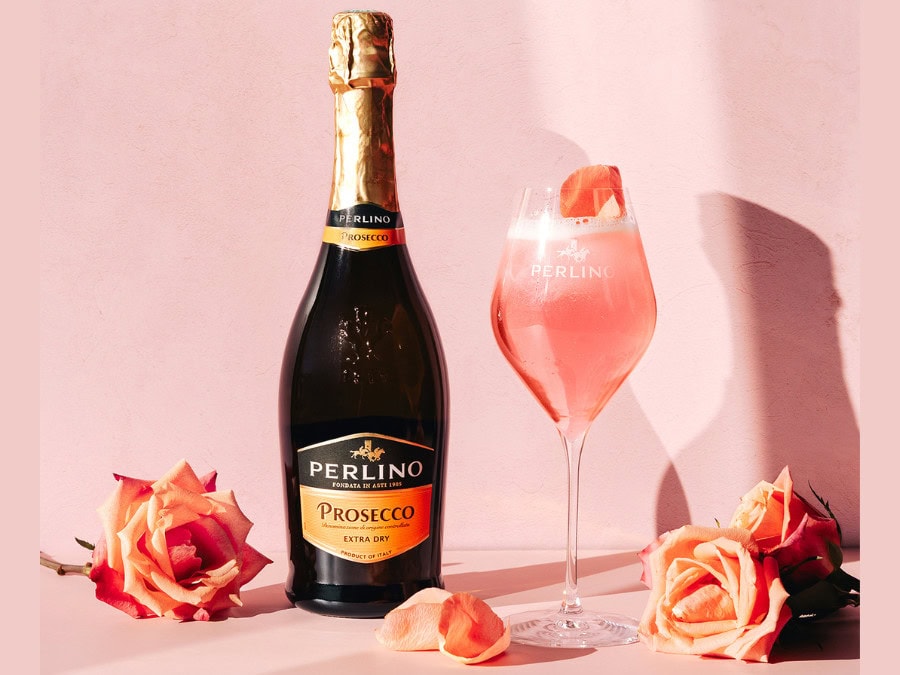
The feeling is mirrored in LMB’s French office. Head of marketing for the group’s Perlino brand (below) in the country, Benoît Paris, notes growing drinking moments and “a trend toward diversification of spritz cocktails” – notably hugo and limoncello.
On an economic note, he adds: “[The French] appreciate high-quality sparkling wines but are facing purchasing power constraints. As a result, they’re drinking less champagne and increasingly replacing it with Southern European sparkling wine, such as prosecco and cava.”
Paris believes devaluation of the category is the biggest threat to growth. “The prosecco market in France is heavily promoted,” he explains, “and private labels are developing rapidly.”
Trento-headquartered Gruppo Lunelli, meanwhile, is seeing an inflationary squeeze in prosecco strongholds like the UK and Germany, where there is “more and more pressure on prosecco prices” as wages continue to lag behind inflation.
“High-end prosecco is a niche, and what’s growing is rather the low end of prosecco production – not in terms of quality of the wine, but in terms of prices that are accepted on the market,” says head of communications Camilla Lunelli.
Grupo Lunelli has turned its attention to the US for Bisol1542, where “we feel less pressure on price and more appreciation for the quality of wine”, she says.
Looking forward, Lunelli highlights other non-European markets of interest such as India, Japan and Brazil. So is the group moving its attention outside Europe entirely for Valdobbiadene-made Bisol1542? Not quite. As well as France, Lunelli says the Nordics are a hot prospect.
Traditional-method alternatives
With the exception of cava, traditional-method wines outside of champagne are faring well. For example, in 2024, IWSR data shows that sales of crémant grew 6% year-on-year in Europe. Between 2024 and 2029, the alcohol insights company is forecasting a five-year CAGR of 5% for the sub-category.
In France, LMB says crémant “is expanding quickly as an affordable premium alternative” and is “winning share”. To capitalise, Henkell Freixenet launched a rebrand of its Gratien & Meyer Loire crémant in February at the Wine Paris trade show, featuring an Art Deco label and cream-coloured foil.
For beleaguered cava, severe drought in Spain’s Penedès region over the last three years has “considerably reduced production and supply capacity”, explains DO Cava. In 2024, year-on-year sales dropped by 7%, but IWSR predicts this trend will slow in the next five years, projecting a CAGR of -1%.
“The drought has had a significant impact on cava’s performance”, says Henkell Freixenet’s Lehmann, causing “substantial pressure on availability, costs and pricing.
“Despite these challenges, demand continues, and we see opportunities, particularly in markets where cava’s identity as a high-quality traditional-method sparkling wine resonates with consumers.”
Regional Italian bubbles
Amid continued price sensitivity in Europe, Lunelli sees potential for regional Italian sparkling, like Trentino’s trentodoc, Lombardy’s franciacorta and Pietmont’s alta langa. Extensive brand building is needed for these wines, however.
Consumer recognition of trentodoc is “growing and doing very well” in Italy, Lunelli says, but elsewhere it is “still limited to opinion leaders” like sommeliers.
One reason for this is the fiddly naming of Italian regions compared to the likes of crémant, which sweeps several appellations together under one term.
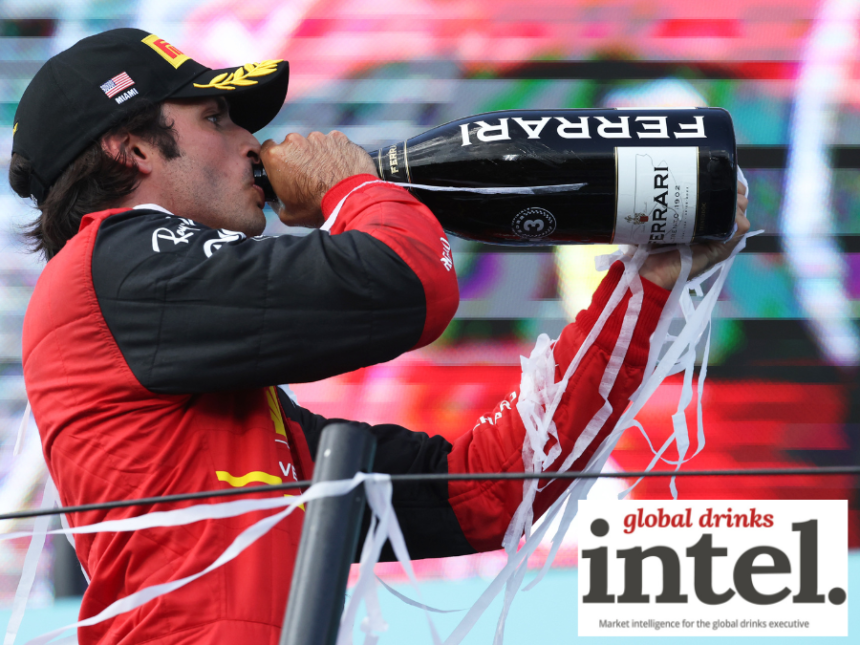
“That’s where the brand comes in,” says Lunelli. She points to “eye-catching” limited-edition bottles released during the group’s partnership with Formula 1 for flagship brand Ferrari Trento, “which worked very nicely outside Italy”.
Gruppo Lunelli made huge strides in putting trentodoc on the map when it penned a sponsorship deal with F1 in 2022, which ended last year. Lunelli says sporting partnerships are still a focus moving forwards, and the family-run company is “working on something” new in that area.
English fizz
Sales of English sparkling flattened in 2024 – hit by “suppressed consumer confidence and a fall in hospitality outings”, according to trade organisation WineGB. While last year’s figures are not yet in, CEO Nicola Bates “remains incredibly confident about growth”.
Indeed, publicly-listed winery Chapel Down started 2026 with the news it had grown 12-month sales for its traditional-method sparkling range by 28% to GBP13.6m (US$18.6) in 2025 – topping 1m units annually for the first time in the Kent-based company’s history.
“One of the big drivers of that is a generational shift of Millennials really adopting English sparkling wine,” CEO James Pennefather says. “Part of it is because that lighter, fresher style of wine is more on-trend than the heavier, oakier wines. But also, the wine tourism that English vineyards offer is very much in line with what Millennials like: authenticity, heritage, stories, experiences [and] craft.”
Though brand building takes time, Pennefather says recognition is reaching “a tipping point”, thanks to a mix of tourism, marketing activity, sporting sponsorships and Chapel Down’s recent listing on AIM, a submarket of the London Stock Exchange. The latter, he says, “really has helped with general word of mouth and advocacy”.
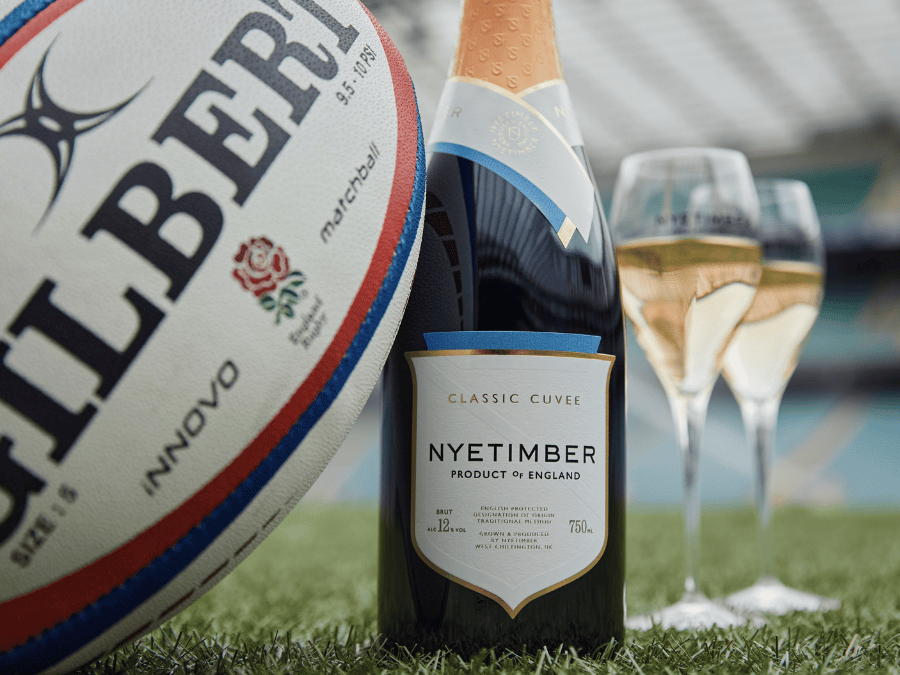
Sussex-based peer Nyetimber also cites sporting partnerships as a key pillar of brand building – with recent sponsorships including British Tennis and England Rugby (above). “Associations between strong brands and partnerships is very important,” says group head of sales for Europe & GTR, Karl Thögersen.
English wine producers are also beginning to look overseas more seriously. In 2024, exports grew by 35% to 817,000 bottles (WineGB) – although this still only accounted for 9% of total sales. Thögersen maintains that brand awareness in exports is “quickly growing” but admits “we’re always ten years behind in the UK”.
While prosecco continues to dominate the European sparkling wine landscape, there is still huge scope for others to grow. Financial pressures continue to weigh heavily on the European consumer’s wallet, leaving space for champagne alternatives that don’t carry the same price tag.
Whether niche regions can steal more of that share is yet to be seen but, as Lunelli puts it: “If you have just a tiny portion of champagne drinkers turning to a different traditional-method sparkling, that still has a big impact.
“We do not need a complete change in consumers to have a significant rise in growth.”