

Zero-proof gins have been at the forefront of the rise of the no/low-spirits movement during the pandemic. Big brands such as Beefeater, Tanqueray and Gordon’s have all introduced no/ low gin expressions in the past year.
A key point in the messaging around these products is they were made with the same botanicals as in the original versions, suggesting the only difference is the alcoholic strength. This point was highlighted frequently in many English language media stories about no/low gins, according to a survey of 1,170 articles published between March and April this year, according to media analytics firm Commetric.
“Consumers do recognise an alcohol-free gin category, and early alcohol-free spirits were designed to be drunk like gin,” says IWSR IWSR research director Humphrey Serjeantson. “And as leading gin brands such as Gordon’s, Tanqueray and Beefeater launch 0% or low-ABV variants, the category is set to grow strongly as the level of consumer awareness of, and trust in, these brands is very high.” Gin-based RTDs have also enjoyed strong growth during the pandemic.

Hendrick’s was keen to ensure its entry into this growing subcategory was anything but a me-too exercise, according to Hendrick’s global gin ambassador Ally Martin. “Hendrick’s take on RTD was never going to be expected or standard. This year we introduced a Batch & Bottle Hendrick’s Gin Martini to bring the bar experience into the home and provide a world-class gin martini to elevate the at-home experience. “Master distiller Lesley Gracie and I worked with five incredible bars from around the world, including Yaldy in Germany and Nauticus in Edinburgh, to develop the perfect iteration of a Hendrick’s gin martini. It can be poured directly from the fridge.”
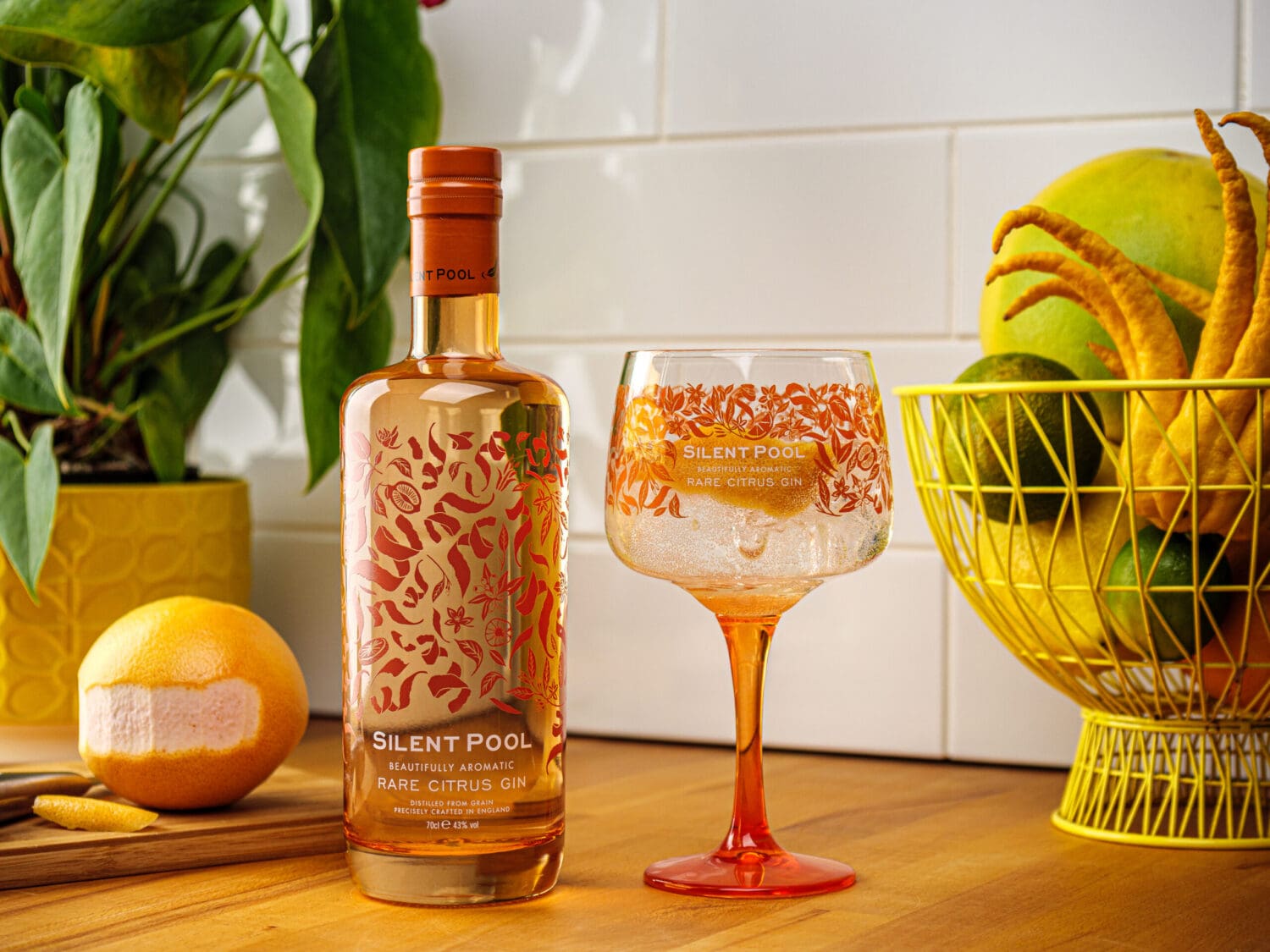
Silent Pool also entered the RTD category in 2021, introducing a double strength 8% ABV gin-and-tonic in a 25cl can in March this year. “Liquid on lips is a core component of our brand growth strategy and RTDs allow us to sample a finished drink with consumers who otherwise might not go out and purchase a full-size 70cl bottle of our spirits,” explains Silent Pool managing director Ian McCulloch. “Our ambition is to penetrate consumer occasions that we otherwise might not feature in due to being a super-premium spirit. We also anticipate some recruitment of brand advocates at a more accessible price point.”
Flavoured gins continue to grow
Flavoured gin (including gin liqueurs) continue to be the growth driver for the category across Europe. The IWSR data reveals that flavoured gins accounted for 18% of total gin volumes in 2020, the subcategory having posted a phenomenal CAGR of around 140% between 2010 and 2020. In contrast, traditional gin grew just 6% over the same period.
One of the biggest flavoured gin launches last year was Bombay Bramble, a blackberry and raspberry-flavoured gin. According to Bombay Sapphire global vice president Natasha Curtin, Bombay Bramble was the top-selling premium flavoured gin in France and Germany over the past year and helped recruit new consumers into the gin category. “Bombay Bramble is our first flavoured gin and the success has meant we have launched the Bramble & Tonic as part of our latest RTD range. Bombay Bramble began its roll-out across Europe in spring last year and has just launched in North America.

“Last Christmas, to continue our mission to support emerging creative talent, we partnered with three up and- coming UK artists to design bespoke labels for Bombay Bramble, inspired by the product,” she adds. “The limited-edition Bombay Bramble ‘Ripe for Discovery’ bottles were available exclusively from Selfridges. As a result of the campaign, we saw sales of Bombay Bramble peak during this period and we saw a peak again last Christmas around the gifting season.”
A more minor trend in the European gin market has been the increasing popularity of seasonal gins. A case in point is Martin Miller’s, which introduced two seasonal gins last year: Summerful, which boasted a third distillation composed of Arctic thyme and rosemary; and Winterful, whose third distillation contained mandarin and cinnamon.
“Initially, we launched in the UK market in 2020 and we have been rolling both out into additional markets throughout 2021,” explains Arturo Illàn, global brand manager at Martin Miller’s Gin, a brand owned by Spanish firm Zamora Group. “They are both amazing gins and are not flavoured since the additional botanicals are distilled rather than being simply added. We have already received awards for them from our peers, and these innovations have been welcomed by retailers and are contributing to the brand’s performance this year.”
Another gin to launch a seasonal range is Edinburgh’s The Secret Garden Distillery, which was set up in 2017 by former wine-merchant-turned horticulturist Hamish Martin, who makes gin with botanicals grown in his botanical garden. Last year the company has created a new look for its Seasonal Edition Christmas Gin, which features the seasonal botanicals of cinnamon, ginger and cardamom presented in a red-tinted bottle and a label made from 30% grass.
“Our new seasonal range is inspired by nature — just as the seasons change, so do the scents and flavours,” says Martin. “Christmas Gin is a delight to make, it fills the senses with all the flavours you associate with Christmas and balances so well with our base botanicals of juniper, coriander, angelica root and winter savory.”

The move by gin towards flavours is leading to considerable category blur, particularly between gin and liqueurs. A good example is Kranebet Botanic Juniper Liqueur, produced by Italy’s Antiche Distillerie Riunite, is launching internationally this year in the US, the UK, the Netherlands and Australia. Kranebet is not a gin, but a 40% ABV juniper liqueur enriched with a selection of botanicals including gentian roots, Roman wormwood, coriander and quassia. The spirit was first created in the Italian pre-Alps town of Asiago in 1924. The brand was relaunched in Italy by Antiche Distillerie in 2018, and now an international expansion is planned for this year.
“Kranebet is a product that stands out for its versatility,” says Antiche Distillerie CEO Nicola Dal Toso. “It’s excellent enjoyed neat and chilled or shaken with ice for a classic offering. It’s impossible not to try it in cocktails, to which it gives a sweet note of juniper, emphasising the drink’s softness and aromaticity. The most successful proposition is the KranebeTonic, refreshing and aromatic: one part Kranebet, three parts tonic water and garnished with three juniper berries and lemon zest.”