

This article was initially published in the October issue of Global Drinks Intel magazine. For details on how to subscribe, click here.
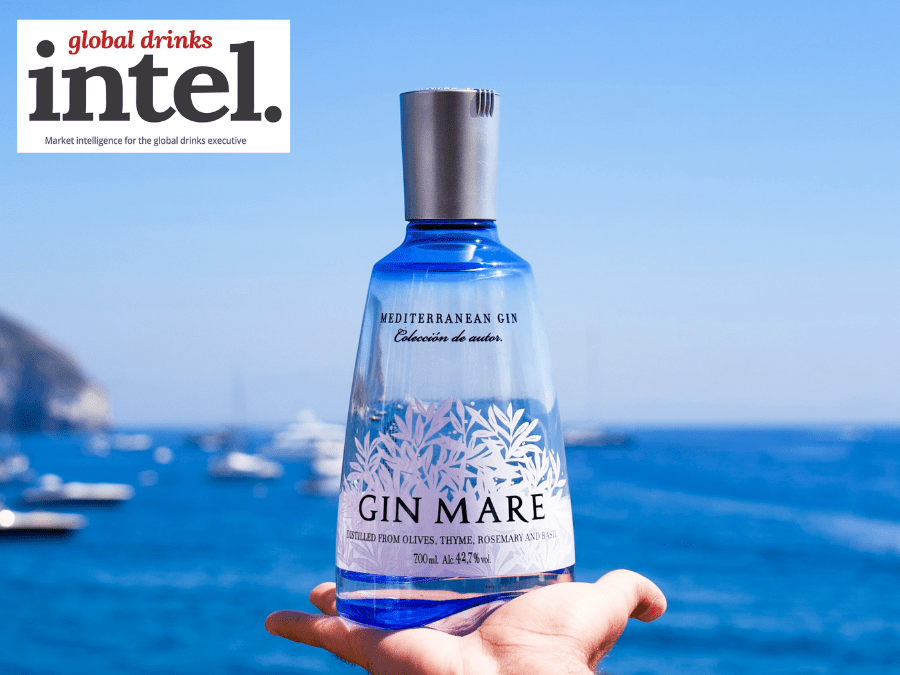
In early September, Brown-Forman added to its gin portfolio, announcing the acquisition of Spanish brand Gin Mare. As the premium-and-above end of the gin segment continues its inexorable rise, Global Drinks Intel hears from Alfonso Morodo Alcalá-Galiano, the co-founder & CEO of Gin Mare co-owner Vantguard, on why the time was right to cut the cord.

Global Drinks Intel: How did Gin Mare come about in the first place?
Alfonso Morodo Alcalá-Galiano, CEO of Vantguard: My partner, Antonio Pardo, and I were both in the drinks industry, working with brands in both soft drinks and spirits. We decided to start a project together with the idea of getting other investors in that would allow us to get into bigger projects, so we started Vantguard in 2006.
We invited other investors in and started distributing some brands in Spain. The company started growing quite well, but we always had in mind that we wanted to have our own brands in the future. In 2008, we were distributing a gin that was doing quite well. That drew the attention of the Giró family [owners of MG Destilerias], who contacted us about a gin they were working on and asked if we’d be interested in working together on the project. The concept was a luxury Spanish gin, but we thought that was too narrow. To position it as Mediterranean, we believed, would really change the game.
It took us about two years to finish the project and we launched Gin Mare in 2010. The family were in charge of production, we were responsible for the sales, marketing and distribution worldwide.
Gin has always been successful in Spain, but when we launched Gin Mare, there was a little craze in the country, started by brands like [William Grant & Sons’] Hendrick’s. We were able to join the craze at the right time and this helped us to work on the Spanish-style Gin & Tonic serve; the balloon glass, full of ice and with a garnish. It comes more from the cocktail scene.
It took a while in the UK, which after Spain, was our second target: If you’re successful in the UK, you’ll be successful everywhere else in the world. The UK thought the product was weird: At that time, the botanicals – rosemary, thyme – hadn’t been seen very much in gin and the flavour profile was hard for bartenders to understand. Also, the traditional serve for gin was the long glass with half gin, half tonic – very strong! You can imagine the resistance we had in the market – It was tough.
Slowly but surely, the UK consumer – especially the younger generation – started to grasp the concept of a more-premium way to drink Gin & Tonic. What always works in this industry is if you go against ‘the older people’. When the consumer drinks something that their parents don’t, then you get a consumer with a stronger relationship with that type of drink.
So, everything in the gin category at that time helped us grow the brand a lot faster than if we’d been on our own.
GDI: Gin Mare is working a few unique selling points at the same time – How much of the brand’s success has been down to covering as many bases as possible?
AMAG: The more you cover all these different areas, the greater the likelihood of success. You never know where success is going to come from, but you need to have many hooks – ten hooks is better than one!
It’s not easy: Maybe the market isn’t ready for your type of drink, maybe the consumer is happy with their drinking habits and you’re trying to change it too much, or maybe they just don’t like your product. There are always risks with a brand proposition, but you have to come with something that’s new or at least something that’s done in a different way.
GDI: Did you have a drinks brand in mind to use as a roadmap for Gin Mare?
AMAG: The more you copy, the bigger the risk that you’ll commit the same mistakes. You’ll always be second.
Of course, you have to have your eyes and ears open to understand what the consumer’s looking for. We did study what other gins were doing: Hendrick’s at the time was changing the game by emphasising the use of cucumber, but then, Bombay Sapphire was also a game-changer, transmitting luxury in a way that hadn’t been seen before in gin.
While we weren’t the inventors of the Spanish Gin-Tonic serve, we were the first to utilise the concept. We didn’t copy anyone to do that.
It’s important to see what other players are doing, but not to copy. It’s the uniqueness that we look for in brands, not what has made others successful.
GDI: How did you choose the price point for Gin Mare [between US$36 and $40 per bottle in the US]?
AMAG: It was a conscious decision, not so much on Gin Mare, but on how Vantguard develops brands. We’ve always thought about coming in with products that are unique and add value, both in liquid and concept. With Gin Mare, we decided to distil every botanical independently – it’s batch produced eight times, then blended. That’s more expensive. We also pay a high cost for a differentiated bottle design that tells the consumer a story about the brand.
We’ve always known that any brand we launch is going to be premium or super-premium.
GDI: What has been Gin Mare’s trajectory over the last 12 years?
AMAG: The Spanish launch was in March 2010, then in the UK around five months later. Belgium, The Netherlands and Germany followed soon after. Our goal was always to be an international company, we don’t see ourselves as a Spanish company. Today, we have volumes of around 170,000 nine-litre cases and our four biggest markets are Spain, the UK, Germany and Italy – Consumers in Italy really connected with the brand, even better than the Spanish!
I’d always understood the US was a very tough market, due to the challenges of distribution. We didn’t have the resources to really tackle the market, so we decided to wait. It took us about three years to get sales going. Things have been going well; around 90% of our sales were in the on-trade. With COVID, everybody went home, yet we’ve been able to maintain our sales levels in the US. We were at a small scale, but consumers were very loyal to the brand.
We knew it would take five years for us to get to the scale to really hit the US. When we met with Brown-Forman, we knew they could really make it for us there. One of the reasons for the sale of Gin Mare is to seed dramatic growth in the US. It’s time for this baby to leave home!
GDI: How did the relationship with Brown-Forman develop?
AMAG: Many companies have shown an interest in Gin Mare – This wasn’t the first approach. We never really wanted to sell the brand, we thought we were doing well on our own. About three or four years ago, I met with someone on the M&A side at Brown-Forman who, although they didn’t make an offer, expressed an interest.
Nothing more happened there, we did receive an offer from another company, then Brown-Forman approached us again, this time with their own offer.
They’re like us in many ways – They build brands, and they provide the security our brand needs for its future growth.
GDI: How much did you agree on?
AMAG: It’s in the high multiples, but I can’t disclose the sum. It’s a very good agreement!
GDI: Is it the attraction of the US that prompted the sale?
AMAG: The drive and desire Brown-Forman showed to make Gin Mare a success in the US played a big part in our decision. Of course, money always talks, but that wasn’t the main attraction. We didn’t just want to sell – We want Gin Mare to keep growing and be successful.
The US accounts for around 50% of the premium segment in gin. Gin Mare has been successful worldwide, yet it’s not even in the top 25 gin brands in the US. Taking Hendrick’s as an example, we’re between 50% and 100% of its sales in the markets that we both sell in: In the US, we’re probably around 3% of Hendrick’s sales.
GDI: Are you preparing to walk away from Gin Mare?
AMAG: The agreement is that we’ll be involved with the brand for the next three to five years. How involved will be up to Brown-Forman. Vantguard is going to use the money to reinforce what we do – We’re brand creators and we want to keep doing what we love.
We have ten more babies to keep nourishing, but our door’s open to provide any support our first-born needs!
This article was initially published in the October issue of Global Drinks Intel magazine. For details on how to subscribe, click here.