This article was initially published in the April issue of Global Drinks Intel magazine. For details on how to subscribe, click here.
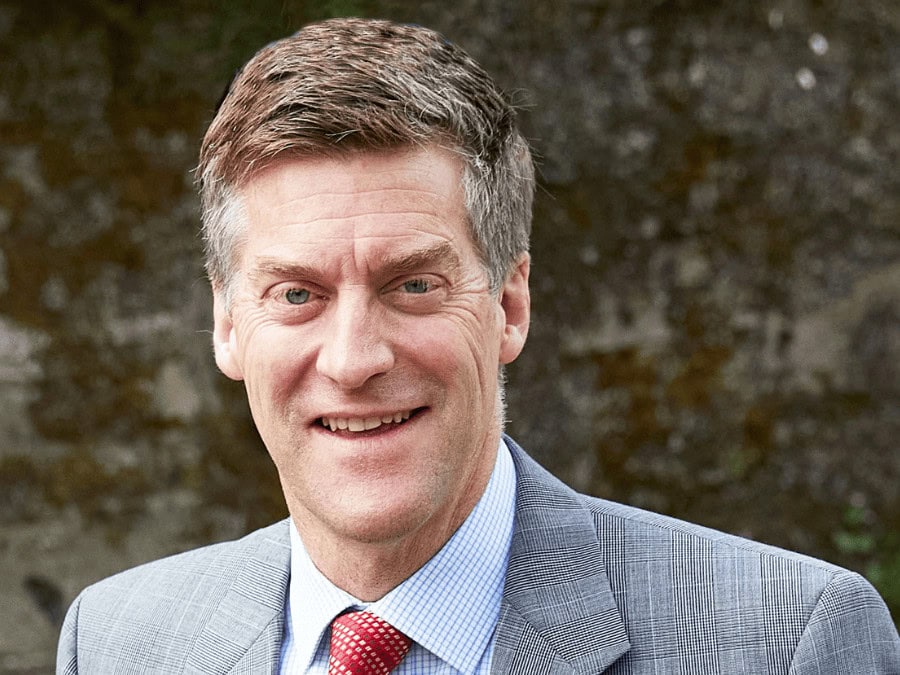
Henry Ashworth has headed up the alcohol industry-funded International Alliance for Responsible Drinking since 2017. Earlier this year, Global Drinks Intel caught up with him in London to dig deeper into this increasingly important aspect of alcohol brand owners’ Environment, Social & Governance efforts.
Global Drinks Intel: What problems was your organisation created to solve?
Henry Ashworth, president of IARD: The IARD brings together the global leaders of the biggest beer, wine and spirits producers on the issue of reducing the harmful use of alcohol. We’re the convenor of these industry leaders who are taking the most visible, active steps in this area.
We currently have 13 full members and one associate member. We look at what each of them is doing and bring it together in terms of standards. Our job is to raise standards through their influence – we’re trying to be the pinnacle of a wider movement where standards can be mapped against changing trends in areas including drink-driving, underage consumption, drinking during pregnancy and heavy, episodic drinking. We want to be active participants in the global alcohol strategy and in the UN’s non-communicable diseases strategy. We believe we’ll make more progress more quickly by having the private sector work with the public and not-for-profit sectors.
GDI: Is there a template for this approach in other industries?
HA: I think other sectors look at us when it comes to how self-regulation works with government regulations in marketing. For example, we support and advocate for legal purchase age – it’s an adult product. That gives us a clear marker of who should be able to receive advertising or marketing and who shouldn’t.
I do think other sectors have been ahead of ours on how to address product packaging – alcohol producers are all looking at that area differently, there isn’t a right or wrong answer to it.
GDI: You’ve ‘only’ got 13 members – What are the barriers to entry to joining the IARD?
HA: Back in 2012, the global CEOs put out a set of producers’ commitments around alcohol and health. And, since I joined IARD in 2017, they’ve made other commitments. We expect the CEO of a company that isn’t yet a member to sign up to the same commitments. There has to be a meeting of minds when it comes to intent, even if implementation may be a little bit behind.
A new member would have to sign up, for example, to the e-commerce standards that we developed with many leading e-commerce platforms during the lockdowns. They’d also need to sign up to consumer information standards.
It’s been incredibly helpful that the UN has given our industry a laser-like focus to take concrete steps to eliminate advertising, marketing and sales to minors. For us, it’s about identifying the further steps we have to take, in order to show we’re part of the solution.
The way to engage with other producers is to start with a set of standards, then embed them into your value chain.
GDI: Do you prospect for new members or wait for them to come to you?
HA: It’s a bit of both. You can spend a lot of time encouraging a company to become a member when it’s just the wrong time in their particular journey. My experience is, when a CEO realises this is an important agenda that they’ll make better progress on by being part of the club, then their progress is much quicker.
The biggest change I’ve seen in the last six years is the visible leadership of the CEOs in making public commitments. By doing this, they send a signal through their entire organisation. When a CEO sees a like-minded group of other CEOs with the same intent and sees it working, then that’s the game-changer.
GDI: How loud is the mood music coming from authorities currently?
HA: The thing that makes the biggest difference is the movement of national trends: If they’re moving in the right direction and the industry can demonstrate that its actions are supporting those downward trends, then some of the noise goes down.
IARD doesn’t operate in one single country – some are moving in the right direction, while some are going against the flow. Covid has been an extraordinary, natural experiment where lots of what people thought were the standardised ways of doing things have turned out not to be. There’s been a noticeable trend in some countries, for instance, where people are drinking less, but harms from alcohol have been going up. That shouldn’t happen, according to the public health model. Of course, we haven’t seen the official statistics from lots of these countries yet.
GDI: What surprises did the pandemic provide?
HA: I don’t think it caught us by surprise, but it became very clear very quickly that as the on-premise was closing down, e-commerce was going through an explosive growth phase. The global CEOs had their fingers on that pulse and gave us clear instructions very quickly to develop something around e-commerce. The authorities weren’t looking at it, they didn’t have an understanding of how these nascent businesses were evolving and regulation takes forever.
The e-commerce standards are a really good example of how the private sector can engage. There’d been some excellent work undertaken in Australia between industry, government and the public health community to work out how to build these standards in the country. We took those standards to other e-commerce platforms around the world and brought them together with our producer members – those platforms joined because our members told them it was in all of our interests that we set some standards, and fast. We went through a testing process with public health colleagues – we didn’t do it in isolation. Within a year, we got these standards launched and they’re now becoming either self-regulatory or co-regulatory standards at a national level.
The other thing that happened because of Covid – and I think it’s a much longer burn – is consumers started to think about what’s important to them. When the on-premise closed, it suddenly became so visible how much people value their social and mental wellbeing as well as their social networks. There’s been a rebalancing of the understanding of what wellbeing means – it’s no longer simply physical wellbeing or lack of disease. Into that feeds a huge amount of innovation we’re seeing now in areas such as no- & low-alcohol, premiumisation and the focus on the experience.
GDI: How has the marketing of alcohol changed in recent years?
HA: We’ve always made the argument that digital technology is an enabler of responsibility. For example, it’s much easier to be able to prevent minors seeing alcohol marketing in a digital space than in an analogue space.
At the moment, the discourse around social media is hot. From our perspective, these platforms offer the best solution to target marketing to the groups that are allowed to buy alcoholic products and to avoid those groups for whom those products are not appropriate. I’m definitely a glass-half-full person when it comes to the opportunities in digital technology.
That said, marketing is clearly evolving: We’ve all seen the rise of influencers and there definitely weren’t sufficient controls in place. What we’ve realised since 2012, when IARD members committed to placing responsibility clauses in all contracts with advertising agencies, is that private sector regulation is a legitimate form of regulation. That’s also become increasingly recognised by the public health community. Applying this to influencers, we’re ensuring they’re abiding by the same rules as paid-for advertising in other forms.
Even with the speed of evolution, the marketing protections become easier rather than more difficult.
GDI: Has brand owners’ attention towards responsible consumption been driven more by investors than consumers?
HA: It’s driven by three things. There’s no doubt that investors want to see not what companies have to do in order to be consistent with their values, but what they are choosing to do. Consumers always lead innovation – as consumers grow more thoughtful about their health, wellbeing and lifestyle, brand owners innovate to create opportunities in no- and low-alcohol.
You didn’t mention employees, who are increasingly voting with their feet by choosing companies that share their values. I believe that ESG reporting is a factor of this tri-partite approach, all of whom are looking to see that companies are walking the walk. IARD’s role is to help our members prove they can set higher standards and are leading the industry.
GDI: What impact does an economic downturn have on drinking responsibly?
HA: I don’t think we’ll know for a bit. The trend’s movement is so fundamentally different as the next generation, which sees alcohol differently, comes through. The cost-of-living crisis will change things, but the generational shift is so strong and that’s what creates the social norm.
You only have to look at the change in the level of responsibility when it comes to alcohol and the workplace – we’re on a positive trajectory.
GDI: Will IARD eventually become redundant?
HA: It’s very difficult for the global brand owner CEOs to come together without a convenor. This particular area is existentially important to them all as they work together to raise standards.
This article was initially published in the April issue of Global Drinks Intel magazine. For details on how to subscribe, click here.
This article is available to Global Drinks Intel members only.
Click below for details on how to join the Global Drinks Intel community.
Already a member?
Log in here to read the article in full.
If you work for any of the following corporate subscribers to Global Drinks Intel, head here to activate your access.
- AB InBev
- Bacardi
- Campari Group
- Diageo
- Moët Hennessy
- Pernod Ricard
- Proximo Spirits
- Suntory Global Spirits
- William Grant & Sons