Global Drinks Intel: Pernod Ricard’s promoting water?
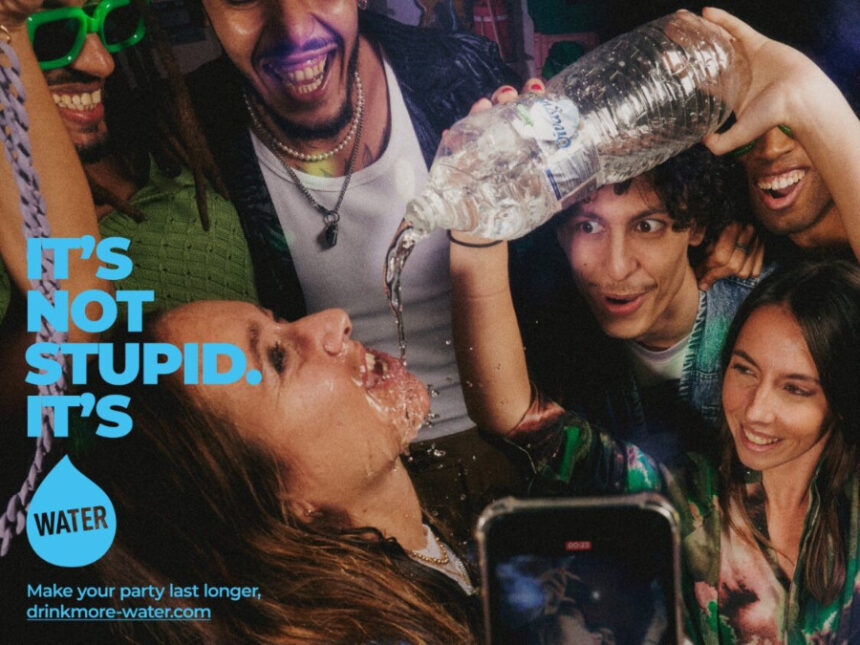
Laurent Scheer, Pernod Ricard VP of global public affairs & alcohol in society: Well, we don’t have any equity in Evian. We’re trying to help consumers pace themselves when they have a glass of one our brands – one way of doing so is with water. ‘Drink More Water’ is an international, corporate programme, entirely funded and led by Pernod Ricard, to encourage moderate alcohol consumption.
This second round will run in around 60 markets around the world.
GDI: You’re not leveraging your brands in any way.
LS: We’re running a combined campaign using the company’s marketing techniques for the sake of prevention.
We’ve had a long partnership with the Erasmus student exchange programme, where we’ve helped them to promote responsible partying – exchange years can get pretty wild. We hit the stumbling block of Covid, when none of these events were happening, so in 2021, we chose to run a digital campaign. The first season of ‘Drink More Water’ garnered 400m views on digital platforms. We also rolled it out to music festivals.
GDI: Where’s the top- or bottom-line benefit for Pernod Ricard, the alcohol spirits brand owner?
LS: We’re demonstrating that we’re part of the solution to alcohol abuse and not part of the problem. We’re trying to solve the problem. We want to provide consumers with practical tips to help them.
GDI: Why isn’t this a pan-industry initiative through the likes of trade association the International Alliance for Responsible Drinking?
LS: I happen to be the chairman of IARD at the moment! We (IARD’s member companies) have agreed to pull together a number of resources, where we deliver collective disciplines. Each company has their specifics in terms of how they want to do that.
IARD is a club where we all share ideas. Maybe, one day, we’ll end up with a collective campaign, but we’ve decided to do our corporate campaigns on our own. That doesn’t prevent us from acting collectively, for instance, in terms of marketing and labelling disciplines.
We aren’t going to mutualise everything in IARD – we all have our different levels of development, strengths and product lines.
GDI: The impact of this kind of message would be much stronger if you pooled your resources.
LS: Maybe it would, but from a practical perspective, it was a natural development for us because of the existing partnership with Erasmus. It doesn’t prevent us from doing things collectively, for example, the ‘Made to be Measured’ campaign by the Scotch Whisky Association in the UK. We’re proud to be part of this collective effort, but it doesn’t prevent us from running our own campaigns.
In this area, more is better. We all want to drive down alcohol abuse and we all have different ways to do that.
GDI: What age range are you targeting for ‘Drink More Water’?
LS: It’s 18 to 30, or 18 to 35 depending on geography. We’re looking at young adults who have a partying mindset. We want to talk to them in a way that’s not boring, not corporate, not institutional.
From a classic marketing perspective, we want to focus on one age group, to help change behaviour.
GDI: And what of the more mature consumer who isn’t moderating their alcohol consumption?
LS: We try to come up with different initiatives for different age groups. For them, we have QR codes on our brands’ bottles that deliver advice. We’ve come up with geo-localised technology that tailors the advice to the market’s drinking guidelines.
GDI: How much does an activation like this cost?
LS: We’ve spent several million Euros over several years.
GDI: Is your budget affected by Pernod Ricard’s sales performance?
LS: There’s no correlation. As long as there’s alcohol, there’s a risk of people abusing it. We cannot afford to stop the prevention initiative. What shape and form it takes will have to evolve. We’re going to have to find other ways in the future to sensitise consumers.
GDI: How confident are you that younger consumers are going to respond to the campaign’s imperative tone?
LS: It’s as far as possible from a moralising, patronising approach. It’s making fun of what some people do when they get drunk. By using humour, we hope to have more impact than a finger-wagging approach, which people ignore.