

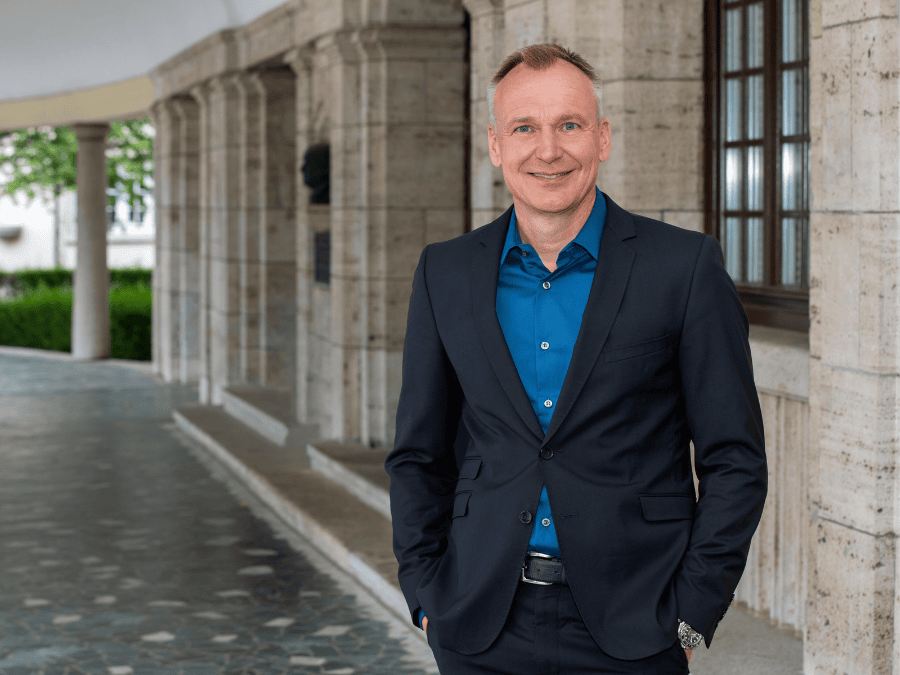
Last month, sparkling wine giant Henkell Freixenet flagged “tense market conditions” when it announced its 2024 financial results. Shortly afterwards, CEO Andreas Brokemper sat down with Global Drinks Intel senior reporter Henry Mathieu to talk through the company’s chief concerns for the year ahead, including tariffs and drought.
2024 was a challenging year across the wine and spirits industry. How did Henkell Freixenet perform, and what were the key factors that impacted your results?
We had slight [sales] growth of 1.5%, which, for sure, doesn’t meet our expectations; the years before, we were growing faster. But on the other side, we needed to realise that it was a really tough year for the entire industry.
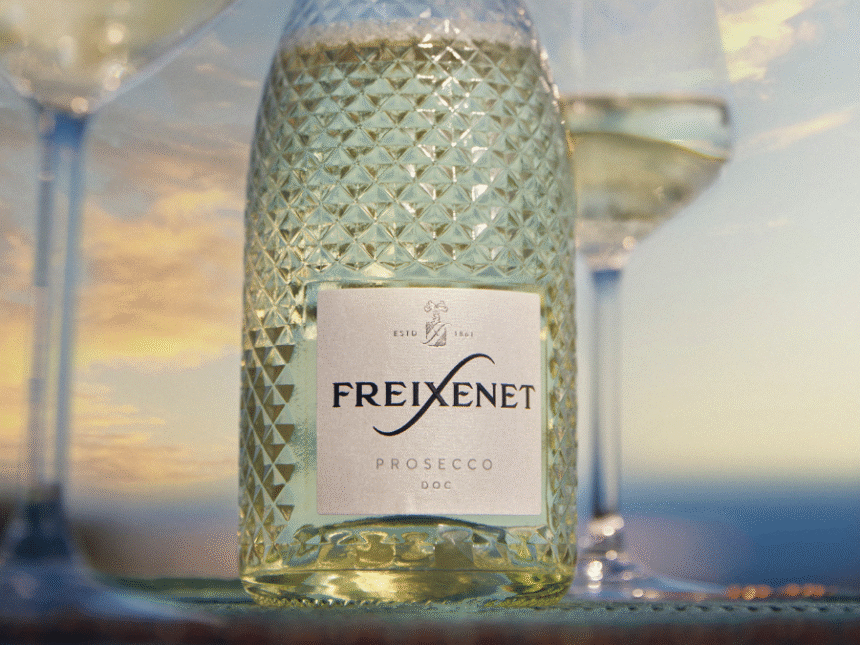
From April to July, we couldn’t promote our number one brand, Freixenet, in its most important market, Germany. This was due to a shortfall of Freixenet Carta Nevada based on the very low harvest that we had in 2023, and an even weaker harvest than normal in 2022. By coincidence, these four months are always very strong for the Freixenet brand, where a lot of consumption – summer celebrations and so on – occur. So, that had a deep impact on our numbers.
Germany was negative on Freixenet, but our Italian portfolio showed significant growth last year. In the same way, Mionetto grew double digit, and that’s first of all thanks to the development of our Prosecco DOC Treviso, which has seen significant growth in all Eastern European countries, starting with Czechia, Poland, Slovakia and on the lower level, Hungary and Romania.
Even in the US, which didn’t show much growth, we performed better than the industry.
You recently announced a US distribution deal for Korbel Champagne Cellars. What’s your strategy here?
One important element of our business model is that over the last 20-25 years, we started to become the specialist globally in sparkling wines from different denominations. From France, we have champagne and crémant. From Spain, we have cava. From Italy, prosecco and asti. From Germany, German sparkling wine, and English sparkling wine as well.
There’s another region that has a significant part of the global sparkling wines, which is California.
I’ve known Korbel California Champagne since I first joined the industry. It’s an icon. In the US, it’s a very strong brand with a long history. Our own California brand, Gloria Ferrer, is much smaller. So when we add Korbel to our US portfolio, we grow our relevance and get into a position where we have the widest portfolio of sparkling wines to offer to the national and regional chains as well as to the on-premise.
Prosecco continues to dominate the sparkling category globally. How do you explain its ongoing success, and is that trend sustainable?
It is one of the most exciting developments in the entire wine industry over the last 30, 40, 50 years. It’s only 15 years ago that the denomination of prosecco was protected. At that time, the overall consumption was between 150m to 200m bottles. Now, we’re nearing 800m bottles sold globally.
Why does prosecco perform so well? First of all, it’s an Italian lifestyle. In the same way that pizza became a global food, prosecco has become a global sparkling wine.
People want to drink dry on the one hand, but they also want fruity or fruit-forward wines on the other. Prosecco is a food-forward sparkling wine with a very low sugar content. So it fits perfectly into the global trends.
Up to the Millennium, sparkling wine was consumed almost solely for celebration. Today, it’s much more of an everyday consumption. People want to decide on their own when they want to celebrate – or at least transition from a busy day into a more relaxing evening.
The aperitivo trend is also key. For me, it’s not the night-out consumption. It’s earlier in the evening. And it’s somehow that transition from a busy day. You want to relax: What’s better than having a spritz in the evening?
If you tick the boxes – light, low alcohol, low sugar, food forward, sparkling wine – you land on prosecco.
What role does non-alcoholic innovation play in Henkell Freixenet’s portfolio and its future growth?
We’re seeing a global market of about 300m bottles consumption for non-alcoholic sparkling and still wines – two-thirds of that is sparkling. Why? Because the quality of the non-alcoholic sparkling wines is better. CO₂ in the bottle camouflages many of the tastes.
It also has something to do with the occasion, because celebration doesn’t always require alcohol. There’s a change in behaviour going on across all age groups. Ten or 20 years ago, you always served sparkling wine at a company birthday celebration. Today, you add two bottles of non-alcoholic because you know people drive or want to stay sober.
We believe that up to 2030, the market will grow to roughly 500m bottles, predominantly in sparkling wine. That’s why we’re spending a lot of effort and money to improve the quality of these products.
US-EU tariffs are back on the table. How do they impact your business and what can you do about it?
The tariffs have a really significant impact to our business. The US, especially now with the distribution of Korbel, is our second biggest market in volume. Mionetto Prosecco, our number one SKU, is fully impacted by the tariffs. Cava is our second biggest. And both are exposed to tariffs because they are protected denominations.
We’re already battling with cost increases; prosecco and cava have increased in grape price. Then we add tariffs. Then we work with a stronger Euro versus a weaker Dollar. That mixes to become a perfect storm.
The denominations don’t allow us to bottle elsewhere. And that’s something we would never change. Cava should remain from Spain, and prosecco should be and will always be produced in Italy.
What we can do is strengthen our footprint in the US with Korbel and premiumise Gloria Ferrer; that way, we get less dependent on imports.
The 2023 harvest was hit hard by drought. How are you managing climate-related challenges in grape production?
Due to climate change, the volatility of grape supply has increased significantly. In 2023, for example, there was a decline of 45%. Almost one in every three plants was nearly dead.
Penedès, where the Cava denomination is based, had more than 1,000 days of nearly no rainfall. That’s one problem. The second is that Penedès has no water below ground. So irrigation is not an option, even though it becomes more important for winegrowing worldwide.
Volatility in grape supply is here to stay. You need very strong governance on the denomination. Champagne has the longest experience of managing this – regulating yield, controlling vineyard development and maintaining balance. Prosecco is learning that now, and cava must do the same.
If you try to manage it with a calm hand – doing nothing and waiting for the problem to fix itself – you risk destabilising a denomination. Consumers want stability. They have the right to expect it.