

This interview was published for Global Drinks Intel subscribers in May. For details on how to join them, click here.
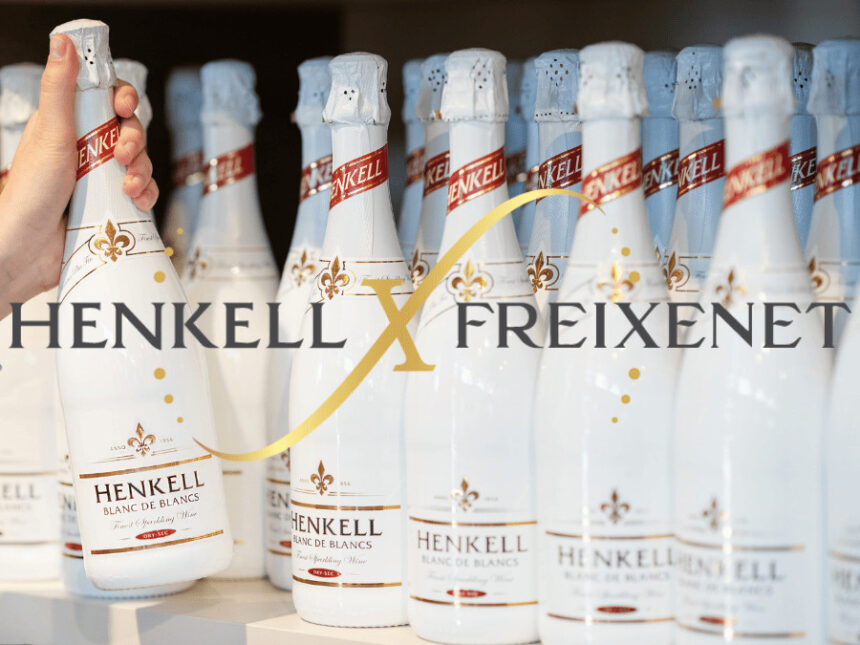
Earlier this year, Henkell Freixenet, the world’s largest sparkling wine company, posted record full-year sales for 2022. Around the same time, Global Drinks Intel sat down with CEO Andreas Brokemper to hear more not only about last year’s performance but also about how the merger between Henkell & Co and Freixenet has been working out, five years on.

Global Drinks Intel: You were leading Henkell in 2018, when the business acquired majority control of Freixenet. Why did the company look to conduct a transaction of this scale in such a fragmented and crowded category?
AB: When I started with Henkell, I felt the future of sparkling wine consumption would move to other countries of origin. We could see at the time a new category that had arrived in Germany called Prosecco. Nobody really knew what Prosecco was, but it was starting to become popular.
From the very beginning, we had a Prosecco in Mionetto, but it took me six years to convince the owner that Mionetto was the perfect place to grow in the future. That was step one in turning a very national business model – when I started, Germany accounted for 80% of Henkell’s business – into a more international model.
When I became CEO in 2013, we could already see that Mionetto was a major growth driver for our international operations, followed by the Henkell brand. We were looking for a perfect combination of both brands and markets and, although the companies appeared to be strong players in sparkling wine, both Henkell and Freixenet were small when we considered the global opportunity. Merging our operations brought together the number one Prosecco and the number one Cava in the world. It was a game-changer for us as well as for the industry.
Both companies shared the vision of being relevant globally, particularly as sparkling wine started to move from being just a celebration consumption occasion to more everyday consumption. So, that was the idea behind the merger, which has gone very successfully.
GDI: Have the consumption occasions for sparkling wine moved even further?
AB: We always expected Prosecco to keep on growing organically, which it has. There’s also been inorganic growth with the arrival of Prosecco rosé, which added around 70m bottles to Prosecco in year one – that’s been the biggest innovation in the sparkling wine industry.
What we’re seeing now is Cava coming back and delivering nice growth rates even in the last two years, without having the on-premise. We believe Cava sits between Champagne and Prosecco, not so much from a pricing point of view but from a taste profile.
As for the category, 20 years ago, there was Champagne and non-Champagne sparkling wine – that was it. Then, it moved to be Champagne, Cava and non-Champagne sparkling wine, and then, Champagne, Cava, Prosecco and non-Champagne sparkling wine. Today, Prosecco’s the most important segment, double the size of Champagne. The category has changed so much and not only with its occasions of consumption.
The next big trend is crémant, which is growing already.
GDI: You experienced the global banking crisis and its impact on the sparkling wine category: How prepared is Henkell Freixenet for the cost of living crisis?
AB: Back in 2008, those markets where Champagne was predominantly consumed turned to Prosecco – London, New York, all the financial places. It was no longer good to serve or drink Champagne. This opened up the opportunity for Prosecco. Hopefully, we won’t have a financial crisis again, but we all understand that the situation right now is quite dangerous. As Champagne is moving up faster now than in the years before: price is going up and supply is limited, which turns Champagne producers into distributors instead of sellers.
I can see new opportunities, especially for those categories that offer value for money, such as Cava and Prosecco.
GDI: Where are those opportunities?
AB: The main opportunity is the less-celebrational occasion. In the past, there was seasonality in our business, with two halves in the year; one from January to September and the other from October to December. That has changed and the summer period has become an opportunity for Prosecco and sparkling rosé. Another important driver is the aperitivo occasion, which changes the mood of the day from work to closing the computer in your home office. It’s a transition of mood, from business to casual.
GDI: How has the cocktails-at-home trend impacted sparkling wine?
AB: There’s still huge potential to grow and you see it in the per-capita consumption for aperitivos in general. While it’s high in Italy, for example, markets like the UK and the US have very low levels. An indulgent, high-quality drink, maybe lower in alcohol, hasn’t been exploited at all.
GDI: How are you navigating the rising costs of production in a category that’s traditionally had a price ceiling?
AB: I think there is no choice. When your back’s against the wall, you have to move. In my 20 years with Henkell, I have never seen a situation like the one right now. First of all, there was a very bad harvest in 2021. That was the first signal.
When you have cost increases of, say, 5%, you ask yourself how you’re going to handle it. When the situation gets worse, it gets easier in a way, because you need to take a decision – there’s no opportunity to cover it in different areas. You have to hand over a price increase and hope the consumer accepts it. But this is the same for everyone in food and beverages. It’s a challenge, absolutely. Hopefully, the rates of inflation growth slow down, particularly in glass, which is our biggest headache.
GDI: What presence does Henkell have in Champagne?
AB: We acquired a small Champagne house in 2000. It’s artisanal, with sales of around 300,000 bottles. We always kept the quality and philosophy untouched. The business is growing, but it’s at a small level for us. We’re comfortable with that.
Champagne is one of the oldest ecosystems, where the model has many different participants; landowners, grape producers, grape buyers, cooperatives, big brands. Other denominations like Cava and Prosecco are learning from this model. The better the ecosystem works, the more successful the category.
GDI: You’ve made moves to ‘internationalise’ Henkell Freixenet’s management recently.
AB: This move was overdue for us. After the acquisition, the business turned international while the management remained predominantly German. We needed to build an international executive committee. It’s important to manage our now-diverse company with a diverse international team.
GDI: Was this an easy transition?
AB: Yes, it was. With the Freixenet alliance, we switched the language in our meetings from German to English. So, we’ve been warming up this culture.
GDI: Does this approach extend to the company’s approach beyond traditional markets?
AB: We’re working to develop the business in the areas where we see the biggest growth for the next decade. For sure, that includes the Americas, particularly South America. It’s not yet time, but it will come for Asia and Africa as well.
GDI: Is there anything else you’d like to declare?
AB: For me, sparkling wine is wine. Maybe the wine industry is 50-60 years ahead of sparkling wine, but we need to help consumers to understand that sparkling wine has a diversity of qualities and taste profiles that are more or less the same as wine. My wish is that when the waiter asks if you’d like wine, then their next question would be: Still or sparkling?
This interview was published for Global Drinks Intel subscribers in May. For details on how to join them, click here.