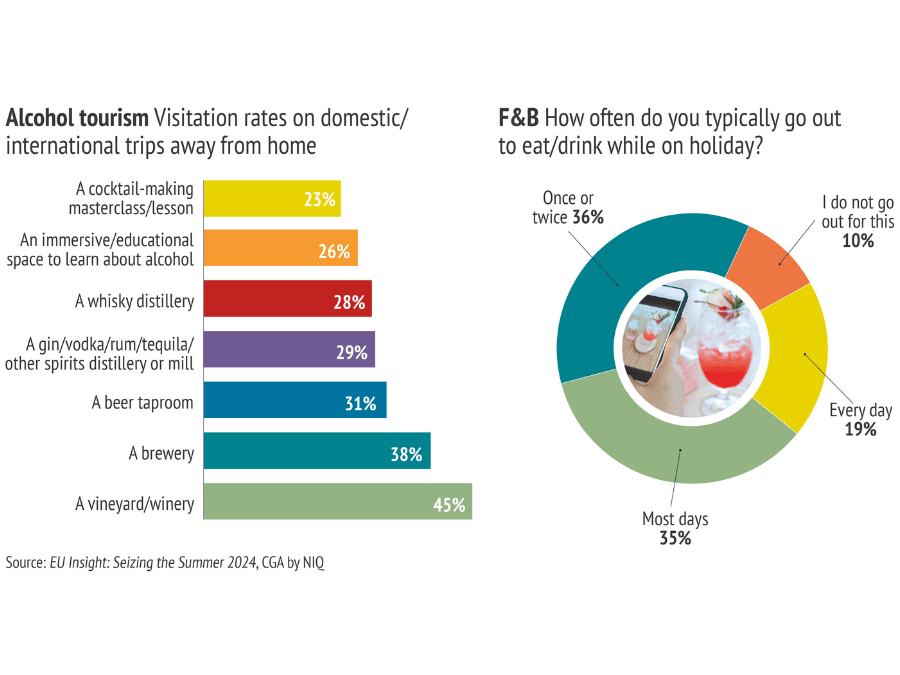
- More than a third of holidaymakers (35%) visit food and beverage venues ‘most days’ they are away
- Drinks-focused travel is on the rise, driven by a rising demand for immersive experiences
- US consumers who visit the on-premise to watch events spend 36% more on drinking out per month
- During the 2012 Olympics, London on-premise venues saw a 5.3% year-on-year sales uplift
- 67% of European consumers plan to spend the ‘same or more’ socialising with family/friends this year
In 2024, price and cost management were two of the key drivers that influenced consumer spending decisions. Put simply, consumers were paying more for less as inflation pushed up summer sales figures.
This challenging landscape has continued into summer 2025, and it’s hard to argue that we are no longer living in uncertain times. Ongoing financial pressures on consumers, coupled with tariff-related uncertainty, continue to unsettle markets and create major challenges for businesses.
Yet, with inflation easing in recent months – and forecast to stabilise at around 2% later this year – consumer confidence is beginning to recover. In May, the Consumer Climate Indicator for the Euro Area rose 1.4 points to -15.2 from -16.6 in April.
There has also been promising unit recovery across the region, with 81% of European markets reporting positive unit growth compared with the previous year.
Drinks experiences
Against this largely resilient backdrop, tourism presents one of the biggest opportunities for the on-premise channel during the warmer months. Key tourism indicators in Europe have returned to pre-pandemic levels: nearly 500m nights are spent in tourist accommodations each year, many during the peak summer period of June to September.
People are significantly more inclined to treat themselves on holiday, according to an analysis of consumer behaviour during this period by CGA by NIQ’s Global Reach survey. Indeed, only a small minority of holidaymakers avoid going out while on vacation, while more than a third go out once or twice, 35% on most days, and nearly one in five every day.
This means that on-premise venues can expect increased footfall from travellers, along with the potential for repeat visits throughout their stay.
But that’s not all: holidaymakers also tend to exhibit higher consumption rates – with 36% drinking more than usual – and are more (56%) likely to pay extra for what they perceive to be a higher-quality drink. With more than one in four keen to try a beverage that’s new to them while on holiday, holidaymakers are also more open to experimentation, meaning this audience may offer significantly greater revenue potential than the average guest.
Beyond traditional on-premise venues, the growing interest in alcohol-related tourism presents even more opportunities for the sector. Drinks-focused travel is on the rise globally, with vineyards, breweries and distilleries emerging as popular destinations for both domestic and international holidaymakers.
Beverage producers can capitalise on this opportunity by creating simple hospitality offerings, such as tastings or tours of their facilities. But it’s not just producers who can benefit – the wider industry can get a share of the pie by organising alcohol-related experiences such as cocktail-making masterclasses or immersive educational events that allow participants to learn more about a beverage’s production, consumption, history and cultural significance.
People aren’t just interested in learning about a product, they want to leave with a meaningful memory, so businesses must focus on creating a memorable, engaging experience for their guests.
Summer of socialising
Summer creates the ideal setting for people to connect with loved ones, encouraging them to spend more during socially meaningful moments. In fact, CGA by NIQ’s research found that 67% of European consumers plan to spend the same or more on socialising at gatherings with family and friends this year.
The weather, of course, plays a crucial role in determining how often people are willing to go out. Warm temperatures usually trigger a boost in social gatherings and impulse purchases, while rainfall tends to suppress on-the-go buying habits. This effect was evident in some European markets during Q1 2024, when rainy conditions coincided with a rise in online shopping and a decline in convenience store sales.
But the past few years have seen some of the warmest weather on record in Europe (with the three hottest years all occurring since 2020), and this summer is expected to continue that trend with widespread warmer-than-average conditions across much of the continent.
The likelihood of above-average temperatures is especially high in the UK, as well as in western-central and central-southern Europe, so businesses should be ready to capitalise on increased social gatherings and increased foot traffic.
Getting game ready
While the weather always brings a degree of unpredictability, large-scale occasions, such as music festivals or sporting events like Wimbledon and the Tour de France, offer more certainty around when and where increased visitation is likely to occur.
During these times, the potential for incremental spending rises significantly, driven by heightened consumer engagement and increased discretionary spending, not just in retail, but in on-premise venues as well.
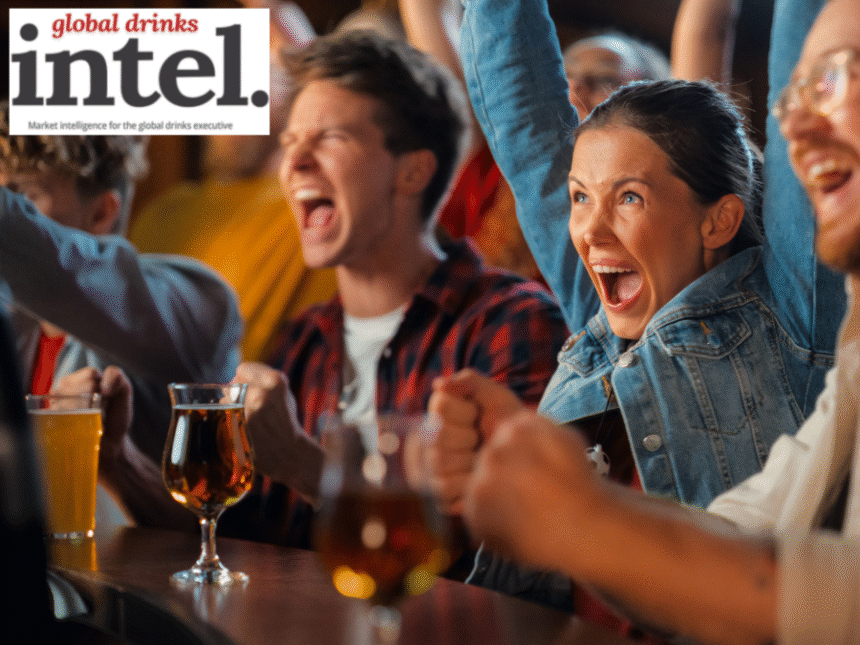
In the UK, for example, 8.5m consumers have watched events – especially sports – in pubs and bars over the past six months. On average, these consumers spend 36% more on drinking out per month than those who don’t watch events. With competition for footfall as intense as ever, attracting sports fans presents a valuable trading advantage.
The UEFA Women’s Euro 2025 has proved to be a particularly significant event this summer, as the competition is one that consumers like to follow closely and celebrate. In 2020, the women’s final, between Italy and England, was the most-watched TV event in the UK in 24 years and the most viewed in Italy since 2012, showing the reach and engagement such tournaments can generate.
This year’s UEFA championship is the first major football tournament to take place under truly ‘normal’ conditions since Covid-19: the 2021 Men’s Euro was impacted by the pandemic, the 2022 World Cup was held in the northern hemisphere’s winter and last year’s Men’s Euro – while more conventional, tinings-wise – unfolded amid the cost of living crisis. With fewer external constraints this time, excitement has been running high, encouraging consumers to go out, gather and celebrate.
CGA by NIQ research demonstrates that revenue potential grows exponentially in cities hosting major events. During the London 2012 Olympics, sales in the capital saw a 5.3% uplift compared year on year, outpacing the national average increase of just 0.4%.
Two years later, sales rose by 2% during the Football World Cup in Rio de Janeiro, compared to 1.6% in the rest of Brazil.
Shops located within 15 minutes of stadiums hosting the 2016 Euro Cup in France experienced a 2% increase in business, compared with other areas of the country. Similarly, two years ago during the Rugby World Cup, Paris saw a 1.6% uplift in sales over the previous year, while the rest of France recorded only a marginal increase.
Sales uplift varies
The challenge for the on-premise lies in driving incremental spend as consumers continue to navigate a high cost of living. Many, though, have developed strategies to manage their expenses while still rewarding themselves.
When it comes to the Euros, for instance, sales uplift can vary widely across countries, largely influenced by which national teams qualify and how far they progress in the tournament (the final takes place this weekend). The better a team performs, the more likely it is to generate consumer excitement and, in turn, boost sales in that team’s domestic market.
Another important factor is that in any major international football tournaments, each team is only guaranteed three group-stage matches. Only those that perform well will advance to the knockout rounds and play more games.
For most markets, then, the peak of consumer excitement will likely occur at the very start of the competition, when all the teams still have a shot at success. This makes the early stages a critical window of opportunity for businesses, and it’s wise to front-load promotional efforts to capitalise on the initial wave of enthusiasm.
However, this summer holds opportunities for European markets well beyond major sporting events, with strong potential coming from drinks tourism, as well as increased socialising with friends and family.
Brands, suppliers and operators simply need to come prepared, understanding their audience, their needs and behaviours to unlock these growth opportunities.
CGA by NIQ’s suite of research services combine to provide brands and operators with a holistic view of the European and British on-premise channels. OPUS is a nationally representative survey of on-premise users, designed to help you understand where and how to engage with your audience.
Meanwhile, REACH illuminates eating and drinking behaviours, offering valuable global and in-market insights and benchmarking for targeted outreach.
To learn more about CGA’s capabilities across the European on-premise, click here.