

A combination of positive factors has given Mediterranean liqueur and aperitif brand owners a boost now that most pandemic restrictions have been lifted in Europe. Joe Bates reports.
After the ravages of COVID-19 restrictions, Mediterranean liqueurs and aperitifs are enjoying a welcome period of recovery. The reopening of the on-premise along with the continuing popularity of classic cocktails, the rise of low-alcohol spritzes and the gradual recovery of tourism in Southern Europe have all helped boost business.
Across Europe, most markets have functionally declared an end to the pandemic, lifting almost all restrictions. The current trading climate is not without its challenges, of course: The war in Ukraine, the rising prices – and scarcity – of raw materials, as well as soaring packaging and logistics costs are causes for concern. In many cases, price rises are being passed on to consumers. Despite these headwinds, though, brand owners are generally happy that business has returned to a semblance of normality, with companies once again able to attend trade shows, stage events and visit their customers out in the markets.
Aperol still rules the roost
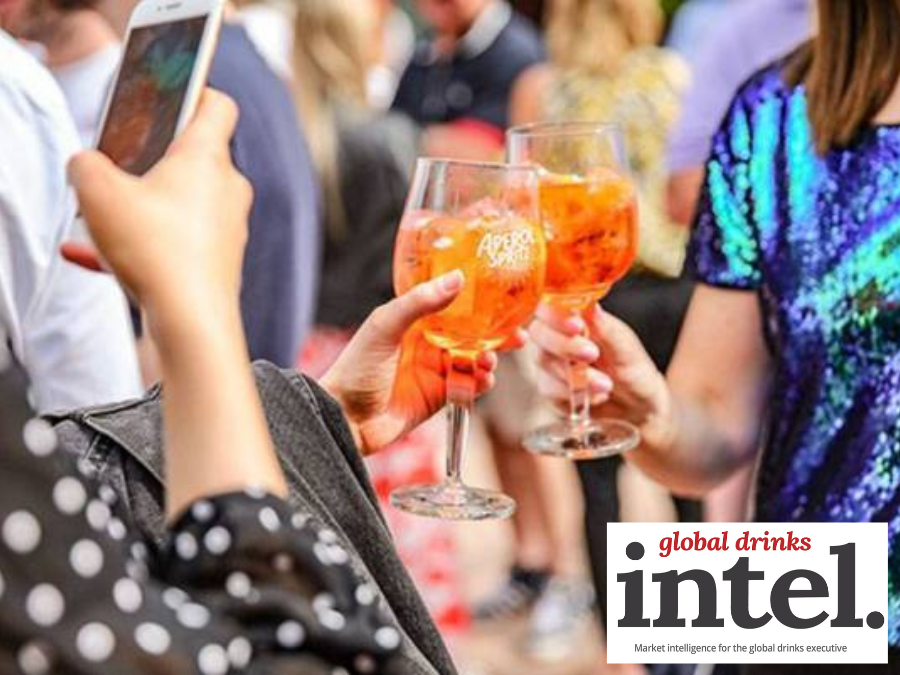
Campari Group’s Aperol brand continues to dominate the aperitif segment, making gains both during and after COVID’s lockdowns. In 2021, sales soared nearly 33%; core markets such as Italy, the US, France, the UK, Russia, Switzerland, Belgium and Austria grew by double-digits. Elsewhere, newer markets such as China and Mexico were up triple digits, while Latin American countries, including Brazil and Argentina, grew by high double digits.
How can such a runaway success deliver even better results for Campari Group? The group’s efforts are focused on trying to ‘de-seasonalise’ Aperol, which is still dependent on the summer months for the bulk of its sales. During the colder months last year, the brand ran winter sports-themed promotions, food-pairing events and gifting campaigns, with a key focus on the Christmas holiday period, in markets such as the UK and Germany.
Aperol may be aperitif’s star performer, but smaller brands are also turning heads. Consider Italicus Rosolio di Bergamotto, launched in 2016 by Italian mixologist Giuseppe Gallo. He was inspired to resurrect the largely forgotten Italian rosolio aperitif tradition. “Rosolio is the liquor recipe that Italian families pass down to each other through generations,” Gallo tells Global Drinks Intel. “Every family has their own and they treasure and cherish it.
“It’s a type of liqueur made from a base of alcohol, unrefined sugar and water in the same proportion, which is flavoured by adding an essence of various types,” he adds. “In Italicus’s case, it’s the essential oils of bergamot peels. Italian Rosolio is the original aperitivo, drunk by the Italian royal family, the House of Savoy. It’s also known as the ‘Drink of Kings’ or ‘Aperitivo di Corte’.”
Packaged in an Art Deco-style bottle designed by Stranger & Stranger, Italicus is produced at a family-owned distillery established in 1906 in Moncalieri, Turin. In Italy, Gallo says that as on-premise accounts have reopened after the pandemic, sales of the brand have grown by around 150% year-on-year.
Limoncello looks beyond the digestif occasion
Limoncello remains the largest fruit-based Mediterranean liqueur segment. In 2021, according to IWSR Drinks Market Analysis, sales of the lemon-flavoured liqueur rose 16% to around 1m cases, a strong performance driven once again by the reopening of the on-premise in Italy and other key markets during the year.
Julian Fernandez, global marketing & innovation director for spirits at Villa Massa Limoncello owner Zamora Co, tells Global Drinks Intel that 2021 was a “record year” for the brand, with sales rising by double digits on the year prior. “This was because both at-home and on-premise consumption grew in tandem,” he explains. “We think this is because people discovered enjoying our natural flavour in cocktails at moments beyond the traditional after-meal occasion, such as aperitivo versus digestif.
“Our focus has been on explaining to consumers that they can also enjoy it at home,” he explains. “We’ve made sure we clearly explain the high quality of the natural ingredients – the P.G.I. Sorrento lemons, for example – and how to enjoy Villa Massa in various combinations, such as with tonic or in a spritz.”
Limoncello Di Capri, produced by Molinari, is also performing well in Italy and its principal export markets. In the first five months of this year, sales are up 75% compared to the same period in 2021, according to a spokesperson. “The goal for 2022 is to strengthen and expand in terms of market share, increasing sales in countries where the product is already present,” the spokesperson adds. “Limoncello Di Capri is distributed in Italy and to around 60 markets. It’s the limoncello leader in HORECA [hotels, restaurants and catering] and holds a leading position in Sweden, Australia, Japan, the Benelux, Spain and Germany. The aim is to increase the presence, strengthen the brand awareness and the recognisability of the product, also exploiting the international interest in limoncello, positioning it as a leader in the premium category.”
Similarly, Matteo Luxardo, export director of Luxardo, the producer of the namesake limoncello, reports the brand is doing well post-pandemic, putting pressure on the family-owned company to meet demand. The ongoing supply chain crisis and rising costs are additional concerns. “It’s a big problem,” he admits. “Bottles and cartons are the most difficult to find, but containers, ships and trucks also have months of delays, giving us lead times of 40 working days for shipments that were normally 30.”
A clear sign of limoncello’s premiumisation is the increasing focus on the provenance of the lemons, the drink’s star ingredient. This year, family-owned Italian firm Bottega is releasing a new Limone di Sorrento Limoncello. According to CEO Sandro Bottega, the new release is “characterised by the fragrant skins rich in essential oils which, left to infuse, create one of the most popular Italian liqueurs”.
Pastis stages modest recovery
If there’s one product that the bustling French port city of Marseille is famous for, it’s pastis, the anise-flavoured spirit traditionally consumed with water and ice. Figures from IWSR Drinks Market Analysis show this most traditional of French drinks segments fared comparatively well in 2021, with sales growing 3% to around 9m cases, an increase driven primarily by the recovery of the domestic on-premise.
Jean-Pierre Trouillet, area manager for the owner of Henri Bardouin Pastis, Distilleries et Domaines de Provence, reveals the brand enjoyed a “great year” in 2021. “With better visibility, consumers seeking better-quality products, the trend towards handcrafted spirits and more reasonable consumption, many new clients seem to have become loyal to Henri Bardouin,” he explains.
“From that, we see more consistency in the presence of our products on shelves and in shops and bars. The brand has become more obvious and is now a ‘must have’ for the majority of the distributors and clients.
“We are in the premium category, a unique product made with care, containing more than 65 botanicals,” Trouillet adds, noting the brand is also faring well overseas. “Henri Bardouin is now distributed in over 50 countries. There’s still a lot to do in Africa, where many ex-pats live (mostly in the western continent and former colonies), but we’re communicating more in the countries where we are present in order to develop the brand. We are also present in duty free with Lagardère Travel Retail.”
Meanwhile, Ricard, the best-selling pastis with sales of 41m litres in 2020, is celebrating its 90th anniversary this year. The brand was launched in Marseille in 1932 by former fine arts student-turned-entrepreneur Paul Ricard. He designed the brand’s logo, label and first advertisements himself and persuaded bars and restaurants across the country to list his pastis, the precise recipe of which has never been released. An environmentalist, Ricard campaigned against industrial pollution, founding the Paul Ricard Oceanographic Institute on the island of Embiez in 1966.
To mark the 90th anniversary, brand owner Pernod Ricard worked with artist Yorgo Tloupas to create a limited-edition collector’s bottle, as well as a new carafe and glass based on the slogan ‘Ricard. Born in Marseille in 1932’. The group’s new Marseille Docks Village headquarters, which opened last year boasting Mx Marseille, a 1,000sqm restaurant, bar, museum and shop dedicated to Ricard, also opened a new photographic exhibition in April to celebrate the history of the brand.
Click here for Part II of Global Drinks Intel’s review of the liqueurs segment.
This article was initially published in July/August’s issue of Global Drinks Intel magazine. For details on how to subscribe, click here.