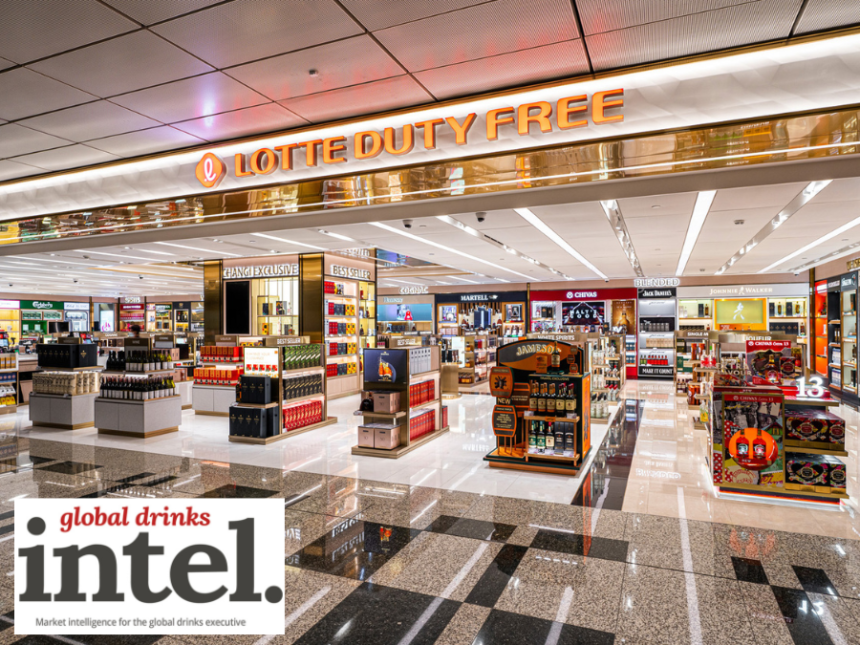
- Global travel retail has successfully pivoted to a mobile-first, cashless business model, championed by Asia’s biggest travel retailers
- Major players are replacing mass marketing with AI-driven marketing automation systems that analyse behaviours to deliver tailored offers in real time
- From robot bartenders to agentic AI assistants, technology is moving beyond the screen to provide personalised, sensory spirit recommendations and automated mixology
- High-production livestreaming activations are successfully bridging the gap between physical stores and remote consumers
Around a decade ago, many industry critics – and more than a few frustrated drinks brand owners – lambasted the global travel retail channel as a digital laggard trapped in a legacy mindset. While their domestic counterparts raced ahead, perfecting slick omnichannel business models, GTR operators grappled with the basics.
With Baby Boomers and Gen X calling the shots in travel retail boardrooms, below-par websites were standard, click-and-collect was a novelty, and the traveller’s digital journey often ended when they reached the departures hall.
Fast forward to 2026, and that narrative no longer holds true. The transformation is nowhere more visible than in mobile-first Asia Pacific, where travellers’ phones are now effectively their bank, ID, ticket wallet and loyalty platform, often all in one app.
To an extent not seen in card-based Europe or cash-dependent US, Asia Pacific has built an integrated digital environment in which apps like Grab, Alipay and WeChat act as operating systems for daily life, with most South-East Asian travellers now preferring a cashless travel experience.
The leading hubs across Asia Pacific are now some of the most advanced international airports globally. Biometric ID and e-gates, automatic bag drops and real-time passenger data flows are commonplace, making fully digitised consumer journeys the norm.
Meanwhile, regional GTR operators have upped their tech game too, introducing in-store robotics, agentic AI-powered liquor assistants and self-serve highball dispensing machines, as well as staging celebrity-driven livestream events to drive remote sales of luxury wine and spirits hundreds of miles away from their bricks-and-mortar stores.
China Duty Free Group, whisky festivals and livestreaming galas
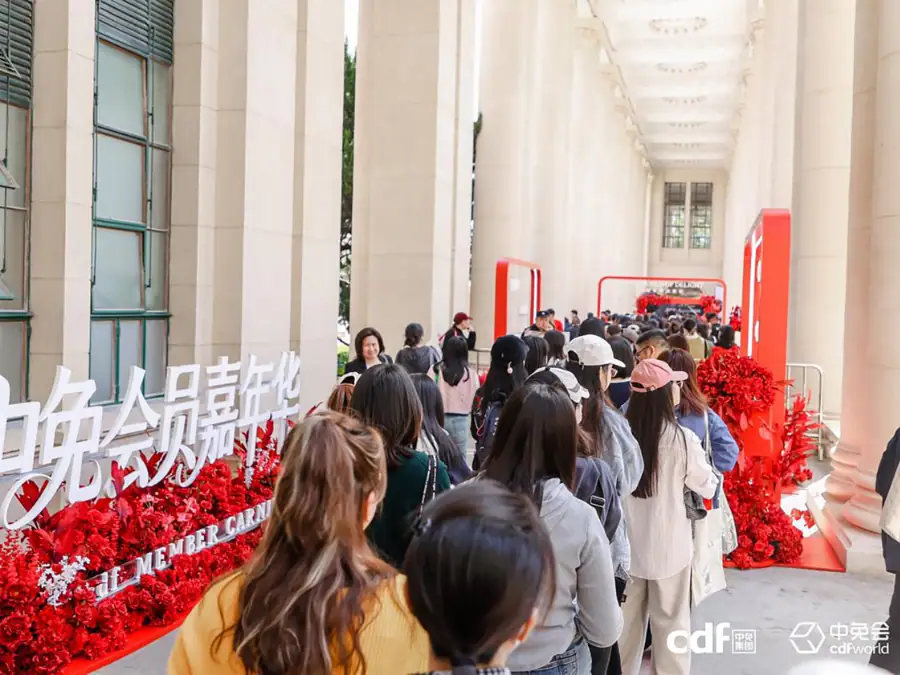
A recent activation by China Duty Free Group (CDFG) is an excellent example of how Asia Pacific’s GTR operators are embracing the integrated digital environment. In late March, the state-owned travel retailer staged a massive consumer-facing festival (below) at the Shanghai Exhibition Center, available to more than 13,000 members of its CDF loyalty programme.
While over 10,000 products from multiple product categories were showcased, whisky was a key element of the two-day CDF Member Carnival, with guided tastings, photo zones and prize draws all part of the mix. The event’s CDF Whisky Bar featured around 100 expressions from 40 brands, while Edrington and Diageo led tastings of their respective Highland Park and Mortlach single malts.
Chinese TV host Li Sisi – CDF’s whisky ambassador – hosted a high-production livestreaming session directly from the event themed around Chinese women’s growing interest in whisky, allowing millions of remote viewers to buy exclusive bottles and “flash sale” items in real time.
Three rival drinks multinationals, Bacardi, Diageo and William Grant & Sons, took part in a ‘Cheers to You’ livestreaming gala during the festival, appearing together to offer potential buyers CDF member-exclusive benefits through the retailer’s digital ecosystem.
Lotte and the automation of duty-free marketing
In South Korea, a pivotal regional duty-free market that in recent years has had to battle a downturn in Chinese traveller numbers, one of the country’s main travel retail operators, Lotte Duty Free, has made a marketing automation system (MAS), a cornerstone of its digital transformation strategy.
First introduced in March last year and then scaled significantly through 2025 and into this year, the system moves away from mass-marketing to hyper-personalisation, targeting individual travellers based on how they behave in-store or when using Lotte’s app.
The system can now analyse 200 different behaviours, including how long potential customers dwell on specific product pages, their past purchase histories and even their response rates to previous promotional offers.
Using big data, the system identifies the optimal time to send a message, so for a potential liquor shopper, this might mean receiving a discount for a specific brand of single malt just as they enter the physical airport terminal.
The system also syncs with popular social media platforms, such as WhatsApp and WeChat, to reach international travellers, as well as Lotte’s own mobile customer app. According to the GTR operator, the MAS has achieved some impressive results. Customer inflow was six times higher than previously and the success rate of driving additional sales was 75%.
Robots, cocktails and smart highballs
Lotte Duty Free has also embraced front-of-house robotisation as a key element of its luxury retail offer, reflecting a wider regional willingness across Asia Pacific to push robots out of labs and into daily consumer touchpoints, whether as in-store retail assistants, delivery robots or service robots in restaurants and hotels.
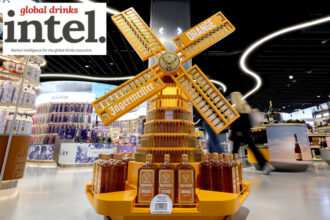
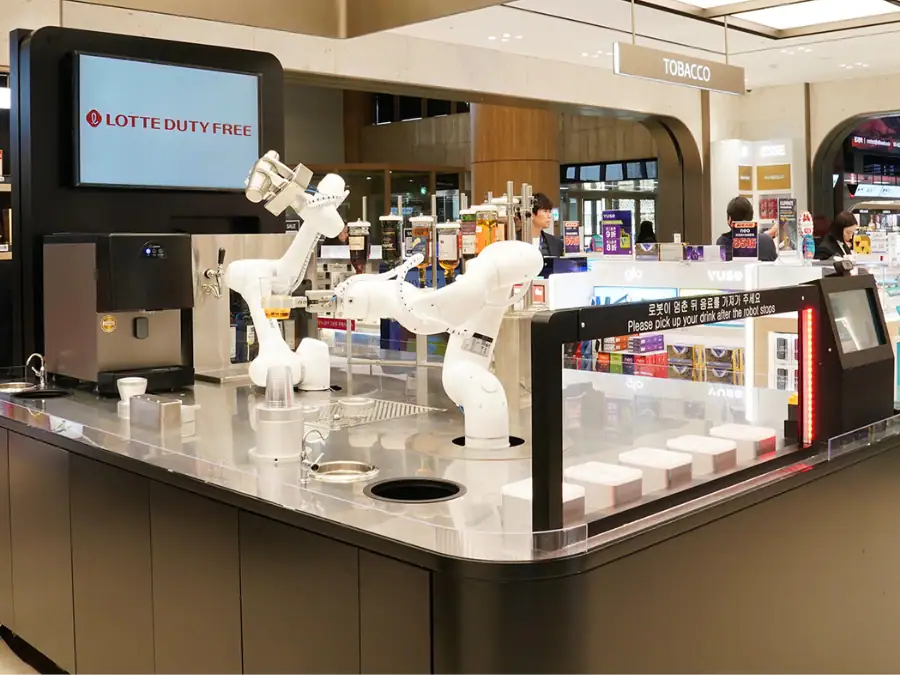
Last year, Lotte introduced an AI-powered robot bartender (above) at Seoul’s Gimpo International Airport. Developed in partnership with Doosan Robotics, this “liquid concierge” uses facial-recognition AI to analyse travellers’ emotions and suggest a spirit or cocktail tailored to their mood.
The cocktail-making system can detect seven different emotional states – neutral, happiness, sadness, anger, fear, disgust and surprise – and employs generative AI trained on professional bartenders’ recipes to create 19 different cocktails. Two collaborative robots work in tandem to handle various tasks, including dispensing beverages, shaking cocktails, handling cups and cleaning.
Meanwhile, at Taiwan’s Taoyuan International Airport Terminal 2 earlier this year, concessionaire Everrich Duty Free put a different spin on a high-tech approach to in-store sampling by installing a smart highball experience in the ‘Taiwan Brands Zone’ of one of its stores. Using precise carbonation and calibrated ratios, the system provided an accessible introduction to Taiwanese spirits, such as exclusive Kavalan whiskies, craft gins and tea-based liqueurs.
Capitalising on the growing popularity of RTDs in the country, Everrich also collaborated with Hennessy to install a self-service draught cocktail bar. Boasting a simple made-to-order, pull-to-serve system, the bar offered two signature Hennessy-based cocktails paired with local flavours, such as a ginger-and-citrus serve and a jasmine-tea-and-honey expression.
“The goal of offering draught cocktails and smart highball machines is about creating an engaging tasting experience that sparks travellers’ interest,” explains an Everrich spokesperson. “Once they try a cocktail, many [travellers] become curious to explore a variety of flavours in an accessible and relaxed way, turning a brief stop into a memorable sensory experience. It is usual for them to end up selecting a full bottle to take home.
“Everrich is also exploring how smart dispensing technologies can further enhance the travel retail experience,” she adds. “We’re currently collaborating with a domestic smart machine supplier to review opportunities for introducing similar concepts across other airports in the future.”
Lagardère trials AI liquor assistant
Agentic AI is receiving outsized attention in the retail sector currently as it represents a structural advance in the technology’s capabilities; moving from an AI model that can assist decisions to AI that can execute them autonomously.
This constitutes a quantum leap in terms of potential benefits such as reduced labour costs, an improved in-store customer experience and healthier profit margins.
If agentic AI can live up to the hype, it will be able to adjust pricing dynamically, replenish stock automatically, personalise promotions and push them to travellers in real time.
In March this year, the Asia division of French travel retail giant Lagardère, Lagardère AWPL, became one of the pioneers in this field by trialling an AI-powered liquor assistant at its Aelia Duty Free stores at Adelaide Airport in Australia. Developed in partnership with The Mercurius Group and AI Consulting Group, the Atlas liquor assistant is designed to deliver personalised spirits recommendations tailored to individual tastes and preferences.
Travellers can access the Atlas app by scanning QR codes displayed in-store using their mobile phones. The assistant provides suggestions based on flavour profiles, cocktail recipes and product preferences, drawing from a range that features both global brands and local producers.
“Atlas generates recommendations by combining factors including the popularity of a product, as well as the prompts given by the traveller, including price point, country of origin, flavour profiles, favourite cocktails and more,” says a Lagardère spokesperson, who notes the app has an additional benefit.
“Atlas is primarily designed as a customer-facing tool,” they explain. “However, our store teams are encouraged to use the AI assistant to upskill their own product knowledge and selling skills.”
The Atlas AI liquor assistant is on trial at the airport until the end of May. “The learnings we get from this initial trial of Atlas will help us understand how AI can elevate service across our business,” the spokesperson reveals.
If GTR operators in other markets follow a similar path, the days of the channel being a digital slowcoach will vanish, replaced with a sophisticated business model where high-tech convenience meets high-touch luxury.
This article is available to Global Drinks Intel members only.
Click below for details on how to join the Global Drinks Intel community.
Already a member?
Log in here to read the article in full.
If you work for any of the following corporate subscribers to Global Drinks Intel, head here to activate your access.
- AB InBev
- Bacardi
- Campari Group
- Diageo
- Moët Hennessy
- Pernod Ricard
- Proximo Spirits
- Suntory Global Spirits
- William Grant & Sons