

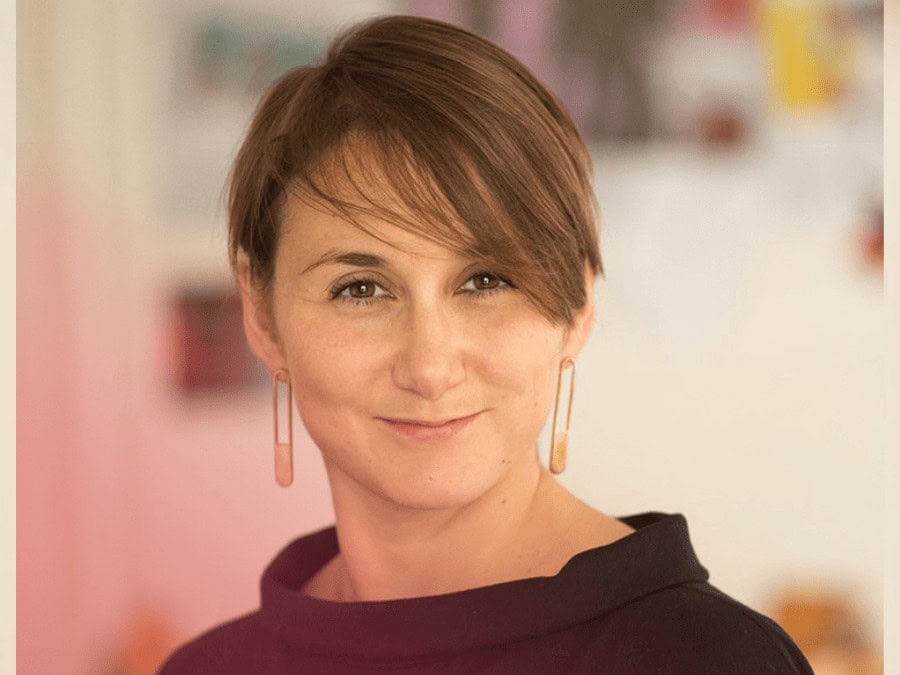
Earlier this week, UK trade association Wine GB announced the departure of its CEO, Nicola Bates. Coincidentally, Global Drinks Intel editor Olly Wehring caught up with Bates (below) last month. In this exclusive interview, the soon-to-be-former CEO lays out what her approach has been during her three years in post and provides a potted history of the English & Welsh wine industry. Food for thought for Bates’ successor, perhaps?
Last month marked your third anniversary with Wine GB. Where did you come from?
I’ve got to that stage in life where I describe my career in decades. I spent my first decade-ish in communications and public affairs with a number of different trade associations, engaging with government to tell stories. In 2010, I stood as a candidate in the general election and used that to move into the commercial sphere and became a board director at a big communications and public affairs recruitment company for almost a decade. I missed the public realm, so I applied successfully for the director of external affairs role at (UK alcohol marketing regulator) The Portman Group.
I’m very much a gamekeeper turned poacher; it’s much more fun telling a story about a category than about the more controlled component.
During my three years at Wine GB, I’ve been able to reshape it and build out a government affairs function. Off the back of my first year, which was all about meeting everyone, listening and understanding, we built a three-year strategy to help our members make wine, market wine and tell their story.
Your prior experience seems to have covered two main areas; lobbying and marketing.
Wine GB is quite rare in that it’s a trade association and a marketing organisation. Normally, these are kept separate.
The connections the industry had with the relevant government departments and with politicians were already good. For me, it’s about building from that and putting in place a more professional, engagement profile.
The focus over the last three years has been around identifying how we optimise this time when we’re on-trend and growing, in order to make sure there’s long-term continuity for the industry. How do we put the industry on the best possible route for growth going forward?
We have seven wine producing regions and there are plenty of people making fewer than 10,000 bottles a year. As much as we want the Chapel Downs of this world to have success, we also want these smaller businesses to become successful. We have good relationships with government, so it’s about building that professional basis, which then allows us to continue to punch above our collective weight.
How do you define success if your areas of responsibility are so broad?
We’re here to promote the sustainable growth of UK wine. Fundamentally, that means it’s got to be profitable. It’s also got to look after the environment in which it operates and it’s got to have long-term credibility.
Our ‘make’ challenges include ensuring the yields are the strongest that they can be and are of the right quality. We also need to make sure we’re getting the right number of people into the industry. By 2040, we anticipate we’ll need 30,000 people, from around 25,000 now.
On the marketing side, the challenge we face today is ensuring that sales equals production. Also important today is how we prove the quality. Ten to 20 years ago, the challenge was around improving the quality; now, it’s about how we prove the quality of the sector. Finally, we need to make sure we’re protecting the industry’s reputation and telling its story.
Our definitions of success are to be able to answer all those different questions.
Is the change from improving the quality to proving the quality quite recent?
It predates me. Wine GB celebrates its tenth anniversary next year and it probably coincides with the organisation’s founding.
We back this with our awards, which have been running for a long time now and feature independent judges who really evaluate the quality – They’re very candid with us! The wines now are so much better than ten or 15 years ago, and we have independent proof of that. We also back this with the ‘Golden 50 Wine List’, which started two years ago. These are UK wines that have won gold medals in either UK or international competitions.
It’s really powerful to have these independent proof points that indicate where we’re matching in the world. It’s not us asserting it, it’s our brands delivering externally, and that reflects on the whole industry.
What’s the size and rate of growth of the UK’s wine industry?
The level of growth has been remarkable. Since 2010, we’ve seen an increase in plantings 500-plus per cent, doubling in the last five or six years, to approaching 5,000 hectares. In sales terms, we’ve gone from about 3.3m bottles in 2018 (which was our original biggest harvest with 13.3m bottles produced) to around 9m bottles in 2024.
We’ve started to see a slight downturn, simply because of where the economy is. The fundamentals in terms of the product, however, remain really strong.
Exports account for around 9% of total volumes today, up from 4% in 2021. We expect to hit 1m bottles for exports either this year or next. If we continue to grow this level of export penetration, while also deepening our involvement with existing and new consumers in the UK, then we’re going to be in a really strong place.
In this economy, to be able to say there’s this really vibrant, fast growing agricultural sector in the UK is a brilliant position to be in. People want to hear that story.
Does that message travel, or is it limited to the domestic market?
We’re doing more on our export messaging, certainly, but we are on-trend – and have been for a long time – domestically. We’re trying to take advantage of that by leveraging the media’s affinity with UK wine – to them, it still feels like quite a novelty.
Presumably that novelty element isn’t enough to grow the export side for UK wine?
It comes down to three areas – firstly, there’s what the brands are doing themselves. We have several that are taking a leading position and opening up markets internationally, to the extent that we’re in 50 different markets. A lot of that is down to their own work.
Secondly, there’s what we can do as a category, through things like attending trade shows and running roadshows in our core markets, where we work to deepen our penetration into those markets we’re already in, rather than necessarily opening up new markets.
The third piece is about what role government plays. The Department of Business & Trade is supportive, but we’d love to establish a partnership model to allow us to take our product out in a far more impactful way. The European Union supports its food and drink producers to the tune of about EUR180m per year. That supports the marketing of their wines in our country. We just do not have the same amount of support when we’re going into their markets to talk about our products. We have credibility for our wines, especially on the sparkling side – 90% of our exports are sparkling. What we want to do is work with government to leverage that as an opportunity to open up more markets.
We’re complementary to the whole export cycle, not just our own. If you’re selling UK cars or services or whatever, you’ll want to do that in a hospitality setting and match your high quality standards with what we have to offer.
What’s the brand strength of the sector?
The brands we have are able to represent not only the diversity and mix of our category, but also how innovative everyone is. On the sparkling side, we have brands that can tap into the markets for traditional method, top-quality champagne, all the way through to prosecco. In still wine, we have a really exciting group of white wines at play and an interesting number of reds coming through.
What we’re trying to do is work hand in hand with our members to have a disproportionate impact on the wider space.
Where are you seeing successes for UK sparkling wine?
In the UK, champagne’s annual sales are at around 25m bottles. We sell about 6m bottles of English sparkling wine here and about 5m of that is traditional method – that’s remarkable. Prosecco, meanwhile, sells about 130m bottle a year in the UK. English charmat has the potential to take a small sliver of that market. For us, it’s about competing in the categories that our producers find themselves in.
You’re about to embark on your next three-year strategy: How do you feel Wine GB performed against its last three-year strategy?
As a trade association, you want to have the same level of momentum and pace as the industry you represent. We’ve reflected that over the last three years.
One of the most important things we achieved has been to define our mission – we understand exactly what we’re here to do. We’ve also put together a lot of guidance and information to support our members. As part of the relaunch of our website last year, we set up a ‘Knowledge Hub’ that allows people not only to find the information they need, but also to discover things they didn’t know they needed to know.
On the people side, we extended our ‘Sustainable Wines of Great Britain’ certification programme, which looks at finding the most sustainable ways to look after a vineyard, to include the people element. We have a guide to hiring for our members and have gifted our safeguarding toolkit to anyone in any industry.
On the marketing side, we’ve done loads, such as working with London Wine Fair to tell the category story, running awards, hosting our trade tasting and creating the Golden 50 wine list. We rebranded entirely to ensure we look like the modern, fresh organisation and industry that we genuinely are.
Finally, on the quality side, we are the secretariat for the ‘Protected Designation of Origin’ scheme and we built a government affairs function from scratch. We also have our ‘Back British Vineyards’ campaign, which calls for duty relief for wine bought during a vineyard visit.
What level of support do you get from the Government today?
I would say that, while we’ve learnt a lot from the continent about wine-making and helped them with wine-selling, we can now afford to learn from their governments about what can be done to really drive a sector forward.
That’s not to say we don’t get anything- We do, and we’re really grateful for the support we’ve had. But, there’s definitely more opportunity sitting on the table currently that isn’t being taken up. We urge the Government to get behind the sector now while we’re on-trend and not lose this moment.
Is there a concern that the sector’s current air of optimism jars with the wider outlook for the wine category more broadly?
You can never gauge when you become popular! Domestically, we outrank most other wine categories for engagement with consumers aged 25 to 45. They’re excited because we’re local, sustainable and the quality is there. Theoretically, then, if we have people who are so invested early, then we’ve got an audience who will go on their entire journey with us. From a UK perspective, then, I think we’re okay.
Globally, there’s more of a challenge. As long as we can utilise the Government overseas, then we’ve still got a space to be in. It isn’t easy, but then again, making wine in England and Wales has never been easy! That’s the challenge.
Members-only intel
Keep reading this members-only article – and every one like it
- ✓All paywalled news and interviews
- ✓Category and market data
- ✓Monthly GDI magazine
- ✓Full archive + daily newsletter
Secure checkout · Cancel any time · Company invoices available
Already a member? Log in
See all plans, incl. 10-reader and corporate
Check if your company already pays for you Your company may already give you free access.
Corporate subscribers: AB InBev, Bacardi, Campari Group, Diageo, Moët Hennessy, Pernod Ricard, Proximo Spirits, Suntory Spirits Group, William Grant and Sons.
Activate company accessNot ready yet? Get the headlines free in our daily newsletter.
Sign up free