In drinks marketing, there has long been a tendency to overdo things; to turn everything up. Lighting. Pour shots. Packaging that looks like it belongs in a gallery. You can almost feel the budget before you’ve even clocked what the product is.
It’s often impressive, just not always convincing.
Sometimes it feels like the work is trying a bit too hard to prove something, and in doing that, loses the thing you actually came for.
A lot of younger LDA consumers have got pretty good at spotting when something’s been overworked. It comes from growing up in a feed where half of the content is engineered, and the other half might not even be real. AI faces, fake comments, reviews that don’t quite ring true, influencers who feel more like actors than people.
After a while, you stop taking things at face value. You assume there’s something behind it.
The Edelman Trust Barometer has been pointing in that direction for a while, showing that younger audiences trust brands less than older ones, while consumer insights platform GWI suggests they’re far more likely to question claims outright. You can see it in their behaviour; faster scrolling, quicker judgement, less patience.
If something feels off, then it’s gone.
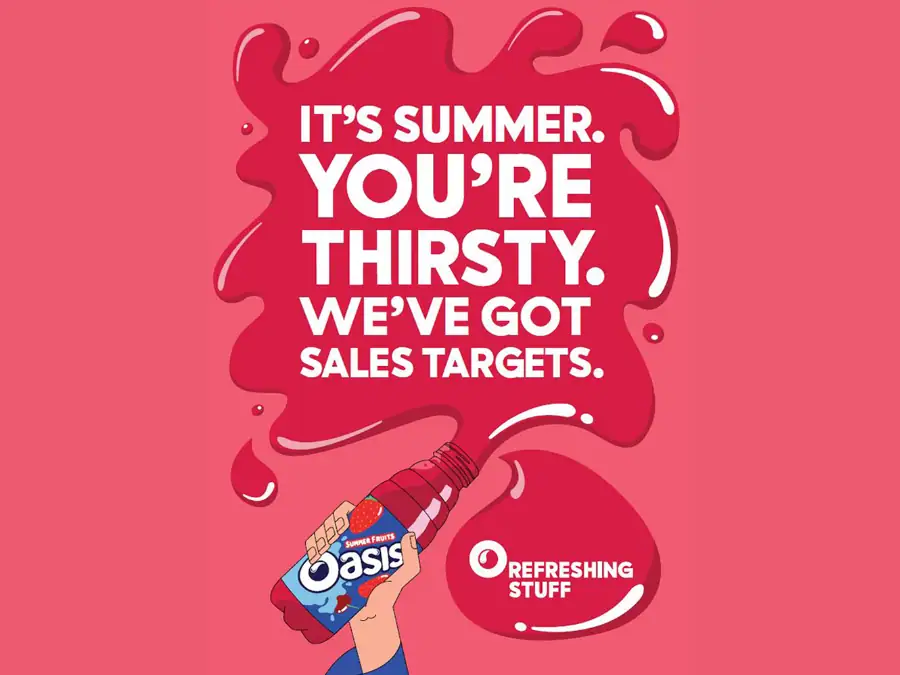
This is why honesty – just being straight – can do more work than polish. Take this line from the ‘Refreshing Stuff’ campaign from soft drinks brand Oasis (below): “It’s summer. You’re thirsty. We’ve got sales targets.” It shouldn’t work. You’re not supposed to say that part out loud. But everyone already knows it, so pretending otherwise feels more dishonest.
It cuts through because it resets the relationship. The brand isn’t trying to charm you or convince you that it’s something bigger than it is. It’s just being clear about the exchange. The execution follows through. It isn’t overshot, nor is it too neat or feels laboured. That’s probably why it works. It doesn’t try to impress you and in doing that, it becomes more likeable.
This is where the idea of premium starts to shift. For a lot of the industry, premium still means control. Precision. Everything exactly right. For younger audiences, it can mean something more self-aware. Less polished. More in tune with how things actually feel.
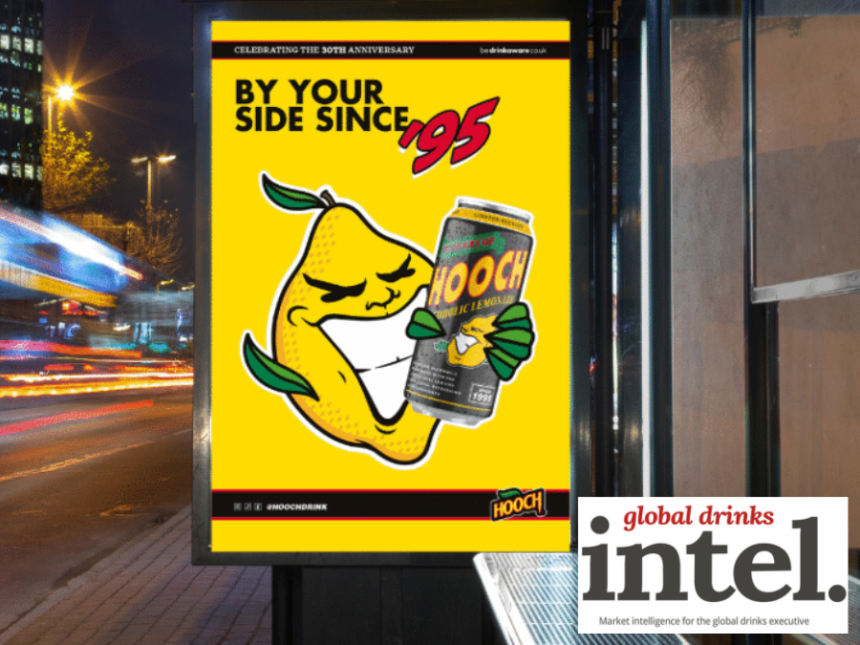
We can see that again with Hooch. Instead of updating itself, the hard lemonade leaned back into where it came from for its ‘By Your Side Since ’95’ campaign. Last year’s work around the Oasis reunion concert tour moment could have gone wrong. Nostalgia often does when it’s overthought. But lines like this – ‘When your fingers did more than scroll’ – don’t feel overthought. It speaks the truth, but paired with visuals that genuinely feel like they belong to the mid-1990s, it lands with a bit more weight. It doesn’t try to reposition the brand. It just owns it.
Then, there’s Sazerac Co’s RTD brand BuzzBallz, coming at things from a completely different angle. Its most recent interactive activation, for the UK launch in April of its Berry Cherry Limeade flavour, saw a giant capsule toy vending machine loaded with samples stationed on London’s South Bank. No nostalgia, no references, just the product. Bright, loud, slightly ridiculous packaging, with big flavours and a high ABV.
The sort of thing most brands would have toned down to look more serious.
But BuzzBallz didn’t, and that’s the point. It’s now the biggest-selling single-serve premixed cocktail in the US and one of the fastest-growing RTD brands in the market. Not because the brand has refined itself, but because it didn’t. There’s no gap between what it looks like and what it is.
All of this sits slightly awkwardly next to the industry’s push towards premiumisation. For years, everything has been moving upwards: Better ingredients, better stories, cleaner design. The approach has worked, but only up to a point. Indeed, a lot of brands have started to look the same as each other. A bit too controlled; a bit too careful.
At the same time, the outside world has become less certain. AI is speeding things up while making things harder to trust. The more perfect something looks, the more people question it. Perfection starts to feel like a signal in itself.
As a result, the work that cuts through often does the opposite. It relaxes and says what it is, leaving a few edges in place. It feels more like something made by people than something engineered.
There’s a practical side to this as well. Consumers are still thinking carefully about what they spend on. If they’re going to buy something, they want a clearer payoff, with less ambiguity. That carries through to how brands talk. If you’re asking for someone’s money, being straight about what you’re offering goes a long way.
That doesn’t mean stripping everything back. Brands still need character. But there’s a difference between building a world and hiding behind one. Oasis and Hooch don’t pretend, while BuzzBallz doesn’t dress anything up. They all assume the audience already understands what’s going on and act accordingly.
In doing so, they earn a bit of trust. Not the big, overclaimed kind of trust, but something smaller. More immediate. More believable.
In this day and age, this approach is proving more effective than most perfectly put-together campaigns.