The fortunes of the fiercely competitive closure sector are closely aligned with those of the beer, spirits and wine industries it serves. Over the past 18 months, the market conditions for beverage alcohol have been tough. Last year, according to the International Organisation of Vine & Wine, global wine production slumped 10% to 237.3m hectolitres, the lowest level since 1961, mostly because of extreme weather conditions.
Spirits, meanwhile. escaped 2023 in better shape, although global volumes were still down 1% versus the previous year, according to data from IWSR, as beer posted a similar performance, with volumes slipping by 1%.
“Times are challenging,” admits Christophe Fouquet, co-CEO of Amorim, the world’s biggest cork closure producer. “The market in general is overstocked, and some countries have been affected by strong inflation, with an impact on consumption. We are currently working to offer solutions and new products adapted to our customers’ requests, to be in a position to respond positively to the demand and maintain our competitiveness levels.”
Amorim is making efforts to increase efficiencies in terms of energy consumption, raw material costs and across its entire supply chain to minimise the substantial impact of inflation.
“Naturally, however, the very significant increase in prices throughout the value chain always ends up having some impact upon the customer, although Amorim Cork always tries to minimise this influence, given the current market circumstances,” Fouquet concedes.
Growth relies on M&A
Market headwinds have also accelerated the ongoing consolidation that the closure sector has experienced in recent years, with smaller regional producers being snapped up by major players.
Guala Closures Group is one company on the acquisitions trail – in April, the company announced the purchase of crown closure producer Astir Vitogiannis, which made over 12bn closures last year from factories in Greece and South Africa, while generating sales of EUR75m (US$828m).
Established in 1953, Astir Vitogiannis closures are used in glass bottles by both beer and non-alcoholic drinks producers. When completed in the second half of 2024, Guala said the EUR136m Astir deal would give the group a larger presence in emerging markets and entry into the fast-growing RTD and non-alcoholic sectors.
Only three months later, Guala bought the remaining 30% stake in Guala Closures DGS Poland – one of the world’s largest aluminium closure producers for spirits, wine and non-alcoholic beverages, producing around 4bn units per year. Guala initially took a 70% holding in the 33-year-old Polish firm in 2011, since when DGS has flourished, with annual sales growing from around EUR50m to EUR126m.
“As we continue to pursue our ambitious growth agenda, the decision to purchase the 30% stake from our minority partner perfectly aligns with our long-term strategic objectives,” said CEO Mauro Caneschi when announcing the deal.
Role in sustainability journey
Assisting wine and spirits brands on their sustainability journeys has become a primary aim for leading closure producers, alongside performance and aesthetics.
Premium closure company Tapì, for instance, now offers a wide range of sustainable closures that are either made using recycled materials or can be easily recycled by the consumer.
“Sustainability is a growing concern for beverage brands, and Tapì leads the way by ensuring that every innovation and new design is born with a sustainability focus,” explains marketing manager Paolo Boratto. “This commitment manifests in reusing materials to give them a second life and enhancing the recyclability of products at the end of their life cycle.
“Tapì offers a wide selection of sustainable products and technologies. One notable innovation is Neos, a technology that reduces the carbon footprint of a product by using polymers from renewable sources to create the shanks of closures [or the entire closure if it is a mono-piece solution],” he adds.
Another innovation is the T-Cask design, Boratto explains, a closure range that both supports the environment by reusing spent barrels previously used for maturation by distilleries and creates a storytelling element for the brand owner.
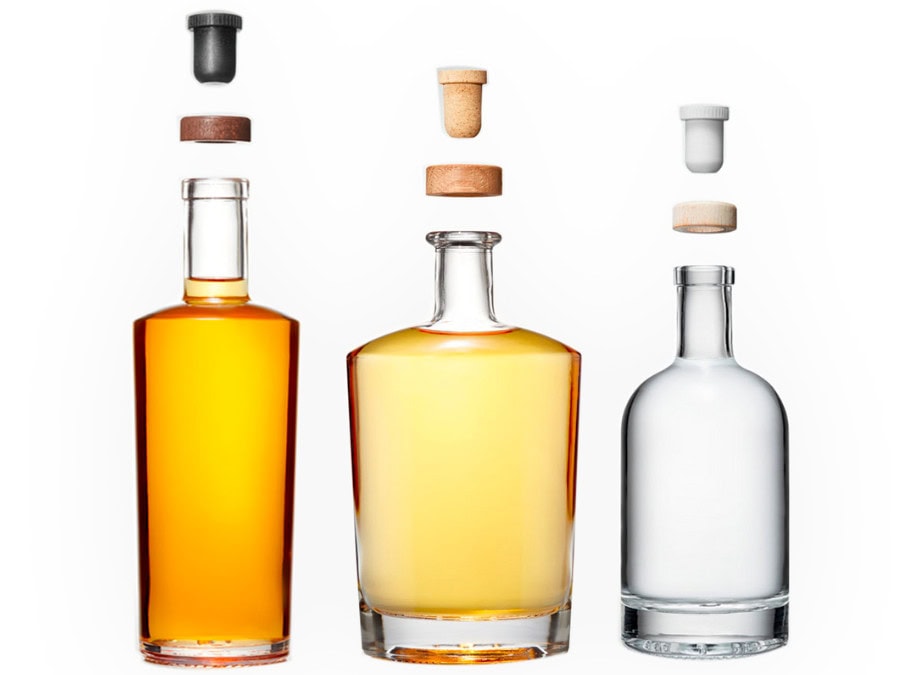
He also highlights Tapì’s Duo (below), a closure designed for spirits and beauty products, with a head and shank that are easily disassembled for recycling.
Working to preserve cork forests
French technical cork producer Diam Bouchage has demonstrated its sustainability credentials further down the supply chain by partnering with agroforestry firm Ferticork to preserve cork forests.
In July, the pair announced a research project that aims to discover how to support the fragile ecosystem Mediterranean cork forests depend on at a time of extreme climate change, while making cork farming more economically viable.
To this end, they have created an experimental solar-powered 10ha cork plantation in Extremadura, Spain, close to one of Diam Bouchage’s factories. Each plot of the plantation is carefully monitored through electronic sensors that measure growth, sap flow, soil humidity and climate conditions to ensure the perfect amount of irrigation for the trees without waste.

Investing in innovation
The closure sector is one of packaging’s most competitive, with producers constantly investing in technologies to improve the performance and aesthetic look of their lines.
Take Portuguese producer Cork Supply, which has spent EUR1.2m developing Legacy, its latest natural cork closure line that it maintains is the “most consistent” performer in the marketplace. The Legacy closure has been developed using Cork Supply’s new X100 technology, which analyses each closure to ensure it doesn’t allow an abnormal level of oxygen ingress. These potential flaws in the internal structure of a natural cork cannot be spotted by the human eye. The X100 technology is only applied after Cork Supply’s DS100 and DS100+ anti-TCA screening processes have been employed.
“We’ve been obsessed with the perfect cork closure since we launched Cork Supply in the 1980s,” says president & founder Jochen Michalski. “We’ve always invested in technologies, creating patents and solutions that allow us to reach the premium market today with the natural cork closure closer to perfection.
“The new technology is the pinnacle of a decade of research and raises the status of the natural cork closure and the position of Cork Supply as an innovation leader in this field.”
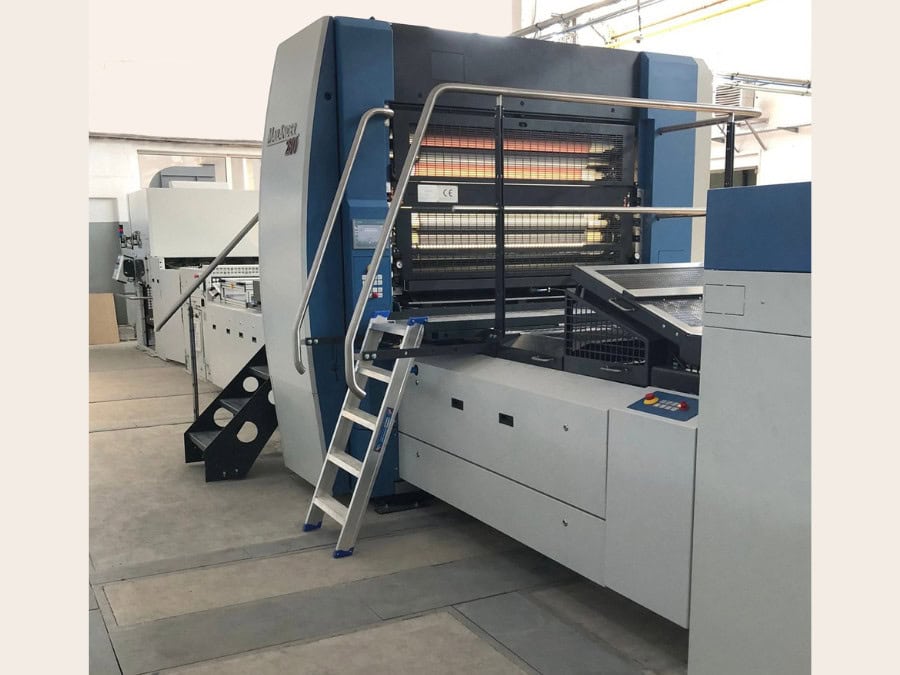
In the screw cap sector, Herti – a major player producing 2bn closures each year for alcoholic beverages, mineral waters and edible oils – prides itself on the level of customisation it offers for customers. The group manufactures closures in 50 different sizes and offers a variety of designs thanks to its investment in the latest printing technologies, such as its PrintabLED process (below), which allows for specially developed UV-LED inks to be printed directly onto metal.
“The essential difference is in the drying of the ink PrintabLED technology,” says a Herti spokesperson. “Drying takes place on a specially developed module, where the sheet with the printed ink passes through it and is dried in an extremely short time.
“The new line fits into the smallest possible space and reduces both electric power consumption and the need for natural gas. Any emission of CO2, ozone and heat are completely eliminated.”
Tailored solutions
Over the past two decades, choosing the right closure has become an increasingly complicated process for any wine or spirits producer. The range of closure types has expanded from natural and agglomerated corks and screw caps to include glass, plastic and biosynthetic closures.
There are so many issues to consider beyond price and aesthetics, such as the thorny issue of oxygen management for winemakers, the environmental footprint and any possible impact on bottling line efficiency.
Glass bottle manufacturer Stoelzle Glass Group, which operates six production facilities in Europe and one in the US, offers a turnkey solution for drinks brands that potentially avoids many of these issues.
“At Stoelzle, we pride ourselves on offering an extensive range of caps and closures, including security caps, T-shape (wood and aluminium) and GPI aluminium options,” says business development manager Alessandro D’Ospina.
“Our global synergies and collaborations with cap and closure suppliers enable us to support our customers with solutions that transcend mere functionality, seamlessly blending design and beauty. This is why we confidently assert that our customisation possibilities are virtually limitless.
“We thrive on challenging ourselves to push beyond conventional limits to transform our customers’ ideas into competitive advantages,” he adds. “Every closure and cap are tailored to the specific product, offering freedom in shape and type selection. By ensuring a suitable neck finish, we guarantee that the desired closure harmonises perfectly with the overall packaging.”
The closure sector today stands at a crossroads. Navigating economic headwinds while simultaneously responding to the imperative for sustainability is demanding innovation and adaptability.
The future will belong to those that can balance performance, aesthetics and environmental responsibility, while creating solutions that resonate with both consumers and the planet.
This article is available to Global Drinks Intel members only.
Click below for details on how to join the Global Drinks Intel community.
Already a member?
Log in here to read the article in full.
If you work for any of the following corporate subscribers to Global Drinks Intel, head here to activate your access.
- AB InBev
- Bacardi
- Campari Group
- Diageo
- Moët Hennessy
- Pernod Ricard
- Proximo Spirits
- Suntory Global Spirits
- William Grant & Sons