

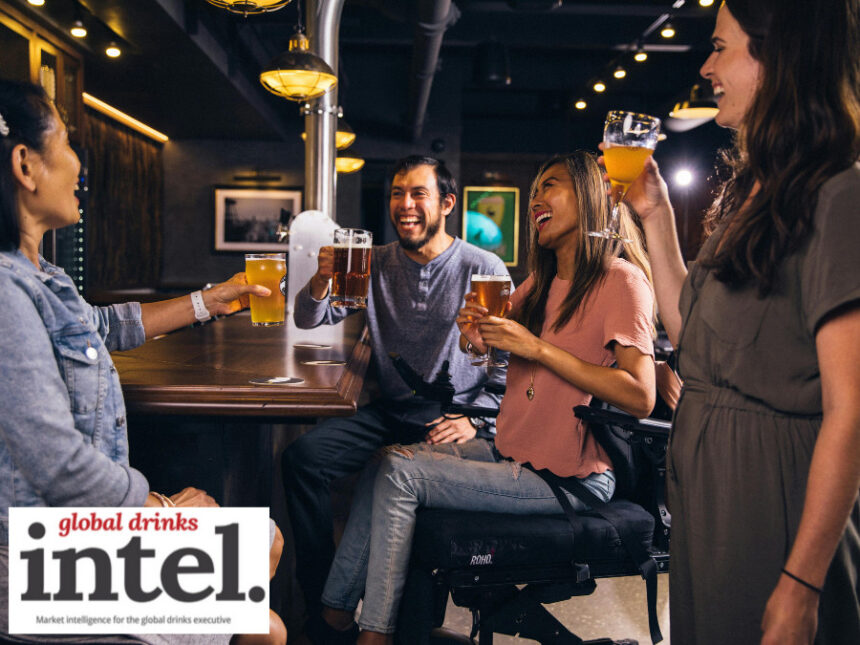
I consider my job a privilege. On a daily basis, I research why, when, where and how consumers go out to eat and drink. To conduct this task, it often means heading to pubs and bars to observe this. That results in spending time in our beloved on-premise channel, visiting anywhere that people buy and consume alcohol.
What I love about this dynamic, vibrant and uniquely sociable channel is unquantifiable; the way it brings people together, the fact that it’s where we go to celebrate for our best times, yet commiserate our worst, the way in which the on-premise acts simultaneously as both as a treat and a comfort blanket.
It’s where stories are regaled, friendships are formed, romance is sparked and experiences lived. The on-premise is inherently decadent, yet accessible enough to be the communal luxury that is prioritised ahead of all others, as has been demonstrated by its resilience in recent times of crisis.
However, what is beloved about a channel that, by its nature, is indulgent and defined by alcohol purchase, isn’t necessarily the alcohol – and it’s certainly not about consuming alcohol to excess.
In CGA by NIQ’s latest global research, we asked consumers about what their relationship is like with various elements of the on-premise. Firstly, we asked about their relationship with going out and socialising and, secondly, with alcohol.
At this point, I have to admit this is a very blunt way of measuring the relative importance of alcohol in the channel. Of course, everybody tells us they love socialising with friends and family, but not everybody tells us that they love alcohol. In fact, in many markets, there are more consumers who tell us they have a ‘love-hate’ relationship with alcohol than those who are positive towards it.
However blunt and basic the measurement may be, the message is clear. The positivity towards the product doesn’t match the positivity to the channel in which it’s sold.
Of course, the sentiment towards a perfectly poured pint, or the refreshing taste of an expertly-crafted cocktail remains amorous, as does the relaxing and unwinding head space that a great alcoholic drink can provide. However, at a time when mental wellbeing has never been more of a priority, the adverse effects of excessive consumption – as well as the negative perceptions and social stigma around alcohol – have an equal counter-impact.
For those who supply and sell beverage alcohol – or for those whose business is reliant on those products – this will cause understandable concern. With a ‘sober-curious’ movement building in momentum and consumers seemingly turning away from alcohol, there’s a significant long-term risk, especially given the increased calls from lobbyists to regulate sales and incorporate health warnings onto packaging.
At this point, there are two differing paths. The first is to ignore or downplay the growing voices and continue to promote alcoholic products themselves, hoping that the hype around those pesky Gen Z and younger consumers falling out of love with alcohol is just that: hype.
The alternative path is to lean in and embrace the evolving needs and attitudes of consumers, to understand the reasons why they may be opting for fewer serves and to assess what the nuanced sentiment behind a ‘love-hate’ relationship with alcohol is.
From this, a more tailored approach can be developed; one that promotes the virtues that resonate strongly with the target market.
As ever, my suggestion would be to invest in understanding the consumer as well as you can to guide your approach. For many, that may be uncomfortable. My guess, however, is that it will be a far more positive than a negative experience.
Indeed, I wouldn’t be surprised if the end result also included enlightened brand teams, marketeers and planners alike, invigorated about the value of the on-premise and its ability to act as more than just a sales channel and instead a facilitator of good times and great experiences.
It’s these messages that are increasingly resonating and those values that consumers are increasingly looking for at a time when brand values are being increasingly scrutinised. Go hard on the virtues of responsible drinking in a channel where human connection is facilitated and you’re more likely win not only today, but tomorrow as well.
Aside from any potential share gains or increased brand affinity, the bigger picture is that we have a duty to our products, to our consumers and to the on-premise as a whole. The reciprocal relationship between the channel and the alcohol it sells necessitates a responsible approach.