

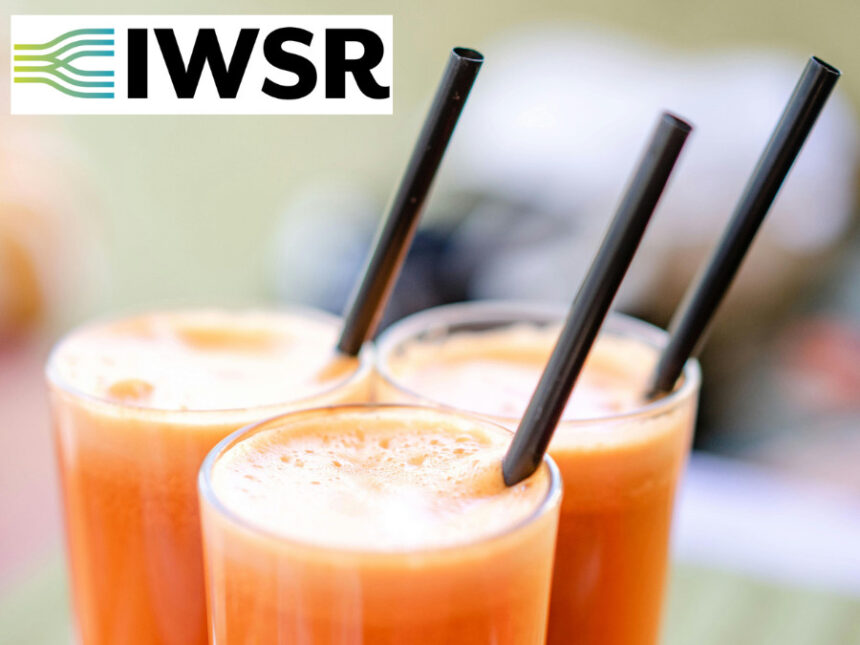
As no-alcohol products continue to dominate opportunities within the buoyant no/low space, alcohol adjacent beverages are emerging to offer tantalising growth prospects among younger LDA+ consumers in particular.
In 2024, according to IWSR’s ‘No/Low-Alcohol Strategic Study 2025’, no- & low-alcohol volumes in the world’s leading ten markets grew by 4%, with value rising by 6%. IWSR projections for 2025 predict a 9% volume gain for no-alcohol products, with low-alcohol declining by 2% versus 2024. To 2029, no-alcohol volumes are forecast to expand by 36%.
Although dwarfed by ‘analogue’ products such as no-alcohol beer, wine, RTDs and spirits, alcohol adjacent products are gaining ground, with volumes rising by 11% in 2025, according to projected IWSR data.
This is also reflected in IWSR consumer research analysing consumption incidence of alcohol adjacents among no-alcohol drinkers, which rose to 19% in 2025 across the top ten markets, significantly higher than in 2022. Consumption incidence is even higher in the US at 33%, and among Gen Z consumers at 30% across the top ten markets.
“No-alcohol analogue total beverage alcohol (TBA) categories lead the no/low market in volume terms,” explains IWSR‘s head of no/low insights, Susie Goldspink. “But, strong growth and innovation continue in the alcohol adjacent space, boosted by the involvement of celebrity founders.
“Consumer awareness of mental health, anxiety disorders and stress management is at an all-time high. Functional products that target any of these issues – or improve sleep quality or energy levels – are on the rise. New ranges often include a portfolio of products that each offer a specific unique effect, such as uplift, unwind, calm, focus and so on.”
Alcohol adjacents encompass a variety of product types, including non-intoxicating hemp beverages (such as CBD drinks); functional, non-intoxicating beverages targeted at adults (nootropic and adaptogenic beverages), and non-functional, no-alcohol products using alcohol cues (botanical, bitter, vinegar-based products, plus wine alternatives, sparkling tea and fermented products).
They are proving especially popular among younger LDA+ consumers, with Millennials and Gen Z accounting for more than three-quarters of the alcohol adjacent consumer base across the top ten no/low markets.
Motivation to purchase
Crucially, where alcohol adjacents differ from other no-alcohol products is in the motivation to purchase: rather than viewing them through the prism of health and alcohol reduction, consumers are more likely to use them to replicate the effects of alcohol, using their functional benefits for unwinding, an alcohol-like ‘buzz’, or mood enhancement.
“Sixty percent of Gen Zs are now moderating their alcohol intake,” says Goldspink. “This cohort is also the key consumer base for alcohol adjacents, and yet they do not see them as an alternative for reducing alcohol consumption. Instead, Gen Zs drink these products for their functional benefits and effects.
“It is possible that these products are incremental to the alcohol and no-alcohol analogue occasion, rather than an alternative to alcohol – and thus they present a unique opportunity in themselves.”
However, interest in alcohol adjacents varies notably by market, with the US and Canada the most developed in terms of product availability and volumes. Across the top ten markets, according to IWSR consumer research, 60% of no/low consumers are open to adjacents (meaning that they consume them, have tried them or would like to try them). In the US, that number rises to 85%, and in Canada to 78%, but it falls as low as 33% in Japan, and 43% in France.
The functional benefits that most interest consumers present a similarly nuanced picture: while drinkers in Japan show a much stronger preference for products that support sleep and far less interest in energy-boosting products, the reverse is true in Germany.
Meanwhile, unwind, energy and mood enhancement are the leading functional benefit preferences in many markets, including Australia, Canada, the UK and the US.
Barriers to growth
For all their considerable promise, alcohol adjacents still face barriers to growth – most notably availability. While this is a persistent challenge across the no/low space, it is especially important for alcohol adjacents: 60% of no-alcohol buyers cite it as preventing them from consuming alcohol adjacents more frequently – versus 50% for no-alc spirits, 48% for RTDs, 46% for wine and 35% for beer.
“Availability is a more significant barrier for alcohol adjacents as this emerging category develops and fights for shelf space,” explains Goldspink. “The perception that they are expensive is another hindrance, as it is for no-alcohol spirits and RTDs.
“An additional challenge is presented by consumers struggling to know which retail section to find these products in. Their location – with soft drinks, no/low or energy drinks, with some refrigerated and some not, some in multipacks and some in the on-the-go section – requires clarity and consistency across channels.
“A category management approach by retailers would help the category to further develop and normalise.”