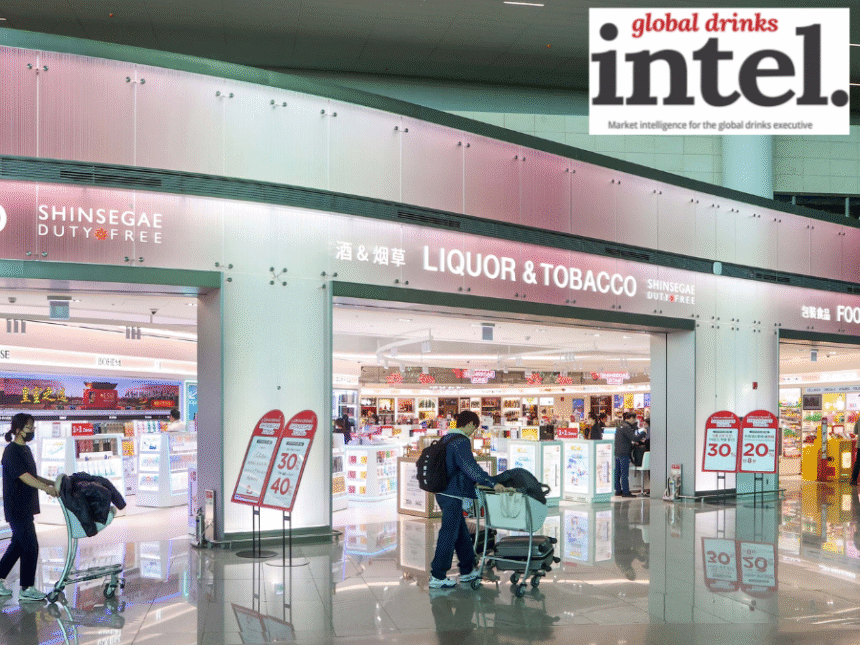
- Shinsegae Duty Free has cemented its presence at Seoul’s Incheon International Airport by focusing on premium spirits, exclusive launches and elevated store design to differentiate it from its rivals
- Regulatory changes and evolving traveller preferences – particularly between Korean and Chinese consumers – are reshaping buying patterns and driving growth in small-format and high-end liquor categories
- Despite macroeconomic pressures and shifting retail dynamics, Shinsegae is doubling down on digital innovation, brand partnerships and destination-driven retail to future-proof its travel retail strategy.
Seoul Incheon, one of Asia’s busiest hub airports and the country’s main international gateway, has long been a critical battleground for Korean global travel retail operators, thanks to its potent mix of high-spending local and Chinese passengers.
Shinsegae Duty Free’s latest chapter at Incheon began in earnest in 2023, after a landmark concession win that marked a seismic shift in the airport’s ultra-competitive retail landscape.
Alongside rival operators, The Shilla Duty Free and Hyundai Duty Free, Shinsegae secured two major concessions as part of Incheon International Airport Corp’s revamped tender process – a 16-store perfume, cosmetics, liquor and tobacco package (DF2) and a 13-shop fashion and boutique contract (DF4).
The victory ended Lotte Duty Free’s long tenure at the airport and positioned Shinsegae as a key player in South Korea’s airport retail sector.
Since its concession win, Shinsegae has emerged as a dynamic force in the wine and spirits category, leveraging strategic renovations, exclusive product launches and digital innovations to drive growth. However, the operator’s success in beverage alcohol has unfolded against a backdrop of broader challenges facing South Korea’s GTR channel, ranging from fluctuating passenger spending to geopolitical and economic headwinds.
Wine, spirits and a new growth trajectory
Shinsegae’s wine and spirits business at Incheon enjoyed “significant growth” in 2024, according to a company spokesperson. This upward trend has continued into 2025, the spokesperson adds, fuelled by rising numbers of passengers using the airport and an important regulatory change in March, when the two-bottle limit of the previous duty-free allowance was scrapped.
While the US$400 spending and two-litre volume caps remain in place, the change has encouraged more adventurous purchases of smaller bottle sizes.
Single malt whisky and premium wine have been the standout alcohol categories, with brands such as William Grant & Sons’ Glenfiddich and The Balvenie gaining notable popularity. “There is strong demand in the premium and rare segments,” Shinsegae’s spokesperson says, highlighting the importance of travel retail exclusives and high-end collections.
Cognac and Chinese baijiu also remain robust, particularly among Chinese travellers, while premium Korean soju is gaining traction internationally, propelled by the meteoric rise in interest worldwide in the country’s culture and cuisine.
Channel exclusives take centre stage
High-end and exclusive products are pivotal to Shinsegae’s strategy. Recent launches have included the exclusive limited-edition GlenAllachie PX Sherry Cask Finish (a 12-year-old single malt selected by world-renowned master blender Billy Walker) and a collaboration with Taiwanese independent bottler Dong Fang Ming on The Shinsegae Duty Free Edition (a trio of exclusive Scottish single malts featuring artwork inspired by Joseon-era Korean paintings).
“We remain committed to offering differentiated brands and unique promotions to create unparalleled shopping experiences,” the spokesperson insists.
Retail as experience – Design and digital drive differentiation
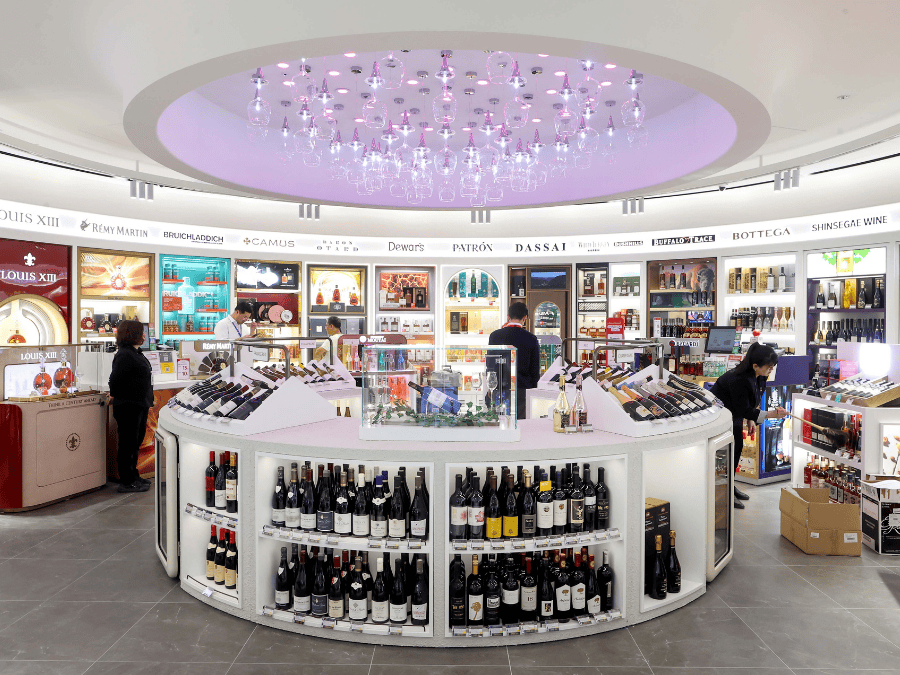
The operator has also invested heavily in store renovations. In November, Shinsegae unveiled a dedicated wine zone at Terminal 2 (above), featuring a striking circular gondola-style design with sections also dedicated to cigars and gourmet foods. “These enhancements have significantly improved the shopping experience, making it more immersive and visually appealing,” the retailer noted.
The revamped area features a wide selection of whiskey/whisky, cognac, sake and traditional Korean spirits, with a prominent branded presence from the likes of Martell, Dassai 23 Sake, China’s Moutai Baijiu and Won Soju, a premium soju brand founded by Korean rapper & entrepreneur Jay Park.
Digital technology is also reshaping the buying journey. “We’re using advanced digital technology, including transparent OLED displays, for in-store promotions,” the spokesperson says, adding that the trend towards e-commerce has gained momentum. “An increasing number of travellers [are] opting for online pre-order options for wine and spirits.”
This aligns with the South Korean GTR channel’s broader embrace of digitisation, where pre-arrival browsing and click-and-collect services have taken hold.
Tailoring the offer – Korean vs Chinese shopping patterns
A key driver of Shinsegae’s liquor sales is the divergence in purchasing behaviours between Korean and Chinese travellers.
“Korean travellers typically make moderate purchases, prioritising quality over quantity,” the spokesperson observes. “In contrast, Chinese travellers are more inclined towards luxury items and often make bulk purchases, favouring high-end spirits such as cognac and premium whisky.”
While spending from Chinese passengers has recovered gradually post-pandemic, it has yet to reach pre-Covid levels. The Korean Government’s recent announcement of a visa waiver for Chinese group travellers, set to take effect during the second quarter of this year, offers hope for a stronger rebound from this key group of shoppers.
According to industry observers, the move could revitalise the country’s wider GTR channel, where Chinese tourists once accounted for 70% of visitors and 90% of sales.
International brands back premium push
Leading spirits brands in Korea’s duty-free market echo Shinsegae’s focus on premiumisation and innovation.
Diageo, for instance, has doubled down on luxury offerings, including Johnnie Walker Blue Label and exclusive launches such as Johnnie Walker Blue Label Umami and the Lunar New Year Snake Edition. “With pricing and pack formats more relevant than ever, we’re staying close to consumers to remain agile and responsive to shifting preferences,” says the group’s global travel MD, Andrew Cowan.
Elsewhere, Brown-Forman, whose portfolio includes Jack Daniel’s and The Glendronach, sees South Korea as a “strong growth driver within Asia Pacific”, with rising average spend per buyer. The brand owner’s GTR commercial director, Anton Skobelev, notes that Jack Daniel’s is the only top-five whiskey/whisky brand in South Korea to have grown in volume compared to pre-pandemic levels.
“The super-premium-plus single malt category is projected to grow by 15% over the next five years, offering a significant opportunity for our brands,” he adds.
Mounting challenges – Exchange rates to rental reform
Despite these successes, the South Korean GTR channel faces significant challenges. The downtown duty-free sector, heavily reliant on Chinese bulk-buying traders, is struggling following a government crackdown on this once-lucrative revenue stream. At the start of this year, Shinsegae shuttered its massive downtown Busan store, citing weak tourist numbers and exchange rate pressures.
While passenger traffic at Incheon surged nearly 27% in 2024 to reach over 70m, duty-free sales only reached 72% of pre-pandemic 2019 levels, according to local press reports. Retail analysts believe a new generation of value-conscious tourists is now prioritising experiences over shopping, opting for budget-friendly retail outlets instead of luxury-focused GTR outlets.
Currency fluctuations have also been unkind. A strong US dollar and a weak Japanese yen have driven many Korean tourists to shop abroad, further denting domestic sales.
Adding to the woes, airport rental fees at Incheon, which since 2023 have been linked to passenger volumes rather than fixed fees, are proving highly challenging amid this structural shift in consumer behaviour. Last year, for example, Shinsegae and rival Shilla Duty Free, which together control around 70% of the airport’s retail space, reportedly paid a combined KRW505bn (US$377m) in rent, representing about 39% of their gross sales.
Nevertheless, Shinsegae is undeterred. The operator plans to open a duplex luxury store in Terminal 2 by in the coming months and expand its roster of differentiated brands. At the same time, digital innovation and supplier collaboration remain pillars of its strategy. According to its spokesperson, the company sees GTR less as a distribution channel, but more as a stage for storytelling and premiumisation, making its stores must-visit destinations.
Shinsegae’s ambitions seem well-matched to Incheon’s desire to become one of the world’s top mega-hubs. With premium spirits gaining favour and footfall recovering fast, the GTR operator’s glass isn’t just half full – it’s being carefully, creatively refilled.