- Navigating volatility – In the face of a provincial mandate forcing the removal of US-sourced alcohol, SAQ aggressively shifted inventory to local and Canadian brands
- New format trials – To meet growing demand for convenience without cannibalising its core network, SAQ is expanding its mini shop-in-shop concept to around 100 SAQ Zones
- Logistics overhaul – The retailer is finalising its largest infrastructure upgrade in three decades with an automated facility in Montréal
- Changing tastes – SAQ is pivoting toward consumers’ health & wellness trends by heavily promoting its no- & low-alcohol portfolio
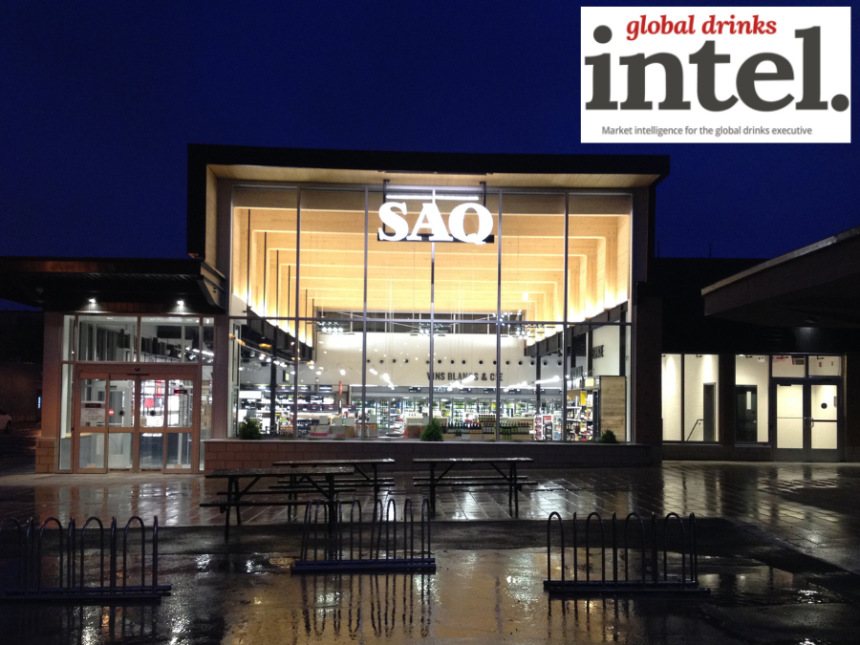
As one of the world’s largest alcohol buyers, Canada’s Société des alcools du Québec (SAQ) is navigating one of the most significant periods of transformation in the state-owned liquor retailer’s long history.
In a volatile geopolitical period that has seen US products stripped from its shelves due to ongoing trade tensions, SAQ has been testing new retail formats, experimenting with rapid delivery and modernising its supply chain as it responds to changing consumer attitudes towards sustainability and alcohol consumption.
SAQ can trace its roots back to 1921, when the rest of North America embraced Prohibition. French-speaking Québec, however, chose a different path, with the Canadian province taking exclusive control of the importation, bottling and selling of spirits and wine to stamp out bootlegging.
For subsequent decades, shopping at what was then called the ‘Commission des liqueurs du Québec’ was a deliberately joyless experience designed to discourage drinking. Customers were restricted to one bottle of hard spirits each.
A cautious path to modernisation
The commission gradually modernised, however, introducing self-service shops in 1970. A year later, the Société des alcools du Québec was born, with legal enforcement and permit issuance placed separately under the remit of the Commission de contrôle des permis d’alcool.
Consumer tastes broadened, and the first La Maison des Vins shop opened in Québec City, with wine allowed to be sold in grocery stores in 1978. From the 1980s, retailers in remote areas without SAQ shops were authorised to sell the same products as those offered at the SAQ – there are now nearly 430 SAQ agency stores.
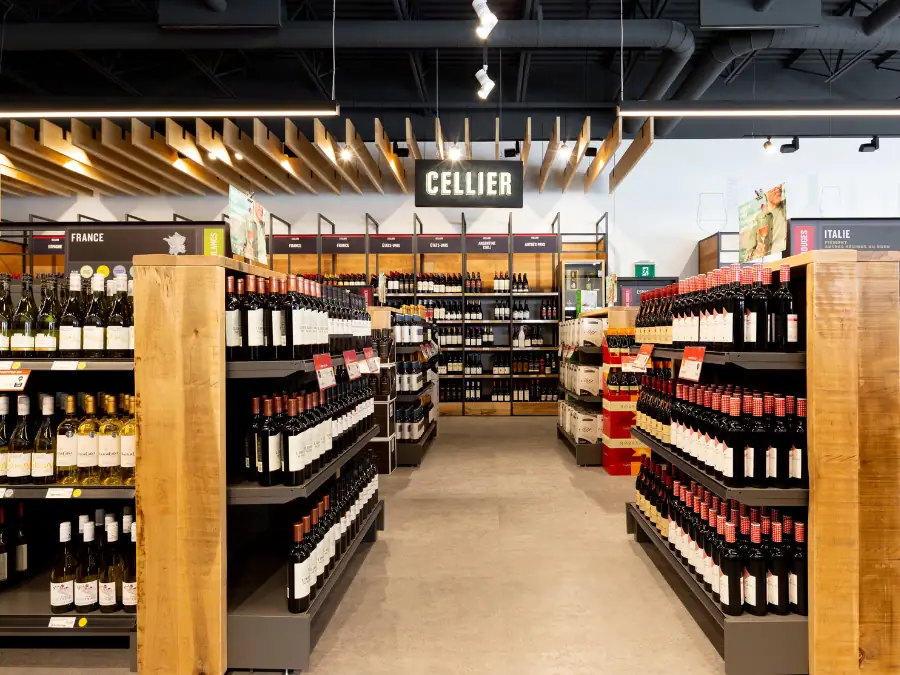
Today, SAQ operates a network of around 400 outlets across the north-eastern province, generating sales in its fiscal year (to the end of March) 2025 of around CAD4bn (US$2.9bn). Without question, SAQ is a global purchasing powerhouse, managing a vast offer of 16,200 products sourced from more than 6,000 suppliers in 77 countries.
Yet, the retailer must also simultaneously uphold its core public health mandate, ensuring that social responsibility remains at the forefront of every transaction. In its last reported year (to the end of March last year), the retailer funnelled in the region of CAD1.4bn in dividends directly into provincial public coffers.
SAQ spokesperson Laurianne Tardif says the operator has remained relevant for consumers for over 100 years by constantly evolving while never forgetting its social responsibilities. “The SAQ is continuously raising the bar across all channels, from modernising its store network and expanding digital capabilities to transforming its supply chain and introducing new formats,” she says.
“What truly sets the SAQ apart is the unique value it delivers to Québec society. We are much more than a retailer: we’re a local, engaged, responsible and high-performing organisation that contributes concretely to the vitality of Québec.”
Trialling smaller store formats
As has been the case for many other beverage alcohol retailers worldwide, a key challenge for SAQ in recent years has been to satisfy consumers’ growing desire for convenience without undermining the traditional strengths of a brick-and-mortar retail experience.
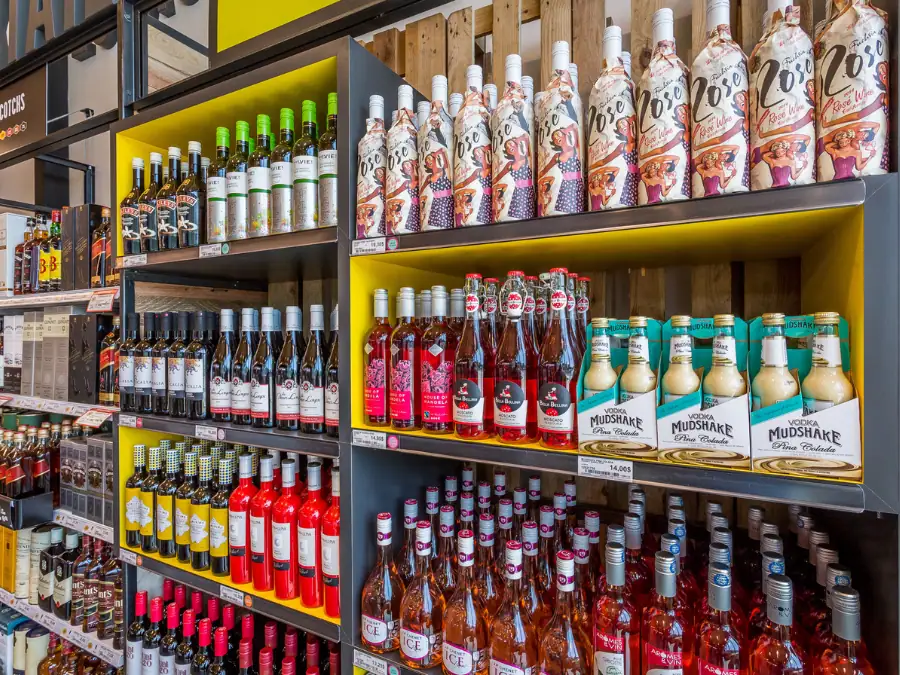
Part of SAQ’s solution has been the roll-out of SAQ Zones, a shop-in-shop concept designed to bring products closer to customers. The initiative began cautiously with eight urban test locations in May last year. Following positive results, SAQ is now planning to open around 100 locations across Québec during 2026.
“At the core of this initiative is a simple objective,” explains Tardif, “to better align with clients’ need for convenience and reach those who don’t typically visit SAQ stores or shop outside regular hours.
“Today’s consumers increasingly expect quick, easy access to a curated offering that fits into their daily routines. SAQ Zones respond directly to that reality by providing a compact selection of 30 to 40 products tailored to local demand and designed for efficient purchasing.”
Crucially, Tardif says the pilot demonstrated that the mini shop-in-shop format complements rather than competes with SAQ’s traditional network. “The concept has proven highly relevant in terms of customer adoption, operational execution and responsible sales practices,” she adds. “We also observed no cannibalisation of our existing network.”
SAQ’s choice of retail partner for SAQ Zones is strictly controlled. Locations are identified according to local demand and proximity to existing stores, before operators are selected through a formal tender process. Participating retailers must already hold licences to sell alcoholic beverages and demonstrate compliance with SAQ’s responsible retailing standards.
Uber Eats pilot project goes live
SAQ is also dipping a toe into the booming world of on-demand digital delivery, announcing in March a six-month trial with Uber Eats on the island of Montréal, offering consumers same-day delivery of around 150 products. The retailer has placed particular emphasis on age verification procedures and delivery protocols, drawing lessons from similar alcohol delivery models operating elsewhere in Canada.
For now, however, SAQ is careful not to overstate the significance of the project. “This initiative remains firmly a pilot,” says Tardif. The company is closely monitoring customer adoption, performance and compliance standards before making any decisions about broader expansion.
Tardif is at pains to point out that both the Uber Eats initiative and the SAQ Zones are supplementary sales channels rather than a strategic replacement for its existing store network. “They do not replicate the full SAQ experience,” she maintains. “Our stores remain at the heart of it: access to a deep and diverse product assortment, personalised advice and a high-quality in-store customer experience that goes well beyond convenience.”
A behind-the-scenes revolution
While consumer-facing innovations like Uber Eats pilots and SAQ Zone convenience kiosks have grabbed the headlines, a bigger project set to shape SAQ’s modernisation strategy is happening behind the scenes.
The corporation is currently finalising its largest infrastructure and logistics overhaul in more than three decades: the construction of the CAD300m Montréal Automated Centre (Centre automatisé de Montréal or CAM).
CAM will represent a paradigm shift for the retailer’s back-end capabilities, with faster, more efficient delivery and greater warehouse capacity. Once fully operational, scheduled for the summer of 2027, the centre will provide customers across Québec with access to expanded online shopping at SAQ.com, with the offer growing from 4,000 to 20,000 lines, including private imports.
Showcasing local products amid geopolitical turmoil
One of the most disruptive operational events for SAQ over the past 18 months came from the worsening political and trade tensions between Canada and the US.
In March 2025, SAQ removed all US-manufactured liquor products after a direct request from the Québec Provincial Government. In February this year, SAQ was given permission to sell US products whose quality could begin to decline from March 2027, with the proceeds going to the Food Banks of Québec charity.
The wider ban on the sale of US products, however, remains in place.
For most major North American retailers, abruptly delisting American brands – historically massive volume drivers across categories such as Californian wine, vodka and Kentucky bourbon – would trigger a catastrophic inventory vacancy and a plunge in revenue. Yet SAQ successfully plugged the gap in its offer by stepping up its promotion and assortment of provincial and Canadian producers.
“Today, nearly a quarter of SAQ’s sales volumes (21.9%) come from products that are ‘Origine Québec’, ‘Made in Québec’ or ‘Bottled in Québec’,” reveals Tardif.
“Rather than a few ‘hero’ brands, this growth reflects a broader appreciation for the quality and diversity of local producers.”
Promoting lower-ABV lines
No- & low-alcohol lines are also proving a standout success for SAQ. “We are actively promoting 0.5% alcohol-or-less options by making them visible and accessible across our network,” Tardif says. “This shift is clearly reflected in our offer: we now carry around 130 products in this category, with growth of nearly 28% over the past year.
“We’re also seeing strong momentum in the low-alcohol category, including lightly sparkling and still wines with alcohol levels between 4% and 9%, which we aim to further develop in the coming years,” she adds.
The outlook for more traditional volume categories looks less promising, however, with wine, by far the largest subcategory with an over-70% market share, dipping 1.6% in SAQ’s last set of financial results. Spirits also shrank, by 1.8%, but tequila (+7.2%) notably bucked the category trend, as did coolers (RTDs), which grew their category share from 11.1% in 2024 to 11.7% in 2025.
While not immune to changing consumer tastes and geopolitical headwinds, SAQ is entering the latter half of the decade firmly positioned as an innovator rather than an unyielding bureaucracy.
Its origins might stretch back to Prohibition, but its tentative forays into digital convenience, back-office automation and a commitment to sustainable sourcing are proof that the retailer can grow and thrive in today’s fast-paced marketplace.
This article is available to Global Drinks Intel members only.
Click below for details on how to join the Global Drinks Intel community.
Already a member?
Log in here to read the article in full.
If you work for any of the following corporate subscribers to Global Drinks Intel, head here to activate your access.
- AB InBev
- Bacardi
- Campari Group
- Diageo
- Moët Hennessy
- Pernod Ricard
- Proximo Spirits
- Suntory Global Spirits
- William Grant & Sons