

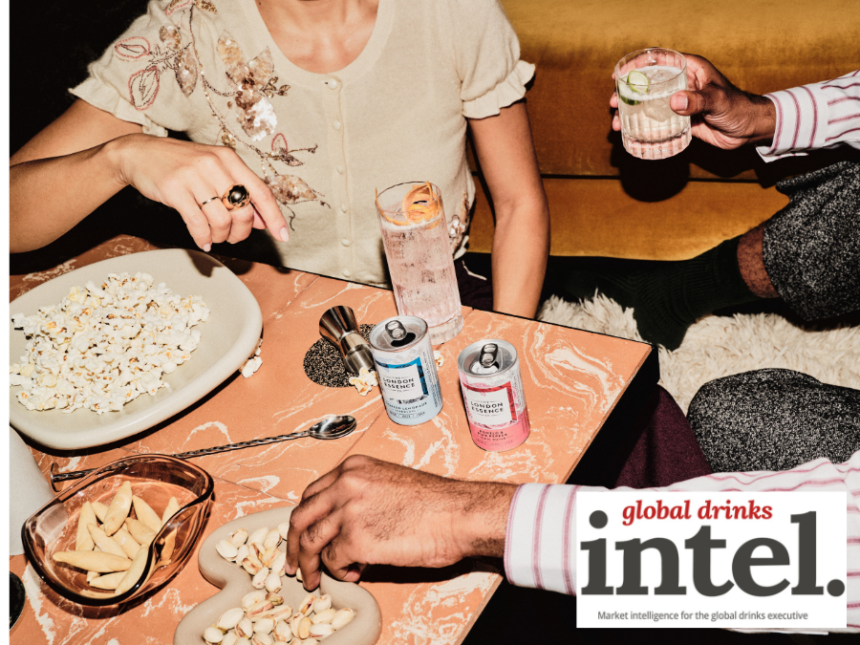
- In the UK’s on-premise channel last year, soft drinks and mixers outperformed the market, despite significant venue closures and a downturn in consumer spending
- Rising cost pressures and staff shortages mean efficiency behind the bar is essential, making mixers an important bartending tool
- The rise of tequila and mezcal has led to a shift in the flavour profile of the category, with diversity and versatility becoming key
- Advances in flavour and quality allow mixers to compete with non-alcoholic alternatives, and to be seen as drinks in their own right.
Could the current – and somewhat enforced – transformation of operations in the on-premise channel prove fruitful for premium mixer brands?
It’s no secret that hospitality venues have been having a rough time of things of late. Fragile consumer spending has exacerbated the impact of sharp rises in ingredient and labour costs.
In the UK, the addition of increases in both the minimum wage and in National Insurance contributions since last April’s Budget has created a perfect storm, hurting profit margins and forcing businesses into difficult decisions on staffing levels and opening hours. The outlook is bleak both for operators and for the producers who rely on on-premise sales.
However, for one category of the drinks industry, at least, a silver lining has formed around this dark cloud.
In the final quarter of 2025, the UK’s licensed hospitality sector was hit with 382 net closures, the equivalent of four sites closing per day, according to NIQ’s ‘Hospitality Market Monitor’. Data from the Office for National Statistics showed that in December last year, hospitality employed 8,784 fewer people than in the month prior.
Despite these mass closures, the number of licensed premises stocking soft drinks in July 2025 was virtually unchanged year on year, at just over 95,000 across the UK. The net result has been stability for the category, according to mixer producer Fentimans’ ‘Premium Soft Drinks and Mixers Market Report 2026’.
The report, released in January in collaboration with NIQ, reveals that soft drinks and mixers outperformed the market in the UK on-premise in 2025. In the 12 months to mid-July last year, their combined sales reached GBP4.7bn (US$6.3bn), making soft drinks the third-largest category after beer and spirits – and more valuable than wine.
On-premise efficiencies
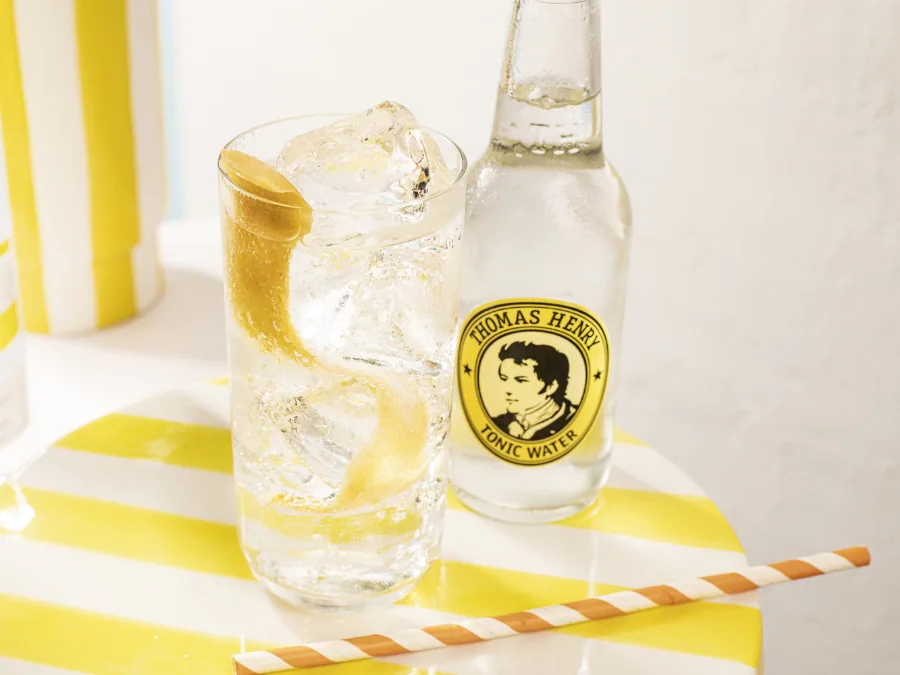
Part of this success is down to tightening purse strings for operators, according to the German mixer brand, Thomas Henry (above). “For bars in particular, rising cost pressures and staff shortages mean efficiency behind the bar has become more important than ever,” says Thomas Henry’s director of international business, Benedikt Fimpel. “This is where premium mixers can make a real difference.
“With the right mixer, even complex flavour profiles can be delivered in a simple two- or three-component highball, prepared in seconds.”
As such, adaptability has become essential for mixer brands trying to win over bartenders.
Double Dutch co-founder Raissa de Haas explains: “In the on-trade, bartenders are looking for products that are versatile, reliable and easy to work with across multiple serves. With menus becoming more streamlined, that versatility becomes even more important – a mixer that can work in several drinks is far more valuable than one that only fits a single recipe.”
Beyond gin
The end of the gin boom also means a simple tonic is no longer going to cut it.
At Carlsberg Britvic, which owns mixer brand The London Essence Co, the MD of breakthrough brands, Russell Goldman, has observed “more and more people looking for flavour-forward mixers that provide a sense of escapism and elevate classic serves”.
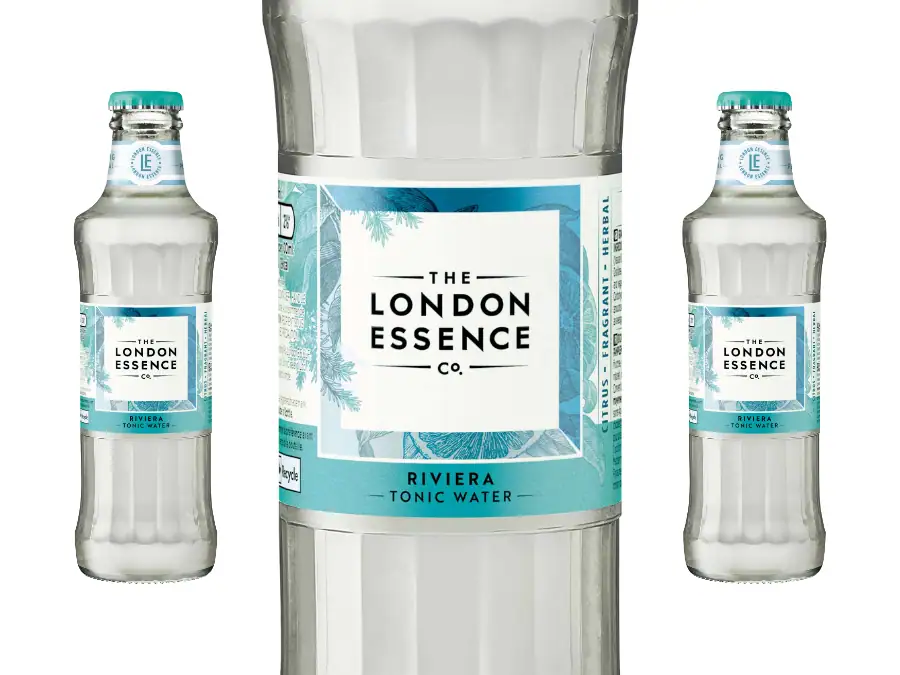
The London Essence Co recently released Riviera Tonic Water (above), made with rosemary extract, which Goldman says pairs “not only with premium gins, but vermouth and other aperitif-style spirits”, offering the versatility now required by premium mixers.
The rise of tequila and mezcal in recent years has also influenced a shift in the flavour profile of the category. Double Dutch’s De Haas says tequila’s prominence “has definitely broadened how mixers are used”.
She adds: “When gin & tonic dominated, tonic water naturally sat at the centre of the mixer category. But as drinks like palomas, margaritas and longer tequila serves have grown in popularity, there’s been more demand for mixers that bring bright citrus, subtle bitterness or fresh herbal notes.”
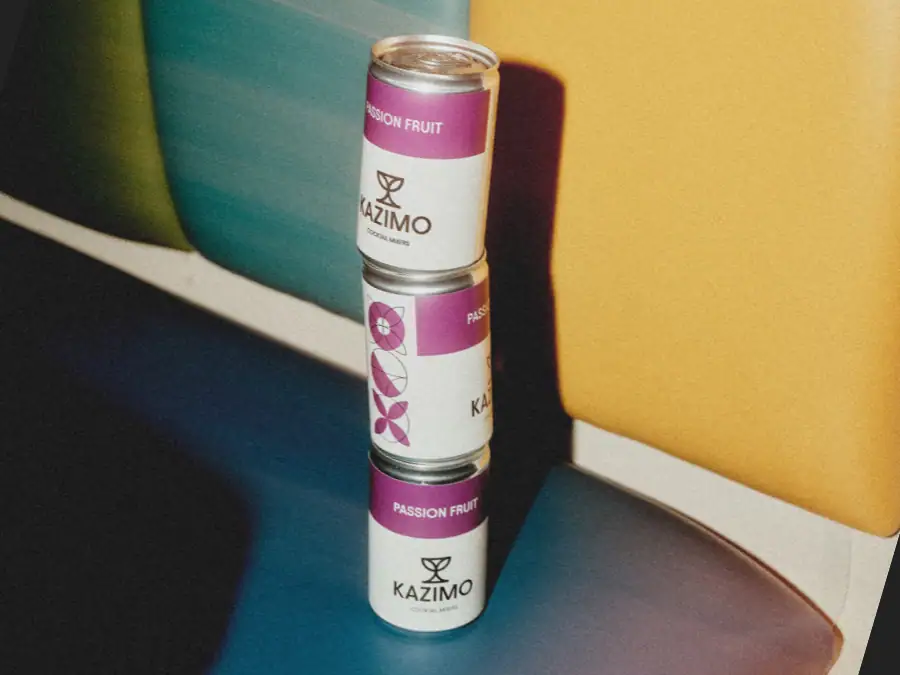
The same goes for UK-based Kazimo (below), a mixer brand that debuted in October last year. “We love anything agave-based, and our products are designed to really complement tequila and mezcal, alongside a broader range of spirit pairings,” says co-founder Marcis Dzelzainis.
When they set up Kazimo, Dzelzainis, a bartender by trade, and co-founder Andy Sweerts aimed to create a brand that met the demands of busy festival bars and high-volume service environments. Kazimo launched with four flavours – Passion Fruit, Rhubarb, Spicy Watermelon and Yuzu – but Dzelzainis has his sights set on more adventurous ingredients.
“I’m blown away by the variety and breadth of Chinese produce,” he says when asked about upcoming flavour trends. “I love working with cherry blossom, I’m really interested in rice wines, and I’m obsessed with oolong tea at the moment.”
But brands must be cautious in their approach to flavour innovation. De Haas warns against “just creating more flavours” for the sake of experimentation, at risk of flooding the market with niche products that don’t deliver on the all-important versatility.
“Rather than one spirit driving one specific mixer,” she says, “we’re seeing the category move towards more flexible, flavour-driven mixers that bartenders can use across a wider range of drinks. Citrus-forward profiles like grapefruit, as well as lightly herbal or botanical flavours, tend to work particularly well with agave spirits while still pairing with gin, vodka or lower-alcohol serves.”
Standalone success
Versatility has also enabled premium mixers to compete with no- & low-alcohol products. Drinks judge & presenter Ruchira Neotia argues that flavour innovation among brands means mixers are becoming “non-alcoholic drinks in their own right”, competing with other categories in the alcohol-free space.
“Fever-Tree started this trend by showing how the overlooked mixer can elevate a drink,” she says. “Now, there are variants and brands with such delicious products that have made the actual alcohol optional.”
In 2024, according to IWSR’s ‘2025 No/Low-Alcohol Strategic Study’, non-alcoholic drinks achieved value (+6%) and volume (+4%) growth, and are projected to deliver a 9% volume rise in 2025. No-alcohol volumes are forecast to expand by 36% to 2029. This ongoing growth provides ample opportunity for flavour-forward brands to shift away from the mixer category and instead market themselves as non-alcoholic alternatives.
Not all brands are keen to make the leap across, however. Thomas Henry’s Fimpel believes that mixers play an important role in the no/low space, but as a component part instead of as an alternative.
“Rather than competing with alcohol-free spirits, mixers enable and elevate the category, helping bars create drinks that are easy to execute but still feel premium,” he says. “The no-/low-alcohol movement is one of the most dynamic developments in the drinks industry today and increasingly a serious source of business for bars.
“In many metropolitan markets, it’s not unusual to see three out of every ten drink orders being non-alcoholic, which raises an important question for operators: do you sell a US$4 diet soda, or create a non-alcoholic craft cocktail that can command $12–$15? This is where premium ingredients, and especially premium mixers, become essential.”
Hospitality focus
Last year, according to NIQ data cited in Fentimans’ report, the mixer category saw volume and value decline in the UK’s grocery channel, dipping 1% to GBP310m. A weak performance in the off-premise is likely to push brands to focus more heavily on hospitality, where sales remain strong.
Whether positioned as a non-alcoholic serve in their own right, or a fast and efficient flavour enhancer, one thing is clear: mixers still hold an important space on the back bar.
Members-only intel
Keep reading this members-only article – and every one like it
- ✓All paywalled news and interviews
- ✓Category and market data
- ✓Monthly GDI magazine
- ✓Full archive + daily newsletter
Secure checkout · Cancel any time · Company invoices available
Already a member? Log in
See all plans, incl. 10-reader and corporate
Check if your company already pays for you Your company may already give you free access.
Corporate subscribers: AB InBev, Bacardi, Campari Group, Diageo, Moët Hennessy, Pernod Ricard, Proximo Spirits, Suntory Spirits Group, William Grant and Sons.
Activate company accessNot ready yet? Get the headlines free in our daily newsletter.
Sign up free