

From sake brewery stays to the Disneyland of Scotch, experiential drinks tourism offerings are popping up on a regular basis. Millie Milliken scopes out what’s new in the UK — and in Japan.
It (almost) goes without saying that drinks tourism during 2020-21 was non-existent. With bans on travel due to the pandemic and the subsequent knock-on effect for drinks-focused tourist destinations, the last few years have seen distilleries and visitor experiences face insurmountable challenges.
In a winetourism.com survey of 1,203 wineries across 34 countries, 32% reported financial losses of 50% to 80% with regard to tourism revenue. A further 20% reported losses of more than 80%, while 58% said they didn’t expect wine tourism to return to pre-COVID levels any earlier than 2022.
Right on schedule, businesses are slowly starting to find their feet again, with a slew of new tourism opportunities opening across the UK (and further afield). Between March and May this year, Glasgow launched ‘MadeInGlasgow’, a campaign backed by around 50 of the Scottish city’s bars, restaurants, venues and drinks producers. The Food & Drink trail saw the likes of Clydesdale Distillery and Hidden Brewery open their doors for tourists to sample their wares.
Also in Scotland, Johnnie Walker Princes Street arrived in Edinburgh with a splash – more on this later – while down south in England, Balfour Winery in Kent launched vinyasa yoga retreats, spirits ‘schools’ opened their doors and distilleries announced new tours and experiences to bring consumers back.
Shiny and new
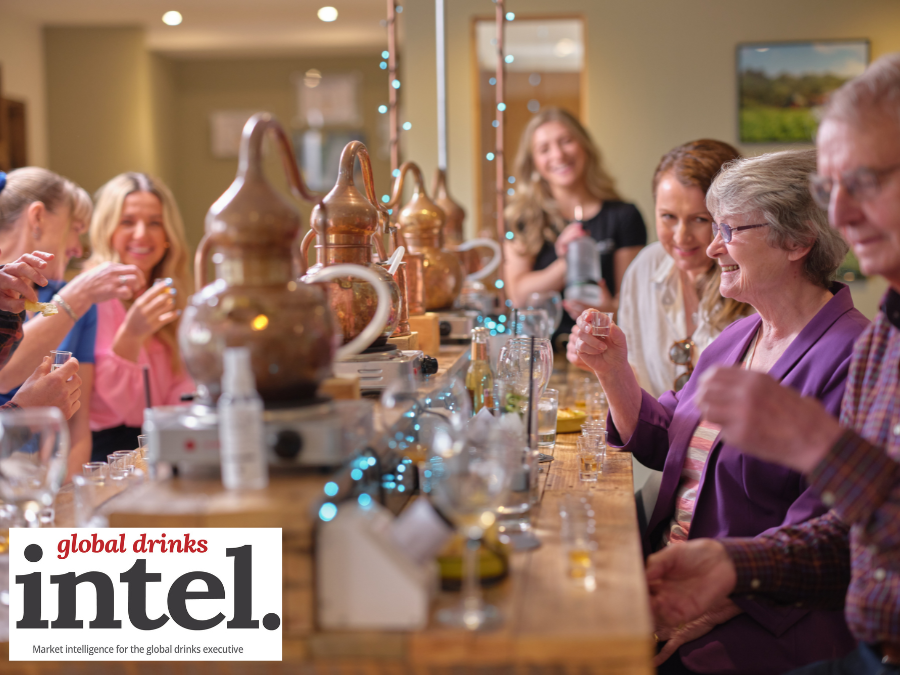
In the southwest of England, Colwith Farm Distillery recently launched a vodka school. Guests can pick their own botanicals fresh from the kitchen garden and make their own botanical vodka using miniature alembic pot stills.
The idea was spawned by the launch of the distillery’s Avor Dor Rosemary & Bay Vodka. “We always encourage and support great ideas here at Colwith — it’s the joy of being part of such a small and passionate team,” explains distillery owner Steve Dustow. “While experimenting with various flavour profiles and individual distillates, one of our colleagues suggested we offer the same opportunity to the public and the vodka school idea was born.”
The vodka school joins the distillery’s guided tours, tutored tastings, gin school and masterclasses. “This very ‘real’ experience shows visitors how difficult, time-consuming and costly it is to produce spirits from scratch,” Dustow adds. “It also gives a sense of place to our products.”
Just 50 or so miles outside of London in Oxfordshire, The Oxford Artisan Distillery is expanding its whisky tours. Launching with one tour a week, the team plans to up the frequency to offer it six days a week in the coming months.
“The tour starts with learning about what truly makes us different, our farming,” details tour manager Esther Oakley. “From the grain, we move to the main distillery to introduce our stills and learn about the process from mash to barrel. Our guests get an exclusive view into the life of a distillery, including visiting our master distiller’s lab to learn about the art of blending. Guests start their tour with a whisky cocktail and get to try at least five whiskies over the duration.”
It’s impossible to talk about drinks tourism in the UK without referencing the opening last year of Johnnie Walker Princes Street. Dubbed the Disneyland of Scotch whisky, the Edinburgh visitor centre is part of Diageo’s GBP185m ($255m) investment in Scotch tourism in Scotland; the largest single investment programme in the industry.
CEO Ivan Menezes described the project as a “landmark investment in Scotch whisky and into Scotland”, saying that the site would set a “new standard” for immersive visitor attractions. “It celebrates Scotland’s remarkable heritage, our incredibly skilled whisky-makers, and looks to the future by engaging new generations of consumers from around the world in the magic of Scotch whisky,” he added.
The eight-storey, multisensory visitor experience, looked after by more than 150 employees who speak 23 languages between them, has quickly become a mecca for whisky fans. At the same time, it’s also become a must-visit cultural hub, attracting a legion of new fans with a host of ever-changing monthly events.
Of course, the UK isn’t the only country to see a renewed drinks tourism push. Three years ago, in Japan, Mariko Tazawa launched Kurabito Stay, a sake brewery hotel. Guests can stay onsite at the brewery in Nagano Prefecture, while also having the chance to experience being sake brewers.
“To accomplish this, we renovated this traditional authentic Kurabito house that a sake brewing master and his craftsman apprentices would call home for the entire period of the sake brewing season and we transform it into a bed & breakfast-style hostel,” explains Tazawa of the project, which she started to help efforts to return sake sales to their 1970s peak.
Diversification drives innovation
This flurry of new drinks tourism experiences has been born from a need for diversification as well as a way of injecting interest for new and returning tourists. Colwith’s Dustow explains: “We were already running gin schools and masterclasses, but became increasingly aware that not everyone likes juniper.
“As our flagship product is our ‘plough-to-bottle’ vodka, it seemed like the natural progression to create a vodka school. Research found that there was nothing like it already offered throughout the rest of the country — so we wanted to be the first of our kind; to offer a new, fun and educational experience for our visitors.”
Tazawa recognised a need for more experience-led engagement with the sake category to help it rebuild, something she has achieved with the Kurabito Stay experience. “During the 30 years of the Heisei period [1989 to 2019], approximately 600 sake breweries went out of business,” she says. “In today’s world, selling things as just ‘objects’ is not effective. The same can be said for the sake market. People want special stories beyond objects and they want to make connections through special experiences. Providing experiential value is a great way of branding that strengthens the connection between the manufacturer and the customer.”
The Oxford Artisan Distillery sees its whisky tour as the best way to teach consumers about its rather unique way of working and the provenance of its whisky. “Our tours are important as they’re the best way to tell our story and teach people about our grains, farming techniques and spirits,” says Oakley.
“We like to warn people that it’s not your average tour, but 99.9% of people come out feeling they’ve learned something and care more about learning where their food and drink comes from. We have many visitors returning multiple times with different people or recommending us to their friends and family. We have enough batches to build a really good story and couldn’t wait any longer to share what we have had maturing for the last three or four years.”
On the ground
It seems as though investment in drinks tourism is paying off for all these brands. Despite not being able to share exact footfall figures, Diageo Scotland brand homes MD Barbara Smith reports that Johnnie Walker’s arrival in Edinburgh is having knock-on effects for the city as a whole.
“It’s clear from speaking to our partners at Edinburgh Airport that the city continues to grow in popularity,” she says. “Time Out has also recently announced Edinburgh as their ‘World’s Best City to Visit’ — this comes as VisitScotland outlines the importance that whisky tourism has in attracting new tourists back to Scotland.”
Since introducing its new vodka school and masterclasses, Colwith has seen a 30% uplift in visitors and is looking at a busy summer season. “As an artisan producer, the quality of our craft is what resonates in the distillery experiences,” says Dustow. “It’s a hands-on offering that allows people to get involved and learn all about how it’s possible to create quality spirits in a sustainable way — that’s also lots of fun.”
In Japan, Tazawa has noticed that more experience-based initiatives are launching, such as wine producers running guesthouses, Japanese tea-themed experiences and concept hotels. “I’m constantly searching for ways to enrich the region through local branding using the power of tourism,” she explains.
For Oakley, returning tourism is key. “We have many more whisky enthusiasts coming to the distillery who usually really know their stuff and have visited lots of other whisky distilleries,” he says. “We also have many people returning who have been on the distillery tour and tried our Oxford Rye and want to learn more about the process and try more of our whiskies.”
This article was initially published in September’s issue of Global Drinks Intel magazine. For details on how to subscribe, click here.