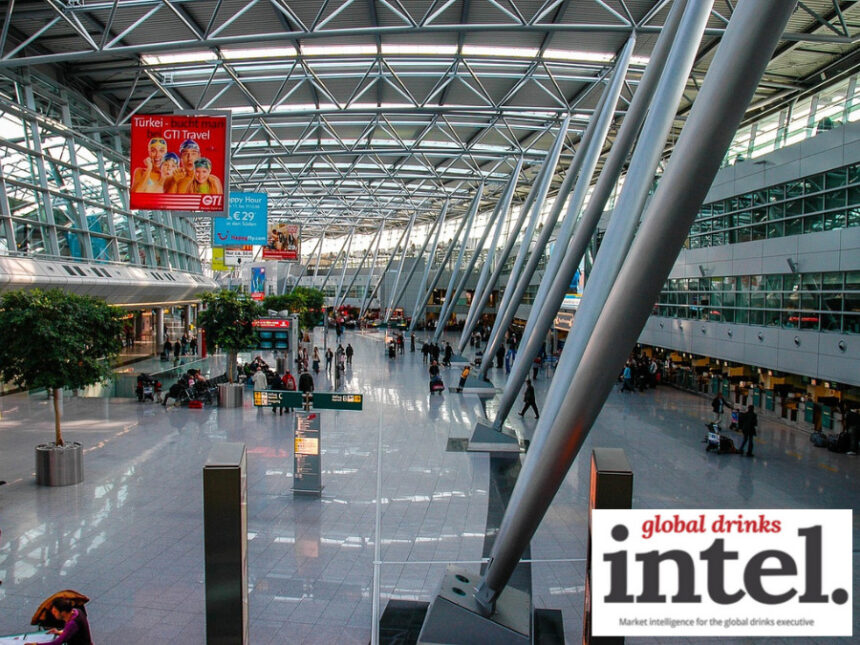
Airports are a consistent market with an engaged and affluent guest base. One in eight (13%) consumers typically visits airport bars, and more than four in five (84%) of them say they will do so again in the next 12 months.
Increasing sales in airport bars begins with an in-depth appreciation of who is using them. CGA’s research shows guests skew towards younger adults and those with a significantly higher average household income and spend on both alcohol and eating & drinking out. In their everyday lives, they tend to be very frequent visitors to bars and restaurants, and so are naturally well disposed to use airport bars while in transit.
The demographics of airport bar guests make it important that marketing stays relevant to the needs and views of 20- and 30-somethings. This relative youth also makes airport bars valuable platforms for generating brand equity as well as sales. Those who discover alcohol brands while travelling may well go on to enjoy them elsewhere for many years to come, and in the off-premise channel more widely.
Five key differences from other bars
- Consumer affluence
Drinkers in airport bars are significantly higher spenders and regular bar-goers than the average US consumer. Those travelling with first class tickets are especially free with their purchases.
- Solo visitors
Consumers are more likely to visit an airport bar on their own than step inside a neighbourhood or sports bar solo. Understanding how the needs of solo guests differ from group dynamics is important.
- Longer sales periods
With flights spread from very early morning to late at night, some airport bars welcome guests nearly 24/7. Assortment and menus that can flex for different parts of the day are vital.
- ‘Treat’ mentality
Travellers at the start of their holiday often arrive with a treat mentality. Positioning brands to serve this celebratory mood is a powerful route to achieving extra sales.
- Spontaneous choices
Airport bar guests often arrive with an open mind about their drinks choices. There are various chances to Influence those who are undecided about their categories and brands, or those who might be persuaded to change their minds.
Tracking behaviours
As well as understanding the who, it’s vital to know why and when people use airport bars. Around half of visitors are likely to be alone, closely followed by with a partner and then friends. Brands need to cater for the needs of the business traveller while also tapping into the excitement of those on vacation in groups. For all guest types, relaxation is a priority need state and choice factor, so promoting brands as the go-to for unwinding and settling back is key.
Timewise, the round-the-clock nature of airports means the range of dayparts in these venues is far wider than in most types of bars. This opens up some unique opportunities that are not often found elsewhere, from breakfast and brunch through to late-night. Food-led occasions, as travellers grab a meal before boarding a flight, are especially prevalent.
Beer tends to be the most popular alcohol selection, just ahead of spirits and wine. Domestic, imported and craft beer options should all be available with notable proportions of category consumers having each of these.
Vodka is the most consumed spirit in airport bars, with whiskey/whisky and tequila also proving popular. Tailoring the spirits selection to match visitor preferences is vital. Spirits drinkers enjoy a range of neat and mixed serves, with cocktails consistently proving most popular for many spirits segments. Collaborating with venues to ensure they showcase your brand on their cocktail menu can help enhance visibility and premium perceptions.
In-flight, soft drinks, which are regularly provided free of charge on domestic flights in the US, is the category most likely to be consumed, marginally ahead of vodka, table wine and whiskey/whisky. No single category dominates in-flight consumption, creating opportunities across alcohol. Consumers engage with a wide range of categories, with around four in five saying they are satisfied with the range available. Building strong partnerships with the most used airline providers is key to leverage this opportunity.
As elsewhere, price is the most common consideration in travellers’ selections, while quality, food pairings and habitual behaviours are also front of mind. CGA’s research provides a deeper dive into the beer, wine and spirits categories, with insights into the most popular types and preferred serve styles. There is also expert analysis of cocktails including a rundown of the most popular types – led by the margarita and bloody mary – and a close look at the hard seltzer and RTD segments.
Driving trade-up
While the majority of travellers are on economy tickets and can be sensitive to price, there is a significant cohort of airport users who carry business or first-class tickets and are ready to spend more freely. Two in five (39%) visitors say they are more likely to choose high quality and expensive drinks – a higher number than the 30% who are more likely to choose drinks with a lower price.
This brings excellent potential for premium brands, especially if they can demonstrate their high quality ingredients and suitability with food. Seven in ten (71%) airport bar users say they are very or quite likely to pay extra for a better quality drink – rising to 82% of those aged between 35 and 54. Younger consumers are also receptive to trying higher quality brands, and those at the start of a vacation may opt for them in this environment because they want to treat themselves – even if they wouldn’t do so in other types of bars.
The cheerful mood and appetite for experimentation has important implications for ranges in airport bars. Well-known and trusted brands need to underpin their offerings, although significant numbers of travellers want to see variety so they can try new things and trade up.
This makes a strong case for ranges in airport bars to be more substantial than in other on-premise outlets, such as in neighbourhood or sports bars.
First-class lounges are of course prime targets for premiumisation, and good visibility here is vital for luxury brands – especially those in the vodka, whiskey/whisky and tequila segments, where high quality and attractive serve styles are vital. Across the channel, clear pricing ladders are needed to guide guests through the trade-up opportunities that are available to them.
Intervening on the paths to purchase
So how can suppliers and venues reach these premium-minded airport bar users and secure their spend? CGA’s research maps their paths to purchase and the numerous factors that shape their choices.
The research shows that well over half decide their drink choice prior to visiting airport bars – a higher proportion than in most other channels, and a reminder of the role of previous experiences and external influences in decision-making. The time of day and type of trip are the two most important factors in these pre-venue decisions.
However, nearly two in five (38%) airport bar visitors have not decided which category to choose before arriving – and nearly two thirds of those who have decided say they are willing to change their minds after arrival. Recommendations on menus and from bartenders can be extremely influential on both of these ‘in the moment’ groups, so menu visibility and collaboration with venue staff to recommend certain brands are pivotal strategies. Special offers have a role to play too, but a range of other factors, such as how drinks are displayed and in-venue advertising, are also powerful.
Brands can also intervene via the digital touchpoints of guests’ journeys through airport bars. Ordering at the bar or at a table via a server are the two most common methods for purchases, but nearly a third (30%) of guests say they now prefer to order digitally. This is notably higher than in many other bar types, and mobile or app ordering has become the norm for many young adults.
Brands that work with venues to get their drinks front-and-centre of digital ordering platforms while emphasising convenience and speed can get a competitive advantage in this important digital environment.
All data is sourced from CGA by NIQ’s research of around 7,500 US consumers who plan to visit the on-premise in the next 12 months. The 2024 edition of the ‘Airport Bars Channel Strategy Deep-Dive Report’ will be available to purchase soon.
CGA by NIQ is the global expert in out-of-home eating and drinking, with a wide range of sales measurement and consumer research solutions. To discover more about the report or other solutions to help develop winning strategies in the US on-premise, click here or contact Andrew Hummel, CGA by NIQ’s client services director for the Americas.
This article is available to Global Drinks Intel members only.
Click below for details on how to join the Global Drinks Intel community.
Already a member?
Log in here to read the article in full.
If you work for any of the following corporate subscribers to Global Drinks Intel, head here to activate your access.
- AB InBev
- Bacardi
- Campari Group
- Diageo
- Moët Hennessy
- Pernod Ricard
- Proximo Spirits
- Suntory Global Spirits
- William Grant & Sons