



Winner – Cotswolds Distillery
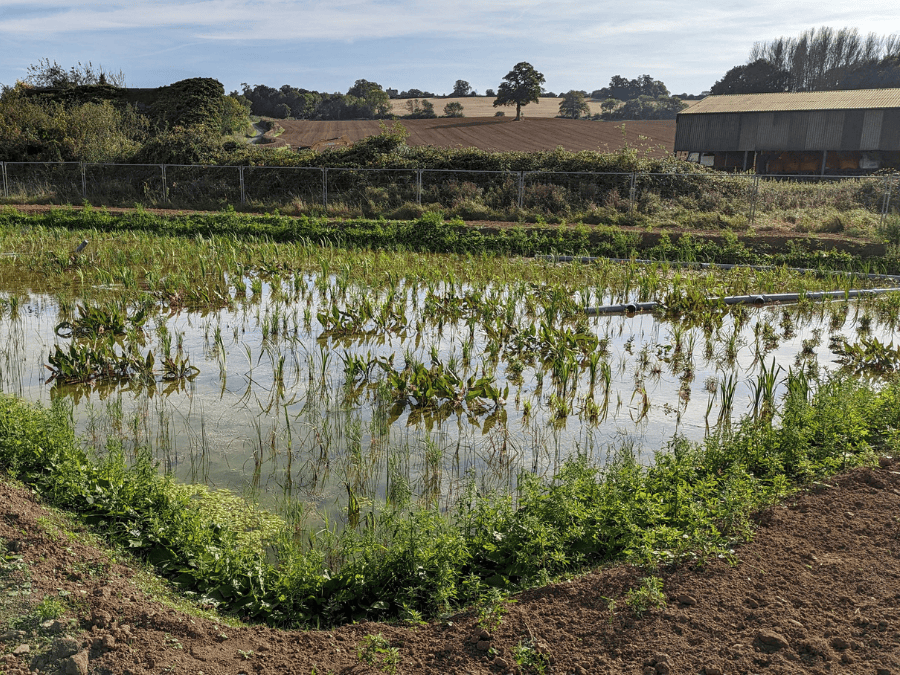
Cotswolds Distillery initially introduced its WETS (Wetlands Ecological Treatment System) initiative as a means of dealing with its production facility’s process effluent, providing a natural filtration system for wastewater through a network of reedbeds and ponds.
But, beyond limiting the need to truck wastewater off-site for processing, the project has also helped to create habitats, strengthen ecological networks and actively contribute to biodiversity recovery.
According to a Biodiversity Net Gain (BNG) analysis conducted in 2024, the distiller’s work has led to a net gain of +1.28 habitat units and +1.40 hedgerow units – creating a mosaic of high-value habitats in what was previously low-diversity land.
The ecologically rich environments created include:
- Species-rich grassland through wildflower turf, seeding and natural regeneration
- Two native hedgerows, comprising six or more woody species per 30 metres, to provide corridors for small mammals, birds and pollinators
- Wetland habitats, including ponds and reedbeds linked to the WETS, and
- A wildlife pond – a permanent freshwater body designed to support amphibians and aquatic invertebrates.
Other initiatives within the programme include the installation of bird and bat boxes for nesting and roosting; log piles and compost heaps for amphibians, reptiles and hedgehogs; and insect hotels for pollinating invertebrates.
According to the distillery, the project has resulted in benefits for a wide range of species, including hedgehogs, harvest mice, bats, toads, newts, reptiles and pollinators.
The wetlands are also directly linked to the ‘Glorious Cotswolds Grasslands’ initiative, one of the UK’s largest wildflower meadow restoration projects, and they sit inside a designated Buglife B-line – a national network of pollinator corridors.
In this way, the habitats created are contributing not only to biodiversity on a local level, but also to regional or even national ecological networks, in line with the principles of the UK’s Environment Act 2021, and the emerging national BNG policy framework.
The company believes that the success of the project shows that smaller, craft producers – as well as larger, well-funded corporations – have the wherewithal to deliver measurable biodiversity net gains that can be quantified and independently assessed.
“The uniqueness of the project lies in its integration of operational necessity with ecological opportunity,” says Cotswolds Distillery. “A system designed to treat wastewater now doubles as a biodiversity engine, delivering benefits for species, habitats and climate resilience, while reducing environmental costs of effluent transport.”
Our judges said: “This is a wonderful example of turning what is usually negative into a massive positive and net gain. Biodiversity is so important, and this distillery has demonstrated it in spades by showing the impact of its actions.“