With autumn well and truly upon us here in the Northern Hemisphere, it’s hard to believe that only a few weeks ago I was sitting on a balcony in the Mediterranean sun, thinking that life is pretty great when you can crack open a beer at 11:35 in the morning without feeling like it’s a bad thing. In fact, on holiday, it almost feels encouraged.
I’ve long assumed that, for most of us, this sort of behaviour is a rare indulgence. But there’s plenty going on that suggests otherwise.
As a strategist, the statistics that always grab me the hardest are the ones that conflict with my own habits. Which is to say that my 11.35 beer hasn’t become a daily ritual – and that I sympathise with marketers in their 40s whose instinct is to project their mid-noughties drinking patterns onto younger audiences.
But, also speaking as a strategist, I also know that’s a mistake.
For example, Gen Z consumers and younger Millennials are setting their own rules when it comes to how they drink. Sticking to marketing campaigns centred around the idea of drinking as something that goes on in nightclubs in the wee small hours isn’t going to cut it.
Research published last month by The Oxford Partnership shows drinking is shifting away from late nights and weekends towards the daytime, especially in dining-focused venues. Break the share of beer sales down hour by hour over the past two years and you see a small decline for each hour after 5pm, and strong growth between 11am and 5pm.
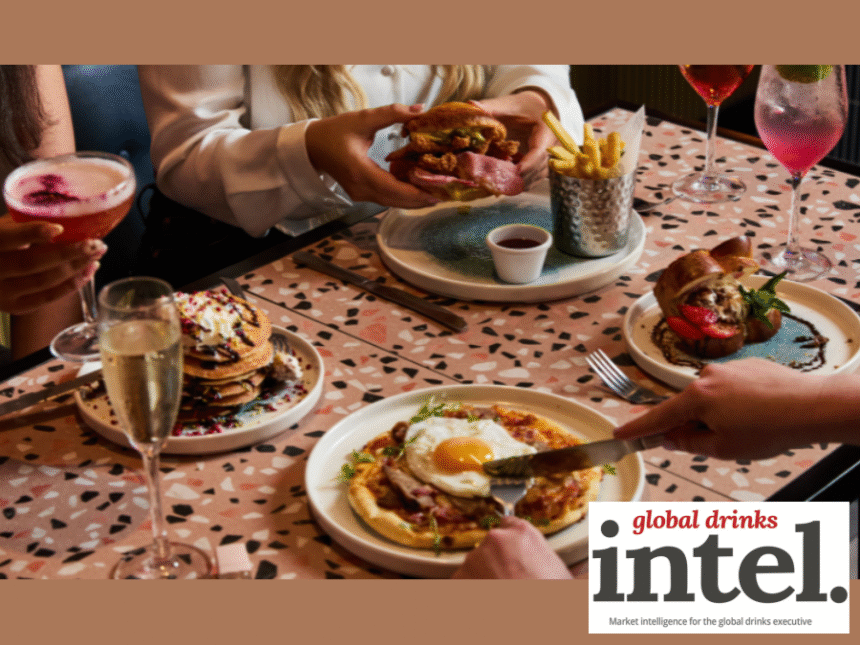
In the UK, the Slug & Lettuce on-premise multiple revealed recently that the busiest time in their outlets on a Saturday has moved, from 9pm to between 3pm and 4pm, and that instead of happy hours, their patrons are showing up in droves for bottomless brunches. Other pub chains in the country, including TGI Fridays, All Bar One, Ping Pong and The Botanist, now make their bottomless brunch part of their offers, as do countless indies.
Also related to day drinking is ‘zebra striping’, where drinkers alternate between an alcoholic beverage and something non-alcoholic when they visit pubs and bars.
Research by KAM shows that a quarter of UK drinkers practise the habit now, but if you include consumers who aren’t strictly alternating but who do swap between alcoholic and soft drinks, that figure rises to two in three UK adults, and 78% of 18 to 24-year-olds. Over the past 12 months in the US, meanwhile, there’s been a 975% rise in Google searches for the term ‘zebra striping’.
At a time when you still hear people claiming that Gen Z “doesn’t drink”, it’s clear that alcohol continues to play an important role in how people like to switch off and relax. What both zebra striping and the rise in day drinking reveal, in my opinion, is that younger consumers want to do this without the downside of feeling bad the next day.
But these changing habits – and the impulse driving them – mean that drinks brands need to show up differently in their messaging.
We’ve discussed no/low-alcohol variants previously, but US hard seltzer brand System has taken it further by designing what it calls “the first inclusive drinking system”. It’s tailor-made for zebra stripers, promising “flavour and aesthetic continuity”, whether drinkers choose the 5% ABV or the 0%.
A recent campaign by Heineken took a nice approach. Called ‘Afterwork Refreshed’ (above) and rolled out in markets including Indonesia, Thailand and Singapore over spring and summer, the aim of the activation was to help workers separate their business and personal lives, starting with the very basic idea of leaving the office on time to get to various Heineken experiences.
Then again, and proving that everything old is new again, you could just turn the clocks back to the 1970s and Smirnoff’s ‘The Bedroom Brunch’ ad (below). It shows a couple still in bed in their pyjamas, enjoying a day of “… no plans, no visits. Just lots of pillows, food to nibble on and beautiful Bloody Bullshots”. Yes, that was a new one to me too — a bloody mary with added beef bouillon.
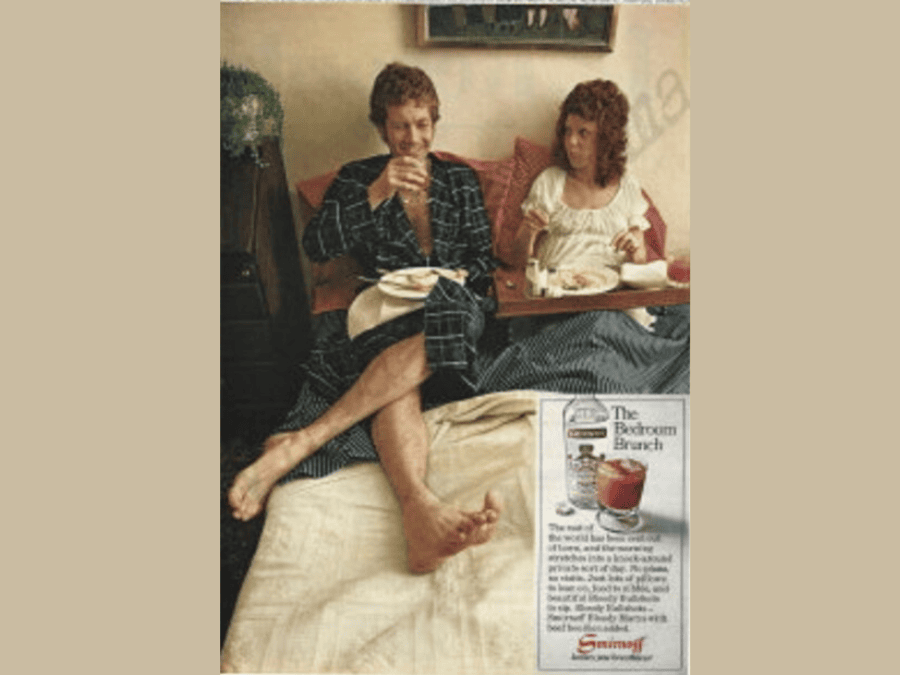
The point isn’t trends being new, it’s every generation pushing against the previous one. After all, take the Smirnoff ad, switch the bouillon for bone broth, and you’d probably be on to a winner.
Or do your own thing – just as long as it’s not happening in the same kind of high-tempo, night-time environment that was the setting for your pivotal 20-something drinking moments.
This article is available to Global Drinks Intel members only.
Click below for details on how to join the Global Drinks Intel community.
Already a member?
Log in here to read the article in full.
If you work for any of the following corporate subscribers to Global Drinks Intel, head here to activate your access.
- AB InBev
- Bacardi
- Campari Group
- Diageo
- Moët Hennessy
- Pernod Ricard
- Proximo Spirits
- Suntory Global Spirits
- William Grant & Sons