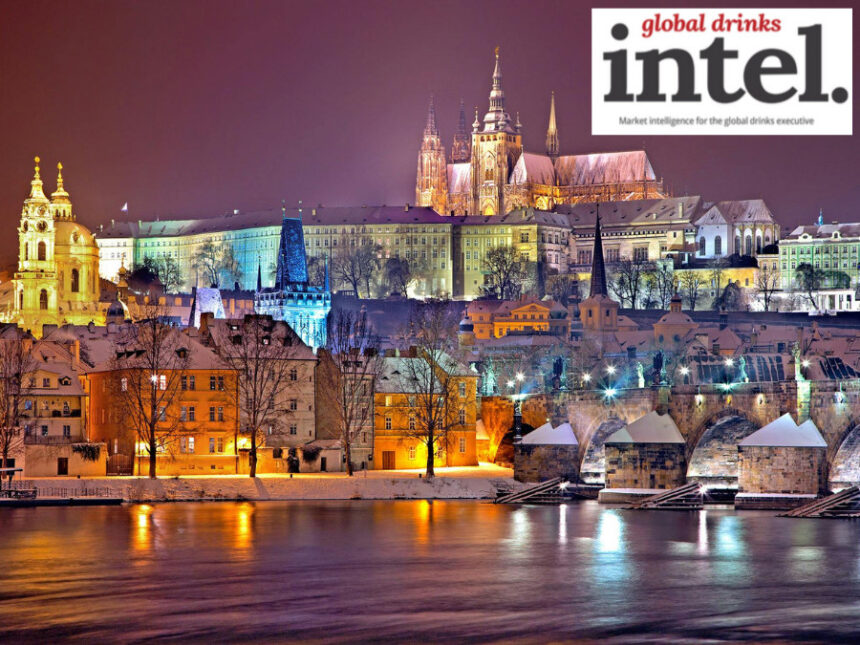
An interesting paradox characterises the on-premise in Prague: although there are fewer customers than ever before, and they don’t drink as much as they used to, new establishments – often ones with very ambitious concepts – are on the rise. Including those that serve exclusively cocktails.
The Scene
Czechia is widely perceived to be ‘beer country’, which is fully justified. The Czechs are the recordholders in terms of beer consumption (128L per person in 2023) and given the size of the country, has an impressive number of breweries – around 550, with 48 falling into the industrial category.
Asahi’s Pilsner Urquell brand dominates the country’s beer market, and lager remains the standard choice for domestic drinkers, but since the turn of the Century, the popularity of top-fermented beer, such as ale and stout, has grown significantly, with small breweries in particular contributing to its rise.
In Prague alone, there are more than 50 mini or restaurant breweries, and almost every large brewery has a branded or contract pub or restaurant in the city. Indeed, the Czech capital, with a population of nearly 1.2m people on 496sqkm, is generally renowned for its high concentration of on-premise venues.
In recent years, however, operators have had to face the fact that fewer people are drinking their beer, and the shift is sizable – 15 years ago, 51% of the beer produced for the domestic market was consumed in pubs and restaurants; by 2023, this had fallen to 30%.
A long-interrupted tradition
Having beer written into its DNA doesn’t mean that cocktail culture isn’t also thriving in this small Central European country. In Prague, the cocktail scene’s initial heyday was between 1900 and 1939, when 60 bars were operational.
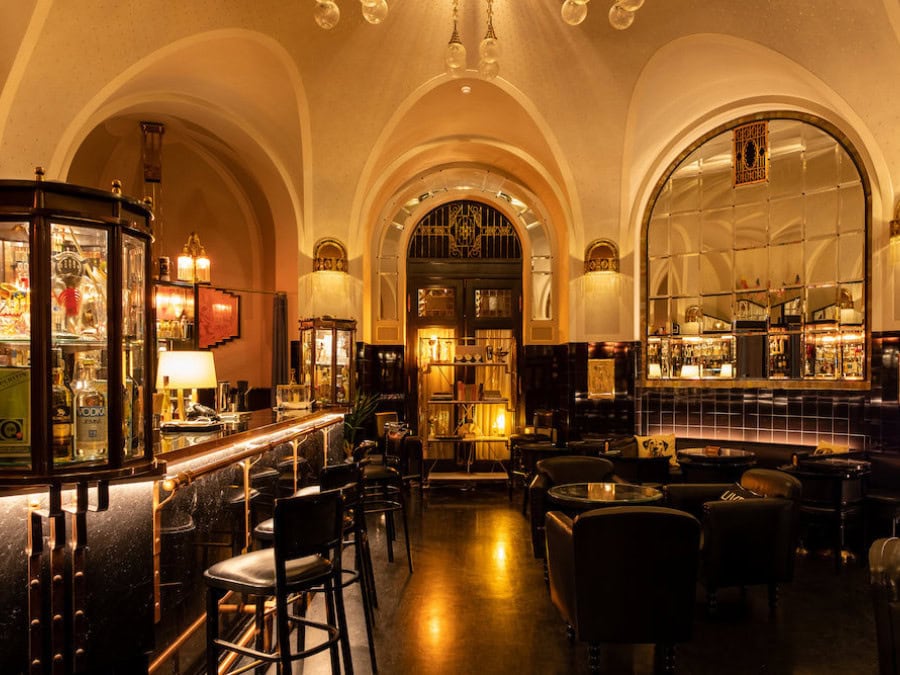
A reminder of this era is The American Bar (below) in the basement of one of the city’s most important Art Nouveau monuments, the Municipal House. The venue has been part of the building since its construction in 1912, and although much of the original decor has been replaced by replicas over time, it has retained its period appearance.
The period from February 1948, when the communist regime came to power, until the so-called Velvet Revolution in November 1989, was not very favourable to cocktail culture as it fell into the category of ‘bourgeois entertainment’. It wasn’t until 1995 that Czechia’s first bar to exclusively serve cocktails opened in Prague – Bugsy’s Bar – and began writing the city’s modern bar history. Among the other pioneering cocktail bars that followed, Hemingway Bar (2009) and Black Angel’s Bar (2010) have received international acclaim.
Changes in the bar scene
These now-legendary bars have to some extent predetermined where Prague’s nightlife will continue to evolve. One of its main centres is in the Old Town around Dlouhá Avenue and its connecting streets, while the other is on the border between the Old and New Towns near National Avenue.
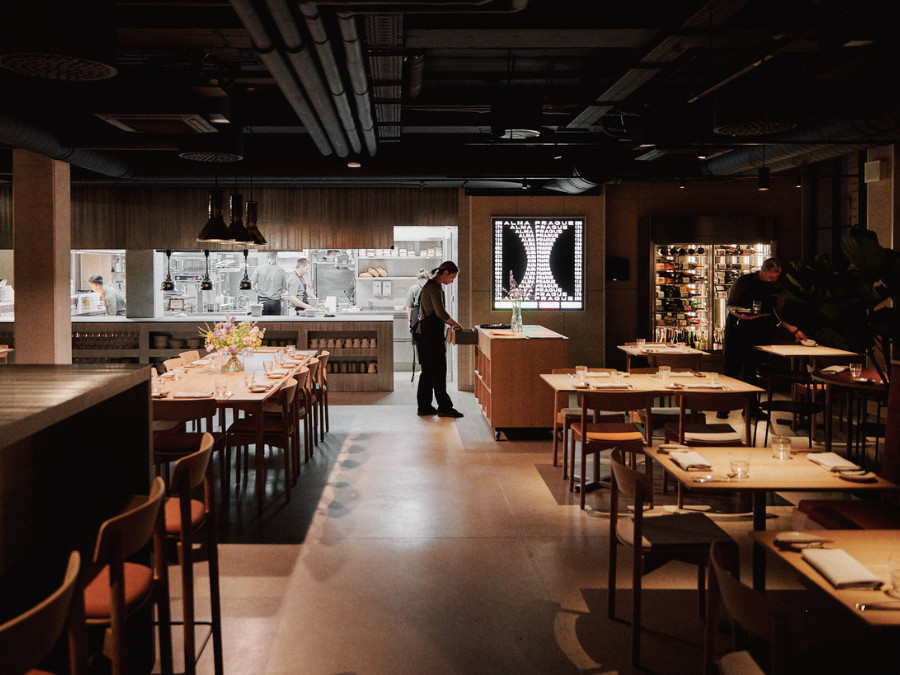
Two of the most talked-about new businesses are located in the latter. The first is the Alma gastronomic complex, comprising a restaurant (below), café, bar and club, which opened last year. The bar team’s philosophy is simplicity, sustainability and seasonality. Alma is the first bar in the city to incorporate foraging and has plans to build its own garden and greenhouse.
The second venue to create a buzz is the cocktail bar Forbína, which welcomed its first guests at the end of August. The National Theatre is opposite the outlet and the historic location is reflected in everything from its name (Forbína means ‘forestage’), and theatrical Art Deco-inspired decor to its drinks menu, with cocktails named after famous productions like Swan Lake and Don Giovanni.
Another recent opening of note in this neighbourhood is The Monkey Bar, part of the upscale Falkensteiner Hotel, a lively venue with a year-round bar garden and a finely-tuned cocktail line-up.
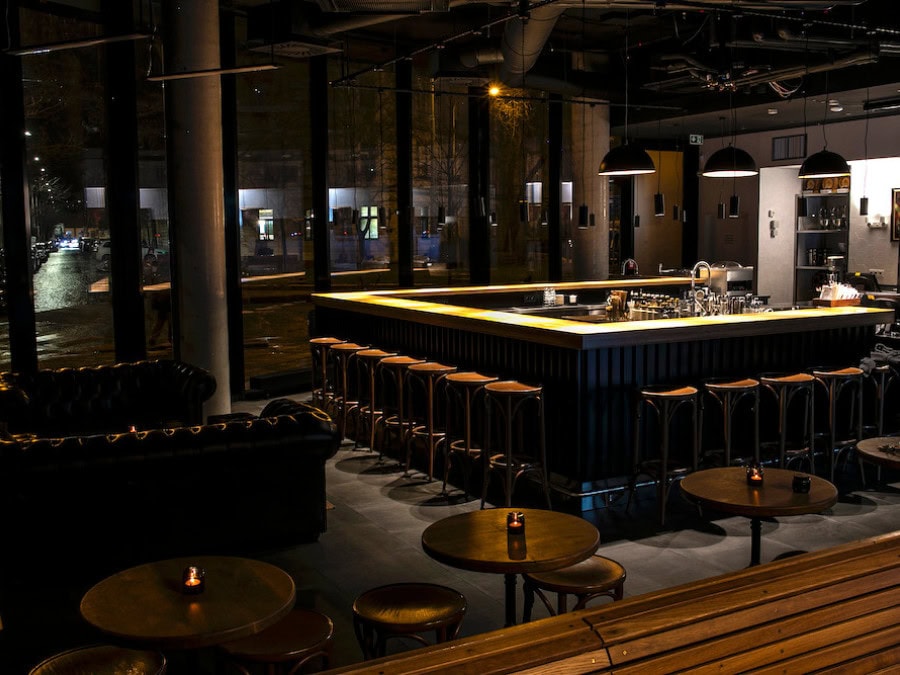
The Lesser Town is also starting to come alive with bars, and there are some interesting venues in Vinohrady district. A sister to Hemingway Bar, Liquid Office (below), opened in the Karlín district in 2022, while Vršovice is known for its concentration of interesting venues, including the neighbourhood-oriented Café Bar Pilotů, as is the Holešovice district, home to Bar Cobra and Garage22, Prague’s only craft distillery.
Plenty of venues for fewer consumers
Among Prague’s recently-opened establishments, there are often bars with unclear concepts and futures, or businesses that rely more on effect than quality. The oversaturation of the market, coupled with the reverberations of the pandemic, has resulted in a shortage of labour. At the same time, bartenders no longer feel the same levels of loyalty to their employers and tend not to hesitate to embark on new projects.
Liquid Office co-owner David Andrle says: “When I started, there weren’t that many cocktail bars and it was all the more difficult to get a job in one of them and then keep it. Today, you can say goodbye to a colleague and they have another job within five minutes. At the same time, today’s young people have completely different priorities. They prefer more free time and less work, but at the same time they expect high financial compensation. Fortunately, there are still enthusiasts who want to work hard and get ahead in this industry.”
Of the current trends in the Prague bar scene, Andrle highlights localism, seasonality and sustainability.
Classics remain the mainstay of Prague’s cocktail scene. Benedikt Houda, bar director at the Falkensteiner, has noticed conservatism among guests of all nationalities. “Even in the context of rising prices, people don’t like to experiment,” he says. “At the same time, they have a hard time imagining a drink based on a list of ingredients, so the ideal is always to match it with a cocktail classic.”
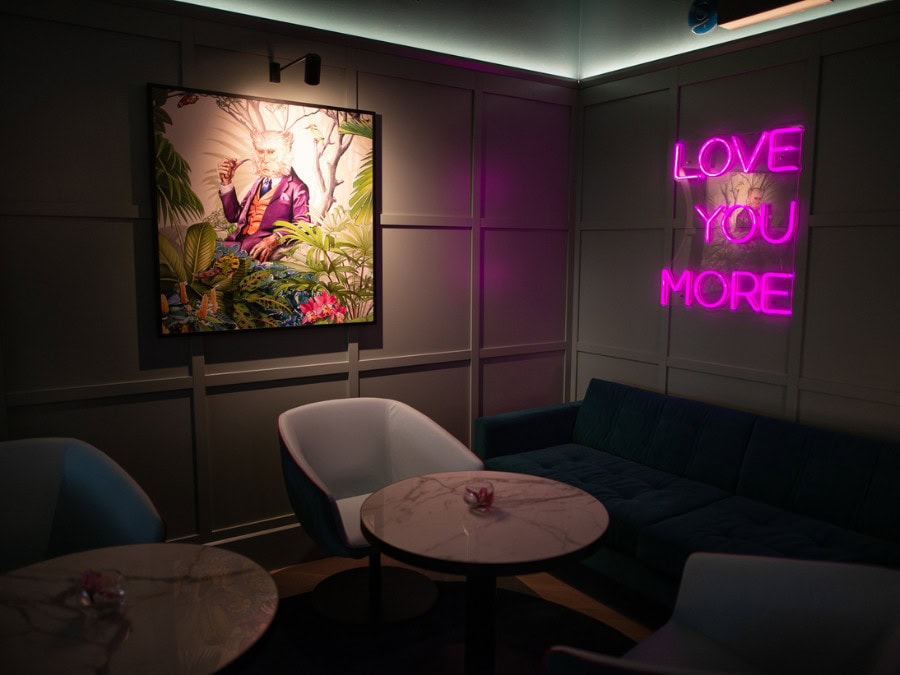
One trend garnering increased interest, Houda adds, is non-alcoholic cocktails, which make up a quarter of the 16-item cocktail menu at The Monkey Bar (below). It’s a similar story at Alma. “We recently added three new non-alcoholic drinks in response to growing demand,” says bar manager Pavel Sochor. “It’s the same with lower-alcohol drinks; seven of the nine cocktails on our current menu fall into the low-ABV category.”
Dominant categories and players
As elsewhere in the world, Czech LDA consumers have been drinking less and thinking more about what they order in recent years. In addition to changing consumer habits, this trend has been driven by the country’s high inflation and a 10% increase in excise duty on spirits.
Subsequently, in the first six months of this year, spirits sales in Czechia fell by 51.3%, according to the Union of Producers & Importers, which last month called on the government to cancel further increases planned for 2025 and 2026.
The premium and upmarket segments of the market remain stable, as wealthier consumers have retained more spending power, reflected in year-on-year growth in champagne (+9.2% sales growth 2022–23, according to the Comité Champagne) and single malt scotch (23.1% volume jump in 2023 vs 2022, IWSR). Rum (+7.6%) remains the best-selling spirit, with gin & genever (+5.5%) still popular.
Agave-based spirits are also growing in leaps and bounds, but they remain a marginal category overall. Attention is therefore turning more towards whiskey/whisky, which is growing across all market segments and is expected to continue to strengthen in the future.
In this context, there’s also been a boom in Czech whisky, led by the relaunched GoldCock brand produced by R Jelínek, mainly known for fruit spirits.
Miroslav Motyčka, the company’s sales & marketing director, says: “Sometime around 2020 to 2022, Czech whisky started to make a stronger presence, first in the whiskey/whisky community and later in the gastronomy sector. There are three serious distilleries producing local whisky, and a number of smaller distilleries starting production. It’s still only a fraction of the market, but the trend is growing steadily and looks set to take hold.
“After all,” he adds, “it combines two distinctive Czech traditions; beer production and distillate production. The intersection of these skills is giving rise to a unique new quality – Czech whisky.”
The strongest player in the domestic spirits market is Stock Plzeň-Božkov, part of Stock Spirits Group, which has built up an impressive distribution portfolio in addition to its own liqueurs and spirits. The division has found partners in Diageo, Suntory Global Spirits and, since April this year, Rémy Cointreau, whose brands had previously been distributed in Czechia by Mast-Jägermeister CZ.
Among the purely Czech distribution companies, the leader is Ultra Premium Brands, which continuously adapts to changes on the global scene – in 2022, the business lost Diplomático Rum when it was acquired by Brown-Forman, as well as Don Papa when Diageo bought the brand last year (it is now distributed by Stock in Czechia). Its current brands include Campari, Nikka and Planteray.
A new player is Poland’s Maspex Group. Although it has been in the Czech market for over 25 years, the company had until recently focused exclusively on the non-alcoholic segment. The move to beverage alcohol came in 2021, when Maspex bought the largest alcohol distributor in Poland, CEDC, which, among other things, produces Żubrówka Vodka.
This year, the group acquired Czech herbal liqueur Becherovka, formerly owned by Pernod Ricard and once a bartender’s ‘love’ brand. Maspex has made no secret of its intention to expand its alcohol portfolio further, so the local distribution environment looks set for another shake-up in the months and years ahead.
‘We wanted an established brand as a trampoline to build our spirits business in its local market and then go global’ – Maspex marketing director Kamil Gebski speaks to Global Drinks Intel
This article is available to Global Drinks Intel members only.
Click below for details on how to join the Global Drinks Intel community.
Already a member?
Log in here to read the article in full.
If you work for any of the following corporate subscribers to Global Drinks Intel, head here to activate your access.
- AB InBev
- Bacardi
- Campari Group
- Diageo
- Moët Hennessy
- Pernod Ricard
- Proximo Spirits
- Suntory Global Spirits
- William Grant & Sons