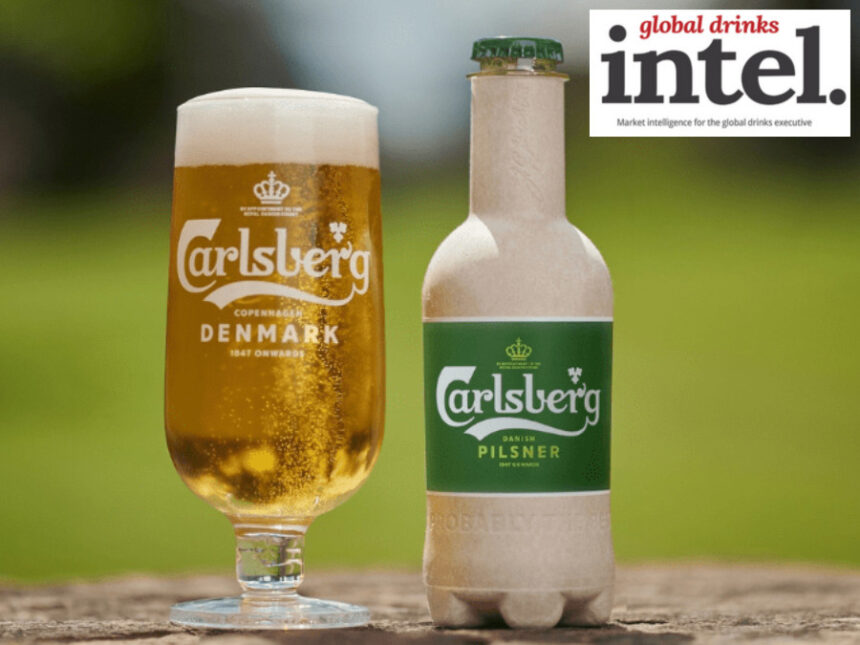
At first glance, the packaging of beer would appear to be fairly straightforward affair. Throughout most of the world, if your ale or lager does not come in a keg or cask, it arrives in a can or bottle, usually contained within some sort of plastic or cardboard carrier. While shapes and sizes can – and do – vary, but basics remain pretty much the same.
It turns out, however, that looks can be deceiving. Very deceiving.
Consumer demand for “eco-friendly, minimalist packaging has led to changes in sourcing over the past year”, according to 73% of respondents to a recent survey of 300 US-based business leaders and managers with responsibilities for packaging and labelling. While not focused specifically on the beer category, the study by print, packaging & marketing specialist RR Donnelley (RRD), found that packaging and labels are key to meeting both internal sustainability targets and consumer expectations, with 81% of respondents saying packaging operations have played a role in their company’s move towards sustainability goals.
“Sustainability in packaging and labels is more than just the materials we use,” says RRD environmental, health, safety & sustainability director Dennis Aler. “It’s about rethinking the whole supply chain to cut waste, improve recyclability and support a circular economy. Forward-looking organisations are putting these practices into place now to stay in step with long-term environmental goals and rising market expectations.”
This very much extends to brewers of all sizes, and its impact might well change the very nature of beer packaging in the near future.
The head of sustainability at Carlsberg, Simon Boas Hoffmeyer, says: “We introduced zero packaging waste as a new focus area of our environmental, social and governance (ESG) programme in 2022, setting 2030 targets that include 100% recyclable, reusable or renewable packaging, 50% recycled content in bottles and cans, as well as a 90% collection and recycling rate for bottles and cans. To achieve these targets, innovation in partnership with our suppliers will be key.”
Back in 2015, Carlsberg began tests aimed at developing a paper beer bottle, starting down a road that has not been without its bumps along the way, reveals Boas Hoffmeyer.
“Following testing and consumer sampling of our bio-based and fully recyclable Gen 2.0 Fibre Bottle in 2022, we are now working on developments towards Gen 3.0 [to which end] we are testing various barrier solutions, which remains the biggest challenge,” he says, “We are among others testing PEF [polyethylene furanoate], a plant-based material that has just started production at our partner Avantium’s new flagship plant in the Netherlands.”
Better six-pack carriers
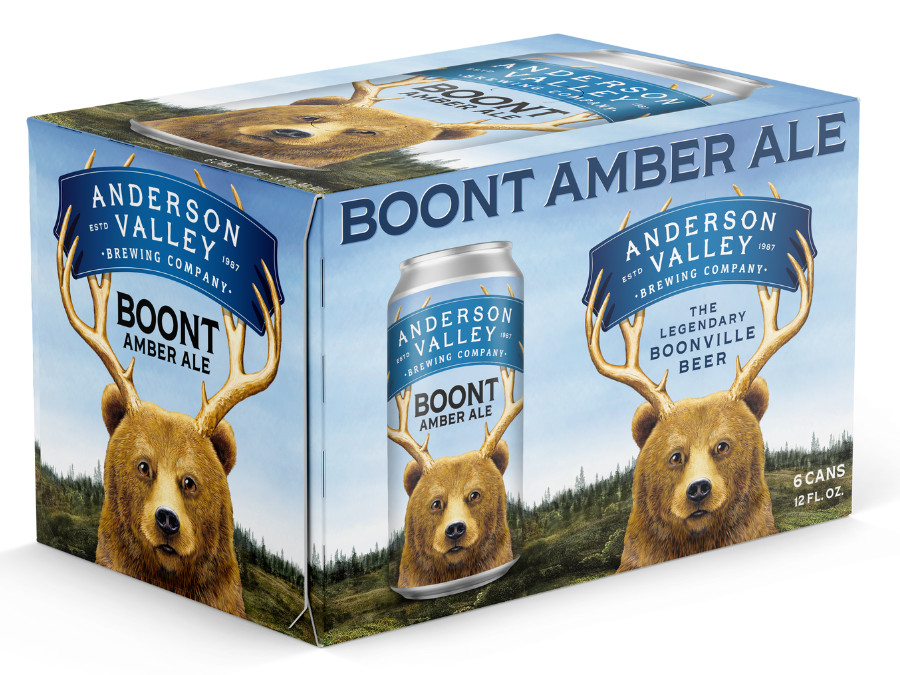
Somewhat less dramatic, but still an important move forward in terms of sustainable packaging, has been the change in beer can carriers by Northern California’s mid-sized Anderson Valley Brewing Co.
“Several years ago, we bought a cartoning machine for a few hundred thousand dollars,” says company CEO Kevin McGee. “The cartoner does all the work and allows us to print on squares and rectangles, so we can really make our brands stand out.”
In addition to getting rid of plastic six-pack carriers and adding graphic impact to Anderson Valley’s brands, including Boont Amber Ale (above), McGee says that another positive aspect of the cardboard carriers is their appeal to vendors.
“[Retailers] love the boxes because they are easy to merchandise, easy to see from a distance and easy to read,” he notes. “Additionally, on the shelf you can stack two six-packs of our cans in the same space that would hold one six-pack of bottles.”
While flagged by McGee as a bonus feature, vendor appeal and efficiency figure highly in RRD’s survey of packaging managers, with “consumer or end-user appeal” and “efficiencies in storage and distribution” cited as major factors that are driving changes to packaging by almost half of respondents.
“Building functional design and safety features into packaging remains essential to ensuring product integrity and a great user experience,” says RRD’s packaging, labels & supply chain segment president, Lisa Pruett. “Meeting this demand requires a balance between three competing priorities: protection, convenience and brand appeal.
“Brands that strike this balance have an opportunity to deliver a product experience customers can trust, boosting loyalty and reducing damage concerns.”
A cautionary tale
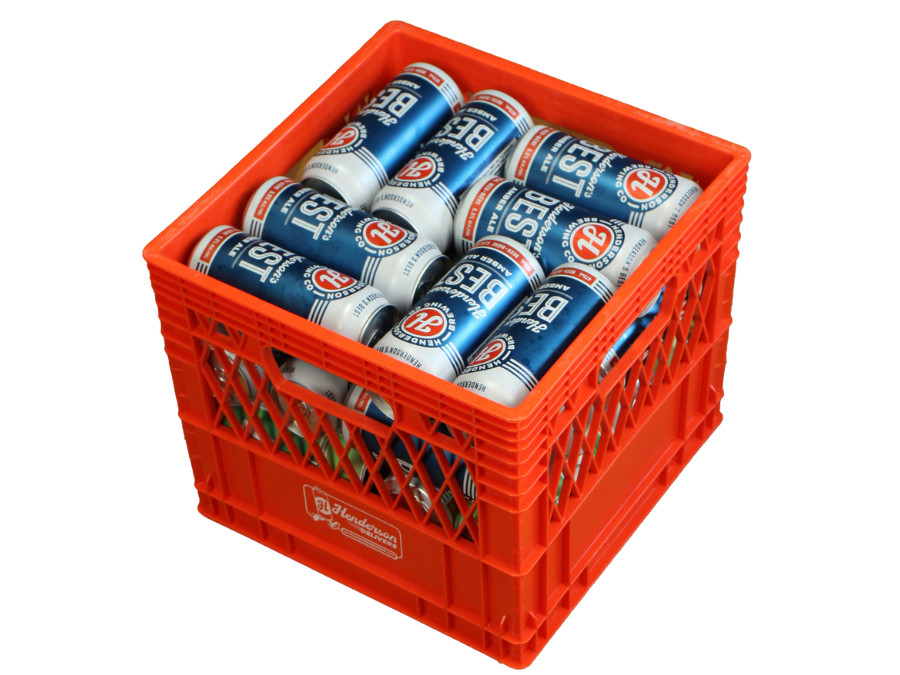
The long-term viability of packaging is also an important issue, since no company wants to incur the cost of revamping its packaging every year or two. In this regard, a pandemic-spawned experiment by Toronto’s Henderson Brewing Co provides a cautionary tale.
“When our home delivery took off during Covid-19, we introduced our beer crate (above) in an effort to mimic the crates used in many parts of Europe,” explains Henderson co-founder & managing partner Adin Wener. “Each one held 32 cans of beer, and the idea was that we would be like a milkman of old; people would leave out an empty crate and we’d replace it with a full one.”
The scheme was initially a rousing success, reports Wener, but it wasn’t long before it ran into difficulties.
“People started hoarding the crates, so we had to keep buying new stock, which at CAD8 (US$5.67) to CAD12 per branded crate, became quite expensive,” he says. “Further, customers would often return a bunch of crates all at the same time, so we’d have to pay out all these deposits at once.”
Post-pandemic, demand for home delivery started to decline with consumers preferring to buy six or 12 beers at a time rather than getting a full crate, says Wener. Eventually, volume dropped off and the brewer discontinued the programme. As a possible replacement, Henderson tested one of the several brands of cardboard can carriers that have entered the market, but found them hard to apply in the brewery and unpopular with consumers.
It’s an experience echoed by others in the industry, including Paul Segura, brewmaster at San Diego’s Karl Strauss Brewing Co.
“It’s been a couple of years since we explored them, but to my recollection, we decided against using the cardboard carriers because moisture compromised their integrity,” he says, “Also, they need to be manually applied, as opposed to the PakTech carriers we use now.”
While Segura acknowledges that the PakTechs are plastic rather than biodegradable cardboard, he adds that the brewer is doing what it can to be more sustainability focused. “We strive to be more environmentally friendly, so we encourage people to recycle the carriers; that’s all we can do for now,” he says, before adding somewhat optimistically, “Perhaps there will be better options in the future and we can re-evaluate.”
Improving containers
Of course, by some measure it is the physical container holding the beer that is the greatest part of its packaging, and in the majority of the beer-drinking world today, that container is a can rather than a bottle. Its constitution is very much on the mind of Carlsberg’s Boas Hoffmeyer.
“We’re working with a wide range of suppliers to meet our goal of a minimum of 50% recycled content in bottles and cans by 2030, and it’s important that we do so with those that share our values and commitment,” he says. It’s an area in which the company is already having significant success.
“Our cans are getting lighter and so is their environmental impact,” says Boas Hoffmeyer, noting that the company’s “best-performing suppliers in Europe” have already exceeded recycled content rates of 60% for cans and 75% for glass bottles.
“In the coming years, we will increase our focus on growing recycling rates and recycled content also in our Eastern European and Asian markets, where the rates are significantly lower than in Western Europe,” he adds.
One thing that’s very clear when it comes to beer packaging is that, whether it’s lighter containers, greater use of recycled material or more sustainable carriers, the environmental impact of their packaging is very much a concern for many in the brewing sector – and therefore it is also front-of-mind for the major suppliers of that packaging.
While that might not produce a viable paper bottle in the very near future, it’s a fairly safe bet that it will continue to change the look – possibly even the shape and size – of the bottles, cans and packages lining beer retailers’ shelves for some time to come.