


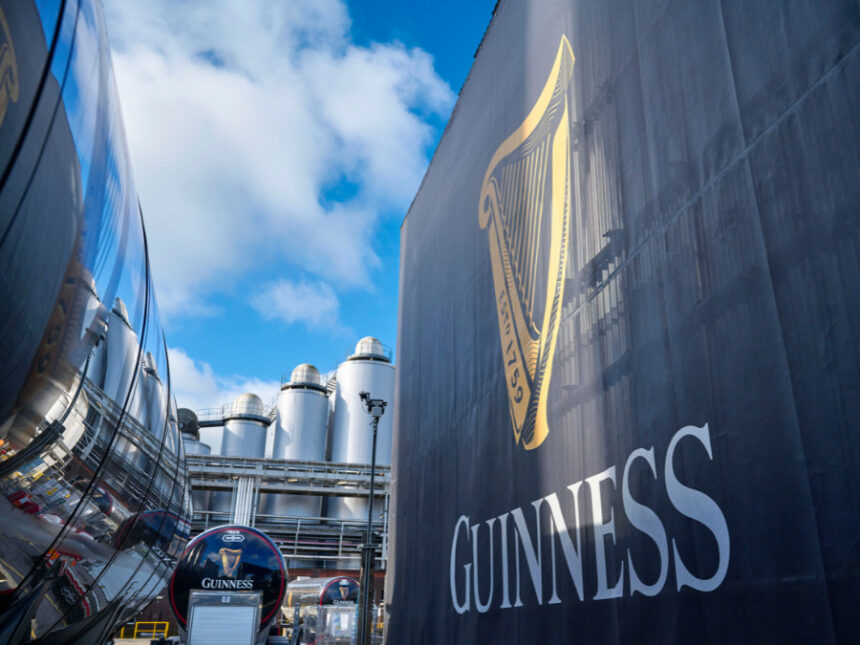
The investment, pegged at “over” EUR100m (US$109m), will target both energy and water usage at the facility in central Dublin. The move, which is set to receive unspecified support from the Irish Government, comprises the implementation of electricity- powered heat pumps as well as a water recovery facility that will generate biogas.
When complete – pending the approval of a planning application that will be submitted later this year – St James’s Gate will have reduced its Scope 1 and Scope 2 greenhouse gas emissions by “more than” 90%, while water usage will drop by 30% from current levels.
The brewery has produced Guinness for 264 years, according to the brand owner.
“St James’s Gate is an historic location for an iconic brand,” said Diageo CEO Debra Crew at yesterday’s announcement. “We’re 260 years into our 9,000-year lease at St. James’s Gate and this investment will ensure that Guinness has an exciting and long-term sustainable future.
“We are proud to lead the way on decarbonisation, both as a major Irish business and as an industry-leading company.”
Earlier this year, Diageo created the role of global head of sustainability, with the head of resource circularity at the World Economic Forum, Kristin Hughes, recruited to fill the post.