

Sign In
  • News
    • Beer
    • Spirits
    • Wine
    • Environmental, Social & Governance
    • Financial Results
    • Marketing
    • Mergers & Acquisitions
    • New Product Development
    • From the Industry
  • Intel
    • Comment
    • Interview
    • Category Intel
    • Consumer Intel
    • Market Intel
  • Awards
    • Global Drinks Awards
    • New Product Awards
    • ESG Awards
  • Magazine
  • Newsletter
  • Subscribe
  • Contact
  • News
    • Beer
    • Spirits
    • Wine
    • Environmental, Social & Governance
    • Financial Results
    • Marketing
    • Mergers & Acquisitions
    • New Product Development
    • From the Industry
  • Intel
    • Comment
    • Interview
    • Category Intel
    • Consumer Intel
    • Market Intel
  • Awards
    • Global Drinks Awards
    • New Product Awards
    • ESG Awards
  • Magazine
  • Newsletter
  • Subscribe
  • Contact
Search
Banner for Global Drinks Intel ESG Awards - https://gdiesgawards.com/categories/


Charlie Mitchell: High OOH expectations driving premium trend

Alex Smith
Last updated: 09/09/2021 at 6:06 PM
By Alex Smith
8 July 2021
10 Min Read

UK. The premiumisation trend was well established in the UK on-premise prior to Covid-19, with value sales outstripping volume growth. But how will the trend evolve? CGA analyses its latest data and insights to find out. The UK pub, bar and restaurant market has undergone a decade-long period of premiumisation, with multiple waves of the […]


SHARE

UK. The premiumisation trend was well established in the UK on-premise prior to Covid-19, with value sales outstripping volume growth. But how will the trend evolve? CGA analyses its latest data and insights to find out.

The UK pub, bar and restaurant market has undergone a decade-long period of premiumisation, with multiple waves of the trend impacting practically all drinks categories and the in-outlet sales mix.

Indeed, within the lager category, nearly half (47%) of all serves sold are now premium, a figure which has increased by 13% since 2010, with a similar, but even stronger movement within the spirits category over the same time period. The consumer’s desire to trade up to premium and even super-premium spirits has resulted in a 17% growth of sales share within spirits, now accounting for one in three of all spirits sold in the on-premise.

Just under half (48%) of UK consumers suggest that they typically spend more to get a higher quality of drink in the on-premise and this is driven by perceptions of brand quality and the occasionality that consumers visit the sector. When asked about the factors for choosing better-quality drinks, consumers state ‘quality of brands available’, ‘price’ and ‘for a special occasion’ as the greatest contributors.

Growing consumer appetite for high-quality drinks

“From spirits to beer to soft drinks, premiumisation continues to disrupt the on-trade,” says CGA senior client manager Nathan Boyes. “There has been a growing appetite from consumers to trial and trade up in the on-premise. Operators have been quick to react, expanding their ranges of high-quality options to satisfy customer demand.”

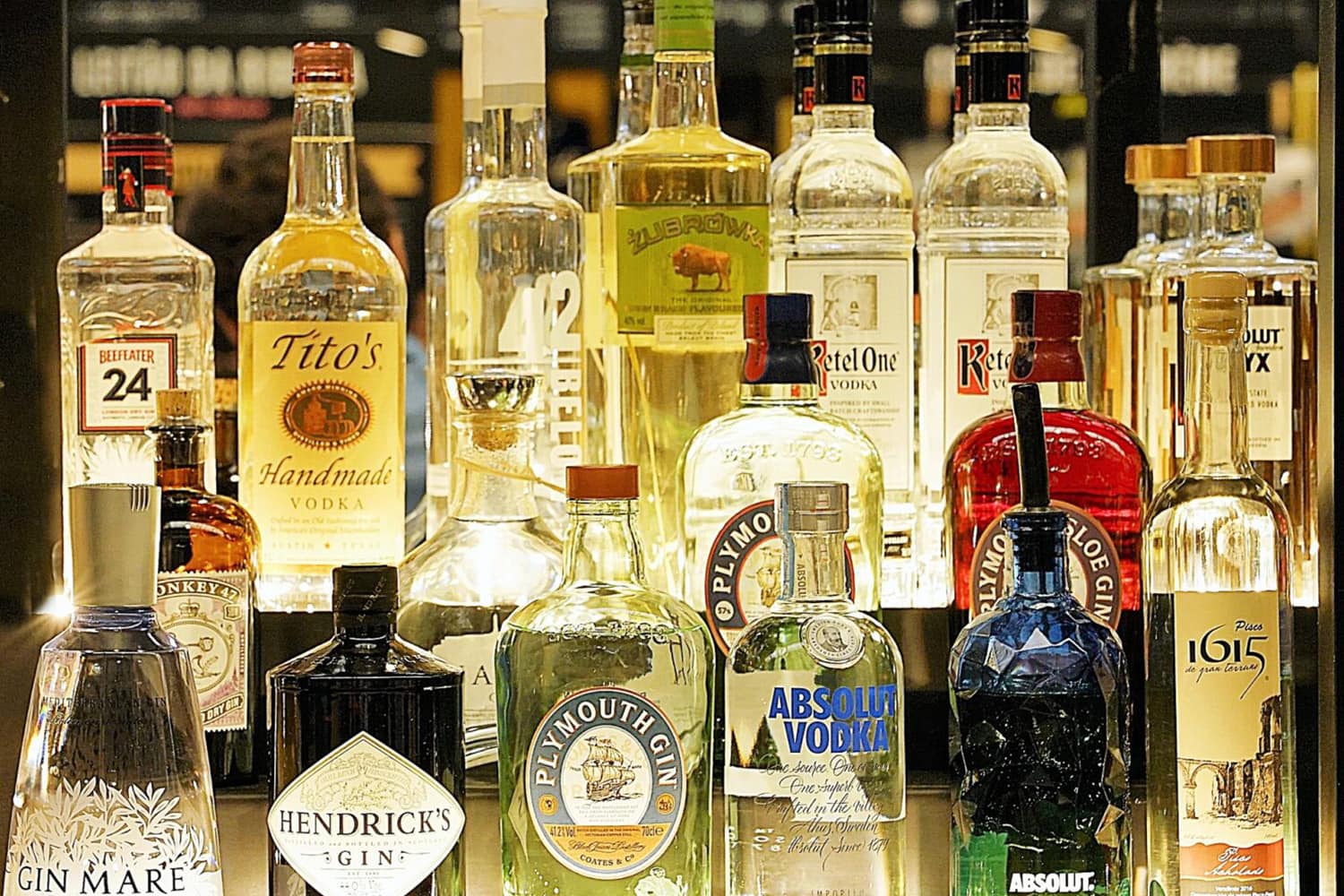
This is reflected in the average stocking portfolios of spirits within the market, with nearly double (+80%) the number of spirits stocked in the average outlet now compared with 2010. This equates to, on average, an additional 19 spirits brands in on-premise backbars, 14 of which are premium. Contrasting ranges between now and five years ago, the evidence of premiumisation is further underlined. CGA categorises the on-premise universe by the quality of outlets, ranging from bronze to platinum and, when comparing the stocking policies of bronze outlets now versus five years ago, the amount and share of premium spirits stocked now is similar to how gold outlets were stocking spirits at that time.

“The fact that bronze outlets now look how gold outlets did five years ago shows how quickly and how widespread the premiumisation trend has taken hold,” adds Boyes. “One in 10 spirits stocked in the lowest-quality outlets are actually super-premium, which has been driven by the desire for consumers to treat themselves, especially if they are visiting less frequently than previously.”

The average outlet that stocks gin now lists over 13 brands

In no category has this been better evidenced than gin — with premium variants contributing to the ‘gin boom’; one of, if not the success story of the UK on-premise over the past decade. The average outlet that stocks gin now lists over 13 brands, a figure that has more than trebled from just four a decade ago. Of these new brands, only 1.4 is standard quality, with premium options making up the other eight brands added. This has led to significant growth within the premium gin category, which now makes up nearly half of overall gin sold (48.5%).

Rum and Irish whiskey hot on gin’s heels in premium stakes

While gin is the clear leader in terms of premium growth, other categories have been embarking on their own premiumisation journeys over the past decade, with rum and Irish whiskey also seeing significant shifts towards premium sales growth.

Irish whiskey and rum is seeing significant premiumisation

“Rum and Irish whiskey have seen plenty of innovation, as well as solid performance from bigger brands, and are tapping into consumer demand for discovery, new flavour profiles and products with heritage and an interesting brand story to tell, making them perfect categories for premiumisation,” says Boyes. However, despite continuing to increase in both volume and value terms, premium and super-premium brands’ growth did begin to slow towards the end of 2019, and the UK on-premise showed signs of polarisation between premium and mainstream big-name brands.

Despite nearly half (47%) of consumers willing to pay more for a better-quality drink, and a surge in very high-end sales in 2019 — including 21% growth in super-premium spirits — there was also a resurgence in mainstream options.

Boyes says: “The story of premiumisation is a complex and fast-changing one, and we saw the market diverge substantially over the course of 2019, with examples of growth in both super-premium and mainstream categories.”

And it is this polarisation which was impacting the market on reopening from July 2020. With 37% of consumers reporting less disposable income than previously, compared with 17% who had more disposable income, drinks choices became increasingly divided between quality and value. While 29% of consumers suggested that they were prioritising high-value drinks, 23% were prioritising high quality and there was very little overlap between these two consumer sets, suggesting an either/or approach to drinks choices in the reopened market.

As such, super-premium spirits lost share of all serves by -0.6%, when consumers initially revisited the market, while standard regained some of the share that it had been gradually losing over the past decade. “As time went on, however, we saw premium/super-premium begin to regain share off standard, particularly in categories linked to cocktails, such as liqueurs, flavoured vodka and flavoured gin, as consumers looked to trade up on cocktail choices,” observes Boyes.

Celebratory and treat spending versus cautious approach

It is this polarisation that is predicted to impact the course of premiumisation as outlets reopen in the UK market in 2021, with initial treat spend and celebratory occasions contrasting with a cautious approach on spending from consumers.

With drinks-led occasions being prioritised in outdoor settings, it is likely that the likes of beer, cider and spirits will gain share from more food-friendly categories such as wine and soft drinks, but with fewer visual cues to encourage trade-up, there is a sense that operators may be leaving cash in the pocket of customers, explains CGA research and insight director Charlie Mitchell. “With in-outlet ordering limited and consumers using phone apps, QR codes and digital menus to order, the path to purchase is fundamentally changed,” he explains.

“Where once bartender recommendation and a highly visible backbar could prompt a trade-up, the heavy lifting is now being done digitally and, in many cases, those encouraging factors are not coming through as strongly as previously.”

However, taking learnings from other sectors could prove the key to success. “In the QSR (quick-service restaurants) sector, self-serve machines have been successful and are now ingrained in the customer path to purchase,” says Mitchell. “The ‘go-large’ prompt is also embedded within that decision-making process and is an easy way to encourage a higher spend per head and could provide inspiration for operators within the out-of-home market.”

Regardless, the underlying trend of consumers looking to spend more on higher-quality drinks choices looks set to continue, albeit perhaps not as universally as in previous years, as subsets of consumers are financially impacted in different ways.

“Consumers are increasingly fickle and experience-driven and have developed very high expectations of out-of-home eating and drinking, which is set to last,” summarises Boyle. “Understanding the drivers, dynamics and habits of their behaviour has never been more important when it comes to capitalising on premiumisation.” ●

Charlie Mitchell is research and insight director at CGA. His Intel columns provide perspective from the on-premise, based on the most up-to-date and definitive data available.

For more details, contact [email protected]

TAGGED:CGA
Previous Article Systembolaget: Sweden’s state alcohol monopoly
Next Article CityScapes; Miami on-premise
MPU for Global Drinks Intel ESG Awards - https://gdiesgawards.com/categories/

The Newsletter

Sign up to receive our newsletter email

  • The very latest news from across the world's beverage alcohol industry
  • Cutting-edge intel from our in-depth category & market analyses, backed by benchmark industry data
  • The best insight on your competitors from our interviews with the industry’s leaders

This field is for validation purposes and should be left unchanged.

Follow on Social

Linkedin Twitter
Short Tower for Le Tribute Pink Grapefruit - https://letribute.com/en-gb?srsltid=AfmBOooXoAFSrBVrsVtLnlySLXXjT62LG4oJ5imdqTABCraYG_SULm5V
Banner for Bayou Rum - https://bayourum.com/

You Might Also Like

Two bartenders preparing cocktails behind a bar

What’s driving cocktail choices in the US on-premise in 2026? – Consumer Intel

24 July 2026
Bacardi Carta Blanca-branded Ecotote from Ecospirits on a bar

Bacardi strengthens Ecospirits partnership with worldwide deal

16 July 2026
Patrons in a hotel bar enjoying drinks

How 250th anniversary and FIFA World Cup will boost drinks sales in US lodging channel – Market Intel

10 July 2026
Heineken Praise the Bar logo

The on-premise should sweat its safe haven status in these apocalyptic times – Comment

1 July 2026
Linkedin Instagram

What next?

  • Sign up to our FREE newsletter
  • Subscribe
  • My Account
  • Sign up to our FREE newsletter
  • Subscribe
  • My Account

About

  • Contact
  • Privacy Policy
  • Cookie Policy
  • Terms & Conditions
  • Contact
  • Privacy Policy
  • Cookie Policy
  • Terms & Conditions

Copyright © 2025 Global Drinks Intelligence Limited. All Rights Reserved

Built and Managed by Kukoo Creative

This website uses cookies to improve your experience. Read our privacy policy | Cookie settings | ACCEPT
Privacy & Cookies Policy

Privacy Overview

This website uses cookies to improve your experience while you navigate through the website. Out of these cookies, the cookies that are categorized as necessary are stored on your browser as they are as essential for the working of basic functionalities of the website. We also use third-party cookies that help us analyse and understand how you use this website. These cookies will be stored in your browser only with your consent. You also have the option to opt-out of these cookies. But opting out of some of these cookies may have an effect on your browsing experience.
Necessary
Always Enabled
Necessary cookies are absolutely essential for the website to function properly. This category only includes cookies that ensures basic functionalities and security features of the website. These cookies do not store any personal information.
Non-necessary
Any cookies that may not be particularly necessary for the website to function and is used specifically to collect user personal data via analytics, ads, other embedded contents are termed as non-necessary cookies. It is mandatory to procure user consent prior to running these cookies on your website.
Functional
Functional cookies help to perform certain functionalities like sharing the content of the website on social media platforms, collect feedbacks, and other third-party features.
CookieDurationDescription
li_gc6 monthsLinkedin set this cookie for storing visitor's consent regarding using cookies for non-essential purposes.
lidc1 dayLinkedIn sets the lidc cookie to facilitate data center selection.
VISITOR_INFO1_LIVE6 monthsA cookie set by YouTube to measure bandwidth that determines whether the user gets the new or old player interface.
yt-remote-cast-availablesessionThe yt-remote-cast-available cookie is used to store the user's preferences regarding whether casting is available on their YouTube video player.
yt-remote-cast-installedsessionThe yt-remote-cast-installed cookie is used to store the user's video player preferences using embedded YouTube video.
yt-remote-connected-devicesneverYouTube sets this cookie to store the user's video preferences using embedded YouTube videos.
yt-remote-device-idneverYouTube sets this cookie to store the user's video preferences using embedded YouTube videos.
yt-remote-fast-check-periodsessionThe yt-remote-fast-check-period cookie is used by YouTube to store the user's video player preferences for embedded YouTube videos.
yt-remote-session-appsessionThe yt-remote-session-app cookie is used by YouTube to store user preferences and information about the interface of the embedded YouTube video player.
yt-remote-session-namesessionThe yt-remote-session-name cookie is used by YouTube to store the user's video player preferences using embedded YouTube video.
ytidb::LAST_RESULT_ENTRY_KEYneverThe cookie ytidb::LAST_RESULT_ENTRY_KEY is used by YouTube to store the last search result entry that was clicked by the user. This information is used to improve the user experience by providing more relevant search results in the future.
Performance
Performance cookies are used to understand and analyze the key performance indexes of the website which helps in delivering a better user experience for the visitors.
Analytics
Analytical cookies are used to understand how visitors interact with the website. These cookies help provide information on metrics the number of visitors, bounce rate, traffic source, etc.
CookieDurationDescription
_ga1 year 1 month 4 daysGoogle Analytics sets this cookie to calculate visitor, session and campaign data and track site usage for the site's analytics report. The cookie stores information anonymously and assigns a randomly generated number to recognise unique visitors.
_ga_*1 year 1 month 4 daysGoogle Analytics sets this cookie to store and count page views.
YSCsessionYSC cookie is set by Youtube and is used to track the views of embedded videos on Youtube pages.
Advertisement
Advertisement cookies are used to provide visitors with relevant ads and marketing campaigns. These cookies track visitors across websites and collect information to provide customized ads.
CookieDurationDescription
__Secure-ROLLOUT_TOKEN6 monthsYouTube sets this cookie to manage feature rollout and experimentation. It helps Google control which new features or interface changes are shown to users as part of testing and staged rollouts, ensuring consistent experience for a given user during an experiment.
__Secure-YNID6 monthsGoogle cookie used to protect user security and prevent fraud, especially during the login process.
_fbp3 monthsFacebook sets this cookie to store and track interactions.
bcookie1 yearLinkedIn sets this cookie from LinkedIn share buttons and ad tags to recognize browser IDs.
yt.innertube::nextIdneverYouTube sets this cookie to register a unique ID to store data on what videos from YouTube the user has seen.
yt.innertube::requestsneverYouTube sets this cookie to register a unique ID to store data on what videos from YouTube the user has seen.
Others
Other uncategorized cookies are those that are being analyzed and have not been classified into a category as yet.
CookieDurationDescription
__Secure-YECpastYouTube sets this cookie to stores the user's video player preferences using embedded YouTube video
advanced_ads_visitor1 monthDescription is currently not available.
personalize_sync1 dayDescription is currently not available.
RBUUID2 monthsDescription is currently not available.
stackprotect1 hourDescription is currently not available.
syncTimeout12 hoursDescription is currently not available.
unique_session_id1 yearDescription is currently not available.
SAVE & ACCEPT
Powered by CookieYes Logo