

There’s a clip that went viral earlier this year – and I can’t stop thinking about it. Steven Bartlett, the British entrepreneur & host of ‘The Diary of a CEO’ podcast and a man whose self-proclaimed success knows no bounds, succeeded in yet another thing. He united the world of drinkers against him.
By his own account, Bartlett had had a couple of glasses of wine and his world fell to pieces. It ruined the next three days of his life where, alas, he wasn’t able to go to the gym, his sleep suffered, and his productivity fell through the floor.
He knew this because, crucially, he was able to track it.
Now, please don’t confuse me for somebody who knows how many steps they take a day (I don’t), what their Whoop score is (I don’t) or how many green rings I have on my watch (it’s analogue). However, there’s a serious point to this.
Alcohol doesn’t help with sleep, nor does it positively impact productivity in the long run (despite some of my better ideas being crafted in the confines of a drinking establishment), nor does it support better physical or mental health. And now, the proof pings at us on smartwatches, on meditation streaks and on step counts.
Indeed, this wealth of self-reflective knowledge has led to Dictionary.com crowning ‘maxxing’ as their word of the year 2026.
In his quest to control and optimise every aspect of his measured life in search of the ultimate – and scored – life, Bartlett is maxxing personified. Be it sleepmaxxing, proteinmaxxing or even booksmaxxing (less about enjoyment of books and more about being seen to enjoy reading), mental and physical health are being not only prioritised, but quantified. Indeed, in 2026, body and mind sit firmly at the top of so many consumers’ personal agendas.
However, concentrating so unwaveringly on one’s physical and mental wellbeing leaves out one crucial pillar of health: social health. One can optimise every score imaginable and still lead a miserable, isolated existence. It’s why I’ve been pleased to see ‘socialmaxxing’ (optimising social skills and social occasions) infiltrate the health & wellness vernacular as people recognise the need for connection.
Social health is, of course, nothing new: The term was included within the World Health Organization definition of ‘health’ way back in 1948.
But, it’s often dismissed in comparison to other aspects of health & wellness.
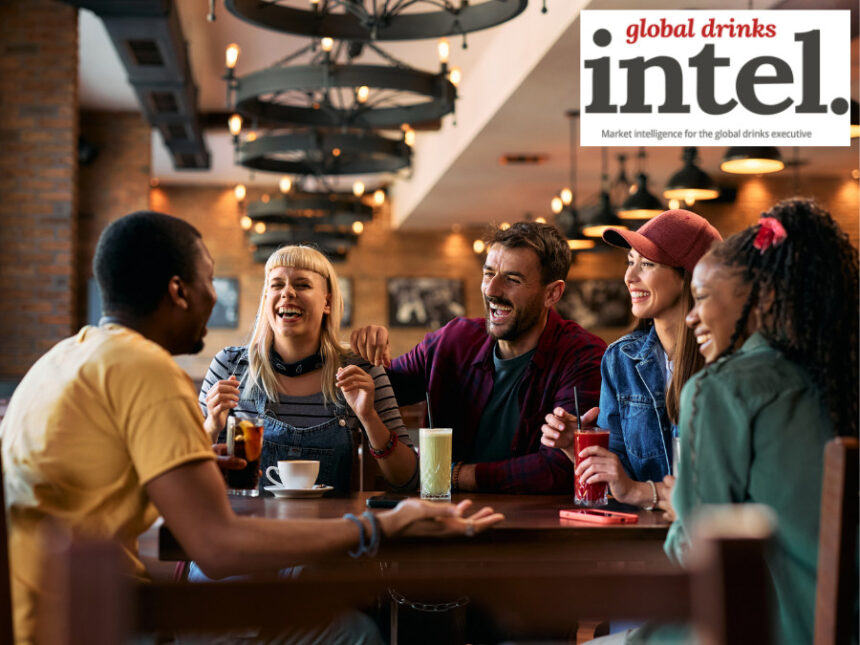
In a time when the Organisation for Economic Cooperation & Development reports that daily face-to-face contact with friends has fallen from 21% to 12%, and about 900,000 people die each year from factors associated with loneliness and social isolation, it is refreshing to see a renewed focus on what is good for the soul, which invariably involves connecting with other souls and often involves eating and drinking out.
Bringing people together is what hospitality does best. The brilliant Claire Warner, founder of the Good Measure Guild, whose mission is to improve the way we gather, recently said that she’d like to see doctors prescribe visits to the pub within the next ten years. While that may have been a ludicrous thing to say even a couple of years ago, it now feels realistic.
And the more we talk about the social benefits of the on-premise channel, the greater the weight of opinion will become.
This is why I was interested to read Heineken’s latest research report, ‘The Future Role of Bars in Europe’. In what is, principally, a research study into on-premise habits, the word ‘social’ appears 47 times in a 19-page summary of findings, compared with just 18 times for ‘alcohol’. The word ‘connection’ also features 18 times, in addition to ten ‘socialisings’ – ‘beer’ appeared just thrice.
Released last month, the report (below) emphasises the role of the channel rather than the role of drinks, and a sense that connection is the main selling point of the on-premise. In an environment where consumers are drinking less, the value of socialising should be promoted, with alcohol providing support, rather than being the main character.
For drinks brands, this supporting role should be one that’s cherished rather than scorned. Indeed, those brands that promote social good will be the ones who build genuine relationships with the next generation of drinkers.
Heineken’s report cites giving consumers a ‘reason to stay together’, so look at how this can be achieved. As consumers look for different ways to gather – online searches in the UK for the phrase ‘pub quiz’ have risen fifteenfold, while interest in Spain’s late-afternoon social gathering, the ‘tardeo’, has increased thirtyfold – there are opportunities to build brands in meaningful, healthy moments that do consumers the world of good.