- Native oak takes centre stage – Distillers use locally-grown oak to strengthen regional identity and create distinctive flavours
- Finishing offers balance – Finishing and pre-ageing help manage native oak’s intense tannins, spice and woody notes
- Wine casks reflect heritage – Georgian and Romanian producers reuse local wine and brandy casks to express regional traditions
- Alternative woods expand horizons – Chestnut, acacia and other native woods offer new flavours and differentiation
- Supply and cost pose challenges – Limited wood supplies and the expertise needed to craft casks make local sourcing expensive and complex
Provenance lies at the heart of whisky’s appeal, reinforced by the knowledge that no two distilleries will produce exactly the same spirit thanks to the local conditions that shape flavour.
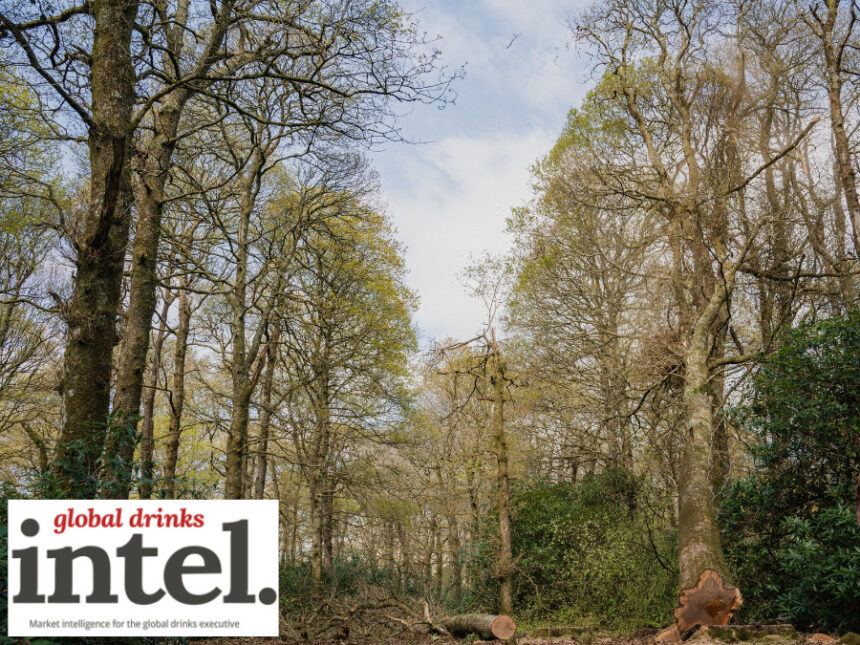
Craft operations, in particular, now take this further, sourcing cereal grains from surrounding farms – or even growing the stuff themselves. But what about casks? Rather than using oak imported from Kentucky or Jerez, is it possible to close the provenance loop and source local wood instead?
The short answer is yes – but it’s complicated. There also needs to be a definition of what is meant by ‘locally sourced’. Depending on the distillery, this could involve casks coopered from trees growing in the area, or it might refer to previously used casks acquired from local wineries. Both confer provenance in subtly different ways.
“This is definitely an aspect that distillers are looking into, but outside the traditional cask-making regions, it’s often hard to find a cooper who can make you a local wood cask,” points out Billy Abbott, brand ambassador at online retailer The Whisky Exchange. “And that’s before you try to find a tree that you can cut up and extract a useful number of straight boards from.”
Scarcity, cost and flavour
This is the chief challenge with creating casks from locally sourced wood: compared with the industrial-scale forests and cooperages of France, Spain and the US, operations in other countries are minuscule and their products are expensive.
However fascinating and worthwhile the results, this is very much a niche.
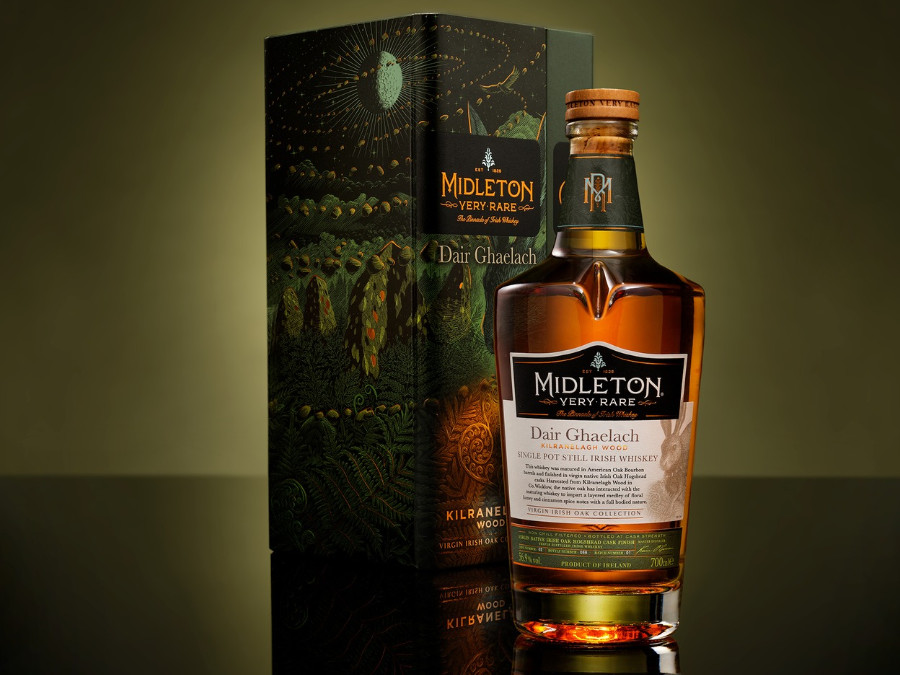
Not that Europe’s whisky-makers are discouraged. For over a decade, for example, Pernod Ricard’s Irish Distillers division has been championing its Midleton Very Rare Dair Ghaelach (above) whiskies, part-matured in oak sourced from Irish forests, creating a “deeper connection to Ireland”, according to Midleton master distiller Kevin O’Gorman.
“It isn’t only about provenance,” he adds. “The oak has a direct influence on the flavour of the whiskey. Each release comes from a specific Irish woodland, with bottles traceable back to the individual tree used to make the finishing cask.
“This gives consumers a clear connection between the origin of the wood and its influence on the whiskey.”
A question of balance
That flavour contribution needs careful handling. “Wood from outside the more well-known oak production areas is incredibly varied, so there’s often much less experience in how the flavours might interact with the whisky,” says The Whisky Exchange’s Abbott. “Some are very assertive and can quickly overtake the flavours of the underlying spirit.”
Scotch whisky distillers have found this when using Scottish oak; it’s a similar story in Ireland. Church of Oak, a distillery in County Kildare that is yet to release its first whiskey, has conducted experiments with Irish oak, but head distiller Greg McEntee is cautious. “It’s likely to be more suitable for finishing,” he suggests. “The influence that the Irish oak has on the liquid is a bit too much for full maturation, unless it’s been used elsewhere first. And the availability is very poor.”
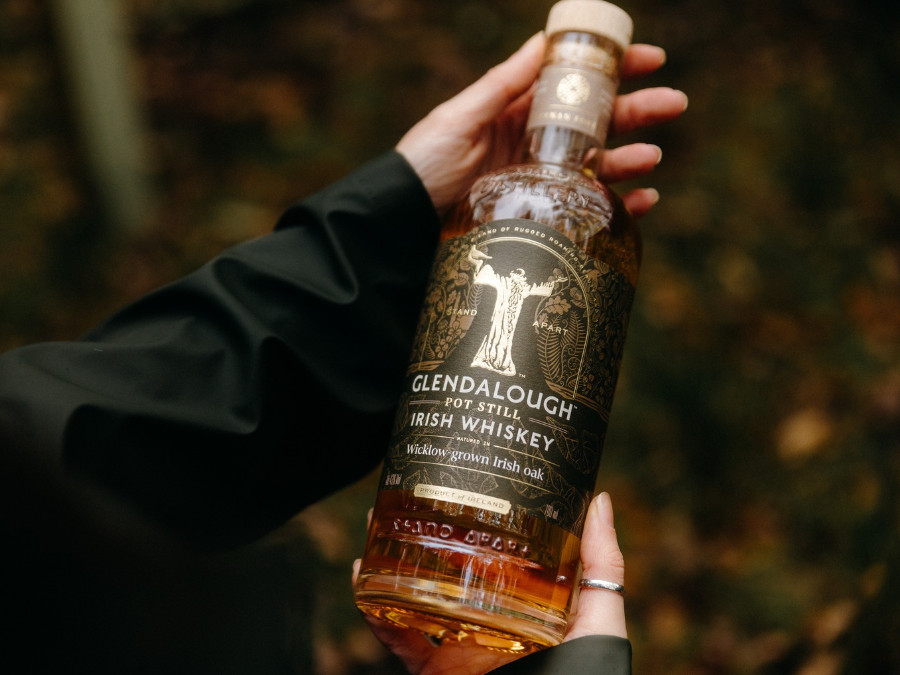
On the other side of the Wicklow Mountains, Glendalough Distillery (above) has used oak sourced from nearby forests to finish both its pot still and peated pot still whiskies. “Irish oak tends to bring a rich spice character, alongside darker notes of toasted oak, coffee, cocoa and dried fruits,” says head distiller Ciarán ‘Rowdy’ Rooney.
Ireland’s growing conditions give the wood a wider grain structure than regular European oak, and Rooney believes the spice profile works particularly well alongside the naturally spicy, textured pot still character.
Like any deviation from the norm, however, investing in local oak comes with a unique set of challenges.
“Unlike more commonly used oak species, there’s no established supply chain sitting on your doorstep,” says Rooney. “You’re starting with a rare and finite resource, so every decision matters, from selecting the right trees through to how the wood is seasoned and transformed into casks.
“It also requires significant investment.”
A new expression of terroir
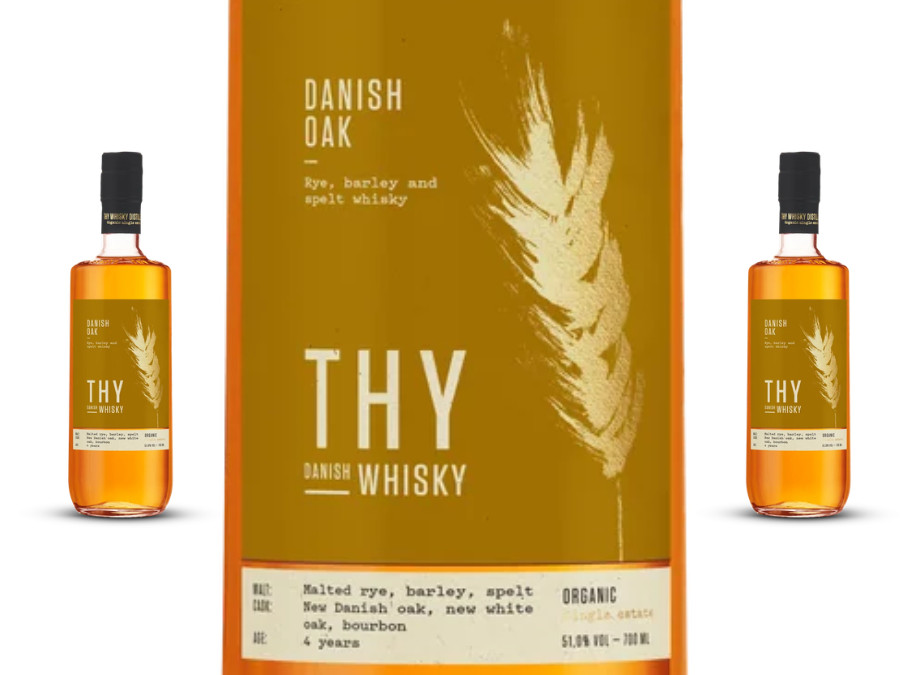
The Irish experience is echoed across the North Sea in Denmark, and the Jutland distillery of Thy Whisky. Here, co-owner, master distiller & MD Jakob Stjernholm started experimenting with Danish oak four years ago, before a collaboration with Aarhus craft museum Den Gamle By – which had just taken on a cooper apprentice – in 2025.
The trial involved creating a traditional 53-litre cask from wood grown in Jutland forests, then pre-ageing and finishing Thy’s spelt-rye whisky in it (combined with new American oak). It yielded 353 bottles (above), priced locally at DKK799 (US$120) each.
“Our experience is that Danish oak can contribute quite pronounced tannins, spice and a deep wood character,” says Stjernholm, “but also lighter and sweeter-sour flavours in the direction of red berries and juicy oak. By blending it with the American oak and ex-bourbon casks we normally use for our spelt-rye whisky, it has helped us find a balance where the Danish oak adds new layers and complements the whisky, instead of taking it over.”
Thy aims to use these casks judiciously. “We grow and malt all our own grain, so exploring local oak is a natural extension of our single-estate philosophy,” explains Stjernholm. “[But] with the reservation that we as farm distillers adhere more to a grains-and-malt-driven expression on our whisky, [rather] than heavy cask influence.”
Nonetheless, the collaboration is set to continue, with a plan to include larger cask sizes, alongside testing maturation periods and strategies. “Pre-ageing looks quite interesting right now,” says Stjernholm, “but there’s still a lot to learn.” He sees Danish oak as an interesting addition, rather than as a primary ageing cask.
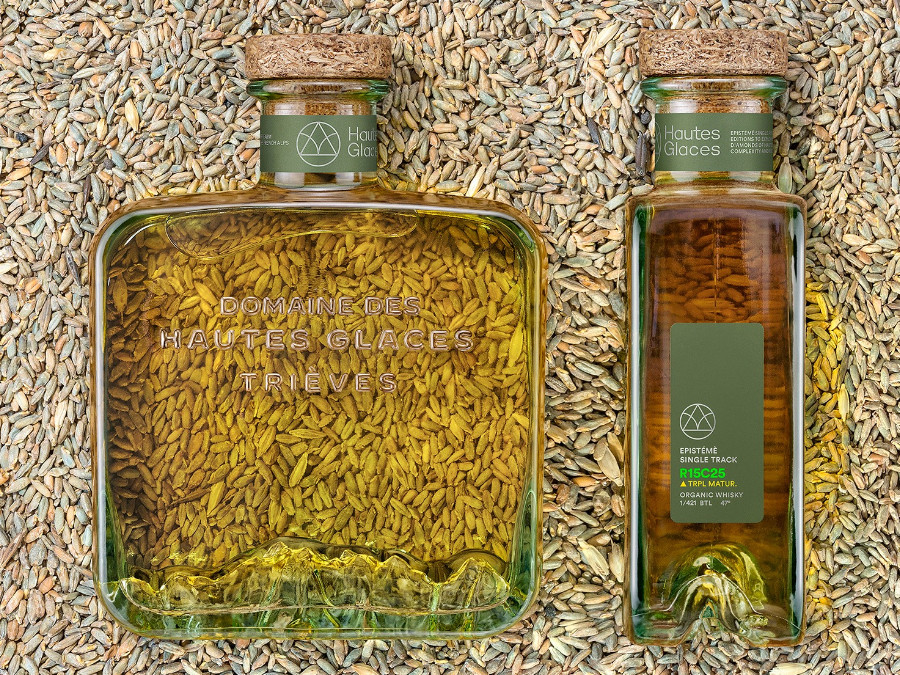
Like Stjernholm, Frédéric Revol, founder of Rémy Cointreau-owned French Alps distillery Domaine des Hautes Glaces, sees wood “as an extension of terroir, as well as a source for experimentation”. Hautes Glaces sources all its oak from France’s wealth of managed forests: Tronçais, Limousin, Vosges, using both quercus robur and quercus petraea.
Revol highlights Epistémè R15C25, a pair of rye whiskies using grain sourced from the same farm but matured respectively in quercus robur and quercus petraea. “There is definitely an appetite for whisky drinkers to open their horizons,” he says. “More and more consumers consider the importance of provenance, the origin of the raw material and its impact on flavour.”
Local wine casks play their part
Other distillers look to the broader heritage of their location. Jimsher Whisky in Georgia, for instance, taps into the country’s 8,000-year wine history, giving a second life to the company’s wine and brandy casks, ranging across French, American, Hungarian and Caucasian oak.
Jimsher’s four core expressions take their names from the casks in which they undergo the second stage of their maturation: Saperavi, Tsinandali, Traditional Georgian Brandy and Trio, which combines all three.
“Whisky enthusiasts are always searching for the next big discovery,” says distillery founder Jimsher Chkhaidze. “For many people, it’s their first time tasting Georgian whisky, and the wine cask is what makes them curious and then brings them back.”
It’s a similar story with Romania’s Alexandrion Group and its Carpathian single malt, which uses the company’s wine casks in products such as Carpathian Single Malt Whisky Peated Fetească Neagră Cask Strength and Carpathian Single Malt Whisky Tămâioasă Românească Fully Matured, respectively local red and white wine styles.
“We see this as an opportunity to create whiskies that reflect their place of origin, while exploring new dimensions of flavour through maturation,” says master distiller & whisky director Allan Anderson.
There are almost endless riffs to be played on local oak sources, but distillers aren’t stopping there. Unlike in Scotland, where whisky must be matured in oak, there are no such restrictions in Ireland and elsewhere. At Hautes Glaces, Revol is experimenting with acacia from the Champaran Forest and chestnut from Dauphiné, resulting in Epistémè R20W26 (above), another pair of expressions matured respectively in oak and acacia.
Meanwhile, Irish Distillers has released Midleton Very Rare Irish Chestnut Edition, part-matured in casks made from six sweet chestnut trees grown on the Cappoquin Estate in County Waterford. The first release in the Rare Wood Collection, the whiskey is priced at GBP375 (US$502) in the UK – its price perhaps reflecting a challenging project, with O’Gorman reporting angels’ share evaporation of 29% over a five-year period, double that of oak, thanks to chestnut’s porous nature.
However imaginative the experiment, the acid test is always the liquid. “Ultimately, I believe local cask maturation should never just be a marketing story,” says Alexandrion Group’s Anderson. “The provenance is important, of course, but the real value lies in what those casks contribute to the whisky itself.”
Rooney at Glendalough agrees. “Consumers are fascinated by the fact that the oak comes from Wicklow forests just minutes from the distillery, and that every bottle can be traced back to a specific forest,” he says. “It’s a genuine story that people immediately understand.
“But ultimately, the flavour has to deliver. The local oak may be what catches someone’s attention initially, but it’s the quality of the whiskey that brings them back.”
Members-only intel
Keep reading this members-only article – and every one like it
- ✓All paywalled news and interviews
- ✓Category and market data
- ✓Monthly GDI magazine
- ✓Full archive + daily newsletter
Secure checkout · Cancel any time · Company invoices available
Already a member? Log in
See all plans, incl. 10-reader and corporate
Check if your company already pays for you Your company may already give you free access.
Corporate subscribers: AB InBev, Bacardi, Campari Group, Diageo, Moët Hennessy, Pernod Ricard, Proximo Spirits, Suntory Spirits Group, William Grant and Sons.
Activate company accessNot ready yet? Get the headlines free in our daily newsletter.
Sign up free