
Tax reforms reshape the market – Tax changes, which were implemented last month, are set to accelerate the decline of weaker beer alternatives and shift competition towards brand, taste and promotion
Japanese whisky sees domestic decline –Volumes fell 3% in 2025 amid inflation, price hikes and a weak yen, with RTD highballs and premium tequila adding competitive pressure
International expansion key – Nikka’s strong sales growth and investment in production capacity reflect the growing importance of overseas markets for Japanese whisky producers
Scotch consumption falls, but audience diversifies – Last year, scotch whisky’s volumes plunged 27%, but more women are discovering the segment, particularly through at-home and off-premise consumption
Japanese craft gin thrives – Between 2020 and 2025, domestic gin value more than tripled, driven by younger consumers, women and growing interest in Japanese botanicals and RTD formats
Japan’s demographic crisis and moribund economy have combined to haunt the country’s beverage alcohol industry, like two spectres at a feast. Around 30% of Japan’s population is now aged 65-plus, shrinking the workforce and, in turn, increasing the economically inactive population. Meanwhile, the country’s economy, currently ranked fourth in the world by the International Monetary Fund, is projected to slip to sixth place in global GDP rankings in 2027, trailing India and the UK.
Given these chilly headwinds, it’s of little surprise that IWSR forecasts Japan’s total beverage alcohol market to decline at a CAGR of 1% through to the end of the decade.
However, pockets of growth across individual categories, coupled with increasingly diverse and adventurous consumer tastes, are giving domestic and international players reasons for optimism.
“While Japan’s alcohol market faces demographic challenges, consumer needs are becoming more diverse,” explains a spokesperson for Suntory Spirits, one of the country’s big four alcohol giants along with Asahi Group, Kirin and Sapporo. “We see an opportunity not only to create value through quality and craftsmanship, but also to create new occasions and experiences that make alcohol relevant to a wider range of consumers.”
Alcohol tax reform implications
Last month’s alcohol tax reforms are undoubtedly the biggest regulatory shake-up impacting beverage alcohol in Japan this year. The changes have significant implications for beer, happoshu (low-malt beer) and RTDs. The latter is a hugely important category in the country, accounting for almost 22% of the total beverage market, according to IWSR.
From 1 October, the tax on beer, happoshu and third-category drinks converged at JPY54.25 (US$0.34) per 35cl – effectively cutting beer tax by around JPY9 and raising the levy on the other two segments by about JPY7. At the same time, the tax on RTDs rose from JPY28 to JPY35. In all cases, the shelf-price impact of these changes will depend on how much producers and retailers pass them on.
According to IWSR research director Piotr Poznanski, the overhaul removes the tax rationale for third-category beer, with weaker happoshu and third-category lines likely to be delisted.
“Competition will shift from tax engineering to brand, taste and promotion, favouring the major brewers and potentially creating a new value-beer tier,” he predicts. “Consumers are likely to split between trading up to beer, staying with reformulated brands and leaving beer-type drinks altogether.”
Although the economic advantage of higher-priced RTDs over full-strength beer has narrowed, Poznanski remains cautiously optimistic about the category’s prospects. “RTDs should retain advantages in flavour, lower-ABV options and appeal to younger LDA-plus consumers, although growth may slow,” he says.
Volumes fall for Japanese whisky
Last year, according to IWSR, the overall market for Japanese whisky declined by 3% in volumes, one of the sharpest falls recorded in nearly two decades. Only during the Covid-19 pandemic was the market more disrupted.
“Domestic consumption volumes fell sharply, driven by aggressive price hikes, record-level inflation over 2023-25 and a persistently weak yen,” says Poznanski.
Highball whisk(e)y cocktails remain a key element of Japanese drinking culture, but consumption habits across the country are evolving. Poznanski warns that higher prices and competition from expanding RTD highball ranges will divert consumers away from bottled whisk(e)y formats and put pressure on volumes. “Premium tequilas will increasingly compete for the same affluent, urban drinkers,” he adds.
Unsurprisingly, Suntory Spirits, historically the pioneering force in Japanese whisky, strikes a more upbeat note. The company sees considerable opportunities for whisk(e)y-based highball RTDs as a vehicle to introduce younger LDA consumers into the wider whisky segment.
“Our focus is not only on selling whisky, but also on expanding whisky culture and creating new occasions to enjoy it,” says a company spokesperson. “The highball has evolved from a trend into an established part of everyday drinking culture in Japan, and we believe there is still significant room for further growth.”
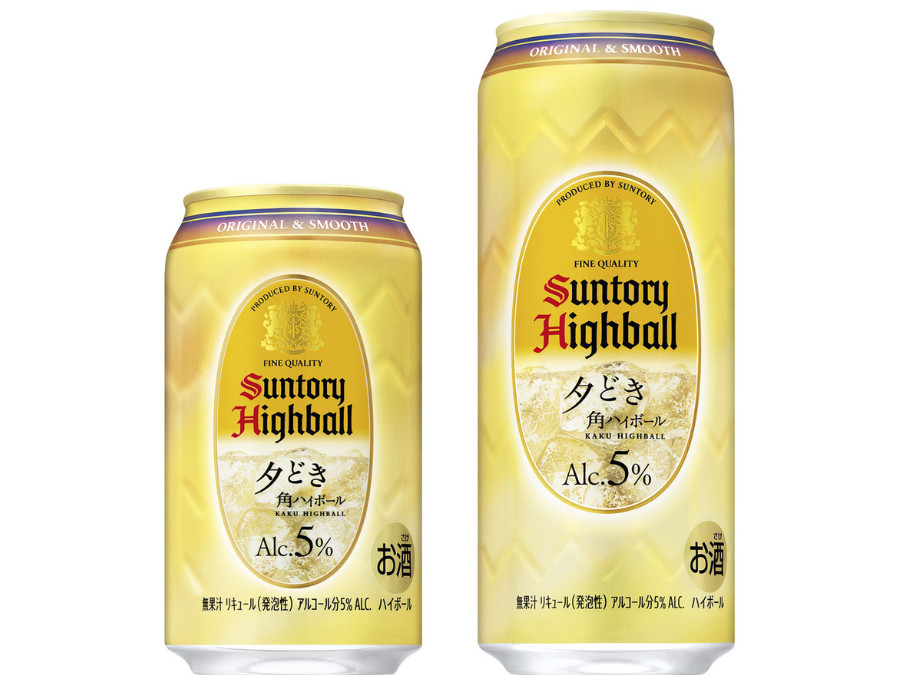
Three months ago, in the hopes of capitalising on the trend, Suntory Spirits released the Suntory Highball (below), an accessibly priced 5% ABV canned mix containing Kakubin Blended Whisky, soda and yuzu.
Nikka bucks category trend
With its portfolio available in around 65 countries, Nikka, a subsidiary of Asahi Group, is managing to buck the broader Japanese whisky decline.
Sales last year totalled JPY59.7bn, up from JPY27.3bn in 2023. The company has set an ambitious sales target of JPY100bn by 2034, spending JPY7bn on upgrading its historic Yoichi Distillery on the island of Hokkaido, with expanded production scheduled to come online next year.
“We’ve been investing not only in the Yoichi Distillery, but also in the Miyagikyo Distillery [located in the Tōhoku region] and other production facilities, including the Tochigi Aging Cellar and Kashiwa Bottling Plant, to prepare for future growth and build capacity steadily,” adds Nikka education & global PR lead Emiko Kaji.
“We believe there is still significant room for Nikka to grow internationally, particularly in markets where we haven’t yet established a presence. There’s also further potential for growth in existing markets, including Japan, through deeper market penetration.”
Scotch volumes plummet, but consumption diversifies
Scotch whisky suffered a disastrous 2025 in Japan, with volumes plunging 27% to 54m bottles, according to Scotch Whisky Association data. IWSR’s Poznanski explains that much of the decline in imported whisky sales in Japan is due to the depreciation of the yen, which has hit consumer spending power.
Even so, an additional door has slowly swung open for scotch brands. Pernod Ricard’s head of corporate & brand communications in Japan, Risa Shimizu, is heartened by the increasing number of women drinking whisky.
“Up until now, the whisky market in Japan was predominantly made up of male consumers – in fact, roughly 70% of whisky in Japan is consumed by men,” she says, citing IWSR data.
“However, gradually and slowly, we’re seeing more women drinking whisky in Japan, fuelling the off-trade whisky market. While the on-trade remains a key focus for the market, we’re seeing more women discovering and engaging with scotch, purchasing through the off-trade to enjoy at home, drinking with friends in a more casual environment.”
More generally, Shimizu believes Japan’s growing “drink better” mindset is good news for premium-plus brands such as Chivas Regal, which she says are steeped in “provenance and craftsmanship. These are things the Japanese consumer appreciates; they’re inherent to the Japanese culture.”
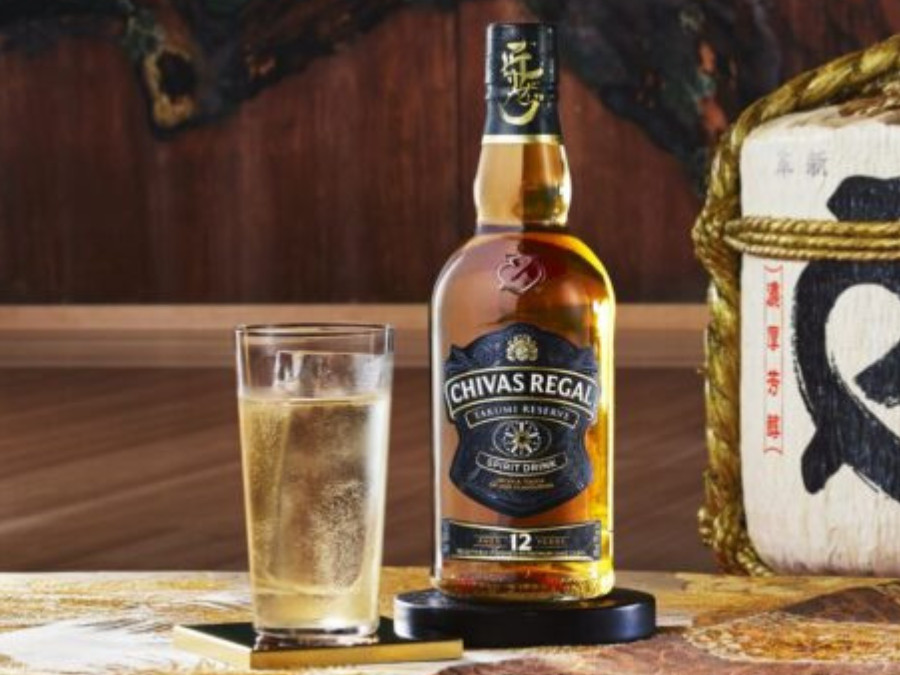
Aged in sake casks from Masuizumi, Chivas Regal Takumi (below), which first launched in 2024, is the brand’s most direct play to win loyalty from whisky drinkers in Japan, serving as “a tribute to Japan’s craftsmanship and unique flavour profiles”, Shimizu says.
Domestic gin on the up
In an otherwise challenging alcohol market, domestically produced gin continues to be a success story. Last year, according to Suntory estimates, the value of the domestic gin market reached around JPY24.7bn, more than tripling from 2020’s levels, with younger LDA and female consumers driving sales.
“In the above-super-premium gin category, based on IWSR 2025 data, Japanese craft gin Roku is now the world’s No.2 selling brand,” says the Suntory spokesperson.
Recent Roku releases for the Japanese market include the 43% ABV Roku Yuzu Yukimi Edition, launched in October, which dials up the citrus notes of yuzu, one of the gin’s six Japanese botanicals (alongside eight traditional gin botanicals), and Roku Premium Gin Soda, a 9% ABV RTD released in the same month.
Structural headwinds
Despite these pockets of growth, the overall picture for spirits in Japan looks gloomy. “In the long term, Japan’s consumer outlook will remain constrained by structural demand weakness and demographic headwinds,” says a downbeat Poznanski.
“A steadily declining working-age population will limit employment-driven income gains and keep aggregate household demand subdued. Long-term consumption growth is therefore expected to remain modest.”
Premium pours, local prices – Japan’s luxury bars face a changing market
Within Japan’s well-established, high-end bar scene, local price sensitivities and rising operational costs are becoming increasingly important considerations, even as international tourism booms.
In Osaka, while intimate master-bars, often run by veteran founder-bartenders, and casual pubs, or izakayas, have long dominated, luxury cocktail bars are gaining traction. However, the task of driving repeat trade from locals, while catering to wealthy tourists, requires a nuanced approach to value.
“The challenge in Osaka is finding the right balance between delivering a genuinely high-end experience and maintaining a price point that feels appropriate for the local market,” says Dominic Dijkstra, director of mixology at Canes & Tales, a 42-seat, ‘hidden’ speakeasy in the Waldorf Astoria Osaka. “Guests are interested in quality and experience, but they’re also conscious of value, so pricing needs to be considered carefully.”
Japanese and scotch whiskies remain pivotal sales drivers, with strong interest in high-end lines and older bottlings, albeit from a small percentage of wealthier customers. “At the same time, the majority of guests remain fairly considered when it comes to price,” Dijkstra acknowledges.
Macroeconomic pressures are increasingly reframing menu development. Currency volatility and unpredictable allocations for imported spirits are prompting bars to embrace a wider range of domestically produced spirits, such as shochu, awamori (a distilled rice-based spirit), infused and sparkling sakes, and doburoku, an ancient, unfiltered, sake-like beverage.
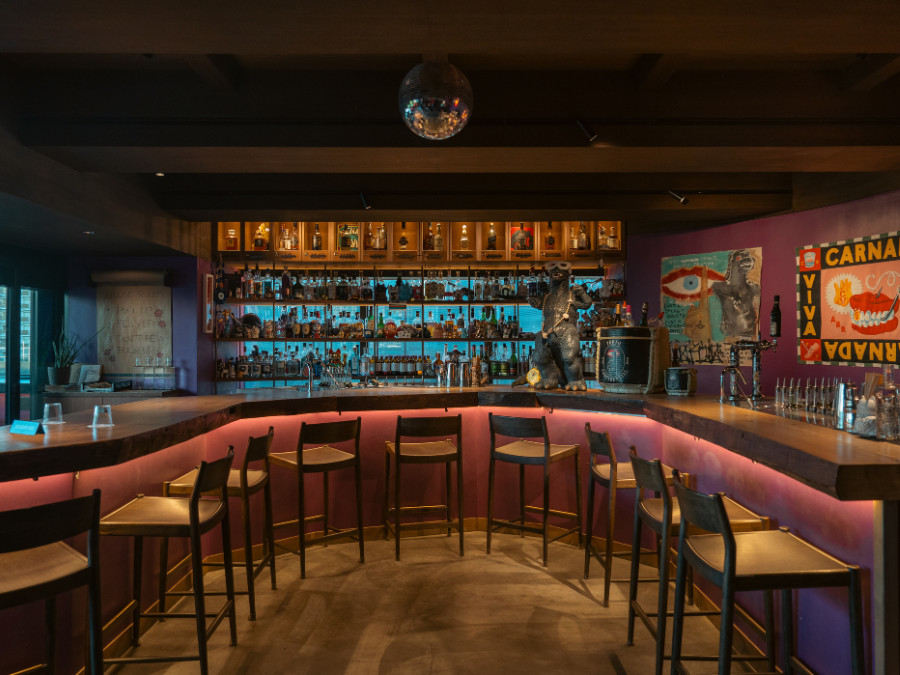
This approach to sourcing, says Holly Graham, founder & creative director of Tokyo Confidential (above), a lively, house-party-inspired bar in Japan’s capital, helps mitigate possible supply chain issues. On the upside, integrating traditional spirits and local flavours also creates more distinct, narrative-driven menus.
“We love to showcase them being used in unusual ways as that impresses locals and visitors alike,” says Graham. “It also invites conversation with guests and education as lots of people ask to try particular spirits or ingredients alone and want to learn more.”
Members-only intel
Keep reading this members-only article – and every one like it
- ✓All paywalled news and interviews
- ✓Category and market data
- ✓Monthly GDI magazine
- ✓Full archive + daily newsletter
Secure checkout · Cancel any time · Company invoices available
Already a member? Log in
See all plans, incl. 10-reader and corporate
Check if your company already pays for you Your company may already give you free access.
Corporate subscribers: AB InBev, Bacardi, Campari Group, Diageo, Moët Hennessy, Pernod Ricard, Proximo Spirits, Suntory Spirits Group, William Grant and Sons.
Activate company accessNot ready yet? Get the headlines free in our daily newsletter.
Sign up free