

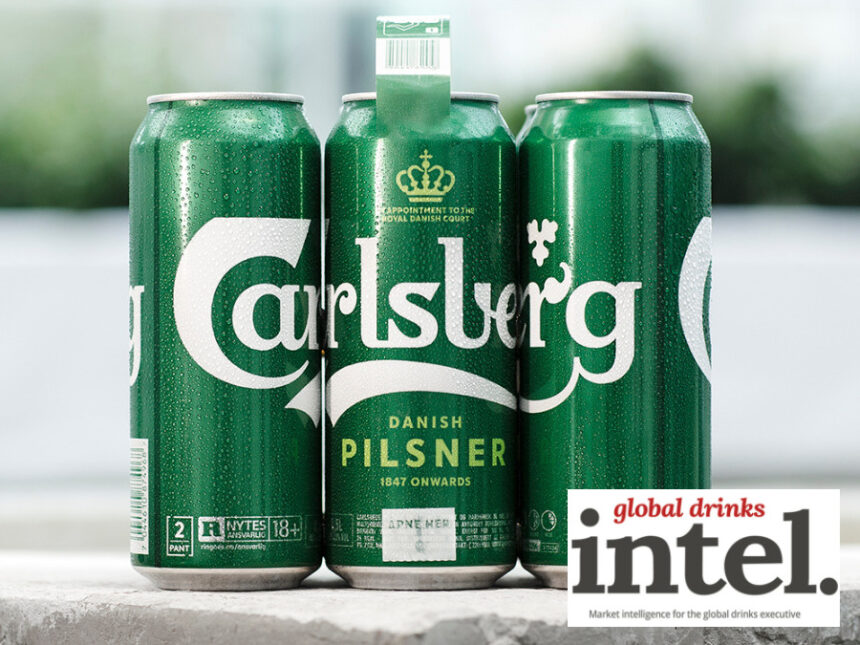
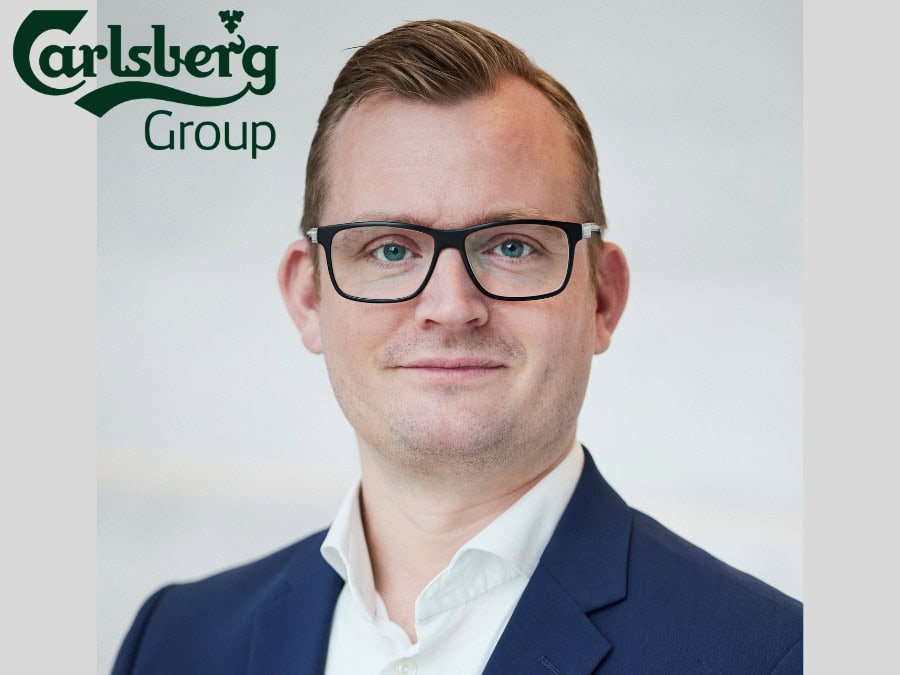
Last week, Carlsberg released an updated version of its ESG programme and operations emissions target. Afterwards, Global Drinks Intel deputy editor Jessica Broadbent caught up with the group’s global head of sustainability & ESG, Simon Boas Hoffmeyer (below), to discuss consumer sentiment surrounding ESG and tackling green-messaging ‘fatigue’.
How will the average consumer see/find/experience Carlsberg’s new programme, ‘Brewing Tomorrow’? Will their shopping trip be affected by the initiatives, for example – or is that not a goal of ESG targets?
Our goal is for consumers to both directly and indirectly meet our sustainability initiatives through our corporate communication and brands. Whether or not they’re aware of our new ESG programme is less relevant.
For us, what’s important is that they meet a growing range of no- & low-alcohol and no- & low-sugar options in their local shop, they increasingly get access to brews based on regeneratively-grown barley or lower-carbon packaging containing recycled content – whether they realise it or not – and that they can choose one of our brands with the confidence that Carlsberg is doing its part by acting responsibly and lessening our impact on the planet.
How can companies like Carlsberg communicate their sustainability efforts to the consumer?
We believe transparency is essential. Through our website and ESG reporting suite (for example, our integrated ‘Annual Report’, ‘Human Rights Report’ and ‘Climate Transition Plan’), we consistently share our targets, progress and achievements in sustainability, like how a biomass energy facility in Laos is cutting their emissions by 84%, or why we advocate for deposit return schemes to advance the circularity of our packaging.
We also focus on making credible information publicly available in a way that matters to the consumer, like communicating on the label that our barley for 1664 Blonde in France is grown with agro-ecological practices, or when we highlight alcohol-free alternatives through marketing campaigns. This is how we bring the four pillars of ‘Brewing Tomorrow’ to life.
Are consumers demanding a greater commitment to sustainability from brand owners? Or is Carlsberg more influenced by internal/regulatory objectives?
Carlsberg’s commitment to sustainability is a core part of our DNA. As a foundation‑owned company, we have always operated with the belief that we have a responsibility to wider society. What’s increasingly clear is that a robust and committed sustainability agenda is also crucial to the long‑term resilience of our business.
Therefore, ‘Brewing Tomorrow’ is deeply integrated into how Carlsberg operates. It’s shaped by the impacts that are most material to both our company and to society – including regulatory developments and growing expectations from customers, such as retailers, who increasingly ask for more sustainable products across our portfolio.
While consumer expectations matter, our ambition is driven by the significant areas of impact we’ve identified in our materiality process, where many different views are taken into account, including, for example customers, NGOs, regulators, employees and consumers.
With everything else they are contending with, do you think consumer interest in sustainability has waned in recent years? Is there perhaps a fatigue around sustainability messaging?
Consumers have a lot on their plate at the moment, and we know there is a fatigue around corporate green claims. But, we also know that the solution isn’t silence from companies – it’s transparency and accountability.
‘Brewing Tomorrow’ is our response to global challenges that continue to intensify: climate change, inequality, water scarcity and growing societal focus on health and well‑being. These issues remain highly relevant, regardless of fluctuations in public attention. Rather than focusing solely on messaging, we prioritise credible, science‑backed action embedded into our corporate strategy.
Are consumers willing to pay more for a product that is ‘more sustainable’, amid the increased costs of living?
We offer products that appeal to many different consumer segments, so there’s an opportunity to take different approaches to incorporating sustainability benefits into our products. But in general, consumers don’t want more claims. They want to see companies step up and take the lead in transitioning their value chains to a lower-carbon future, preferably without additional costs for them.
You think consumers would like to see things like carbon reduction and more sustainable packaging, but not have to pay more for it?
Consumers have increasingly high expectations for companies to take responsibility and take action when it comes to their impact – as they should. Whether specific claims on bottles and cans are the way to do this depends a lot on the product, the claim, the geographic location and more. It’s certainly true that consumers want to see action happening and see businesses doing their part to lessen their impact.
We believe this will increasingly become a pre-requisite, like their expectation that products are safe and of a high quality.
Is it a fallacy that more-sustainable products are more expensive to the end consumer?
That depends. It’s true that sustainability and premiumisation can go hand-in-hand. For example, it can be more straightforward to incorporate low-carbon initiatives like regeneratively-grown barley into premium products because the consumer is already prepared for a more innovative and unique product.
But, there are also initiatives that can boost sustainability goals without coming with an extra cost for consumers. A good example of this would be the impact of deposit return schemes. When these systems function well, they enable a higher share of recycled content in bottles and cans without coming with an extra cost. This is a win-win.
Members-only intel
Keep reading this members-only article – and every one like it
- ✓All paywalled news and interviews
- ✓Category and market data
- ✓Monthly GDI magazine
- ✓Full archive + daily newsletter
Secure checkout · Cancel any time · Company invoices available
Already a member? Log in
See all plans, incl. 10-reader and corporate
Check if your company already pays for you Your company may already give you free access.
Corporate subscribers: AB InBev, Bacardi, Campari Group, Diageo, Moët Hennessy, Pernod Ricard, Proximo Spirits, Suntory Spirits Group, William Grant and Sons.
Activate company accessNot ready yet? Get the headlines free in our daily newsletter.
Sign up free