

Sign In
  • News
    • Beer
    • Spirits
    • Wine
    • Environmental, Social & Governance
    • Financial Results
    • Marketing
    • Mergers & Acquisitions
    • New Product Development
    • From the Industry
  • Intel
    • Comment
    • Interview
    • Category Intel
    • Consumer Intel
    • Market Intel
  • Awards
    • Global Drinks Awards
    • New Product Awards
    • ESG Awards
  • Magazine
  • Newsletter
  • Subscribe
  • Contact
  • News
    • Beer
    • Spirits
    • Wine
    • Environmental, Social & Governance
    • Financial Results
    • Marketing
    • Mergers & Acquisitions
    • New Product Development
    • From the Industry
  • Intel
    • Comment
    • Interview
    • Category Intel
    • Consumer Intel
    • Market Intel
  • Awards
    • Global Drinks Awards
    • New Product Awards
    • ESG Awards
  • Magazine
  • Newsletter
  • Subscribe
  • Contact
Search
Banner for Bayou Rum - https://bayourum.com/


Why alcohol adjacents offer ‘unique opportunity’ in no- & low-alcohol – Category Intel

IWSR
Last updated: 23/01/2026 at 10:15 AM
By IWSR
22 January 2026
6 Min Read

‘Availability is a significant barrier for alcohol adjacents as this emerging category develops and fights for shelf space. The perception that they are expensive is another hindrance.’


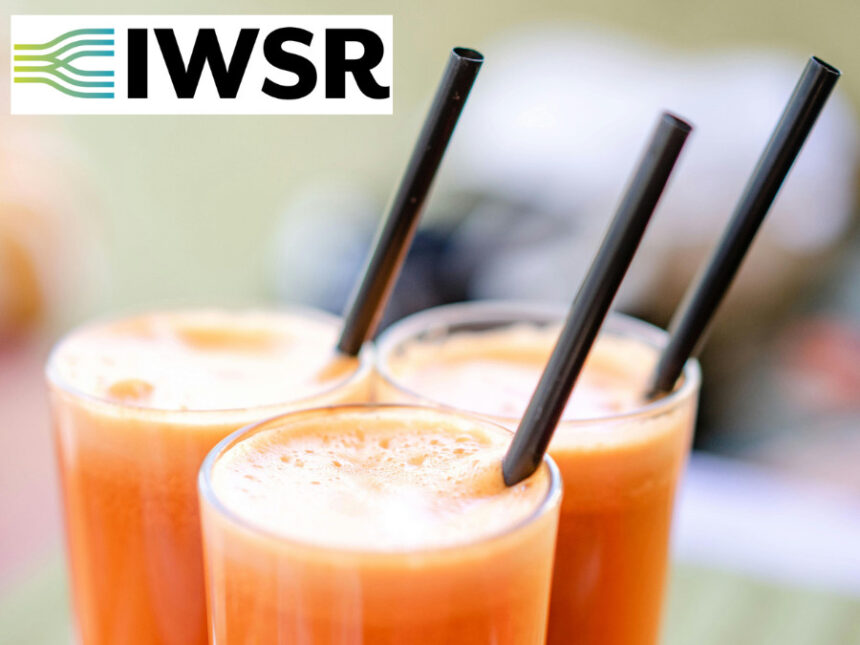
Three healthy beverages in glasses
Credit: Atlantic Ambience/Pexels
SHARE

As no-alcohol products continue to dominate opportunities within the buoyant no/low space, alcohol adjacent beverages are emerging to offer tantalising growth prospects among younger LDA+ consumers in particular.

In 2024, according to IWSR’s ‘No/Low-Alcohol Strategic Study 2025’, no- & low-alcohol volumes in the world’s leading ten markets grew by 4%, with value rising by 6%. IWSR projections for 2025 predict a 9% volume gain for no-alcohol products, with low-alcohol declining by 2% versus 2024. To 2029, no-alcohol volumes are forecast to expand by 36%.

Although dwarfed by ‘analogue’ products such as no-alcohol beer, wine, RTDs and spirits, alcohol adjacent products are gaining ground, with volumes rising by 11% in 2025, according to projected IWSR data.

This is also reflected in IWSR consumer research analysing consumption incidence of alcohol adjacents among no-alcohol drinkers, which rose to 19% in 2025 across the top ten markets, significantly higher than in 2022. Consumption incidence is even higher in the US at 33%, and among Gen Z consumers at 30% across the top ten markets.

“No-alcohol analogue total beverage alcohol (TBA) categories lead the no/low market in volume terms,” explains IWSR‘s head of no/low insights, Susie Goldspink. “But, strong growth and innovation continue in the alcohol adjacent space, boosted by the involvement of celebrity founders.

“Consumer awareness of mental health, anxiety disorders and stress management is at an all-time high. Functional products that target any of these issues – or improve sleep quality or energy levels – are on the rise. New ranges often include a portfolio of products that each offer a specific unique effect, such as uplift, unwind, calm, focus and so on.”

Alcohol adjacents encompass a variety of product types, including non-intoxicating hemp beverages (such as CBD drinks); functional, non-intoxicating beverages targeted at adults (nootropic and adaptogenic beverages), and non-functional, no-alcohol products using alcohol cues (botanical, bitter, vinegar-based products, plus wine alternatives, sparkling tea and fermented products).

They are proving especially popular among younger LDA+ consumers, with Millennials and Gen Z accounting for more than three-quarters of the alcohol adjacent consumer base across the top ten no/low markets.

Motivation to purchase

Crucially, where alcohol adjacents differ from other no-alcohol products is in the motivation to purchase: rather than viewing them through the prism of health and alcohol reduction, consumers are more likely to use them to replicate the effects of alcohol, using their functional benefits for unwinding, an alcohol-like ‘buzz’, or mood enhancement.

“Sixty percent of Gen Zs are now moderating their alcohol intake,” says Goldspink. “This cohort is also the key consumer base for alcohol adjacents, and yet they do not see them as an alternative for reducing alcohol consumption. Instead, Gen Zs drink these products for their functional benefits and effects.

“It is possible that these products are incremental to the alcohol and no-alcohol analogue occasion, rather than an alternative to alcohol – and thus they present a unique opportunity in themselves.”

However, interest in alcohol adjacents varies notably by market, with the US and Canada the most developed in terms of product availability and volumes. Across the top ten markets, according to IWSR consumer research, 60% of no/low consumers are open to adjacents (meaning that they consume them, have tried them or would like to try them). In the US, that number rises to 85%, and in Canada to 78%, but it falls as low as 33% in Japan, and 43% in France.

The functional benefits that most interest consumers present a similarly nuanced picture: while drinkers in Japan show a much stronger preference for products that support sleep and far less interest in energy-boosting products, the reverse is true in Germany.

Meanwhile, unwind, energy and mood enhancement are the leading functional benefit preferences in many markets, including Australia, Canada, the UK and the US.

Barriers to growth

For all their considerable promise, alcohol adjacents still face barriers to growth – most notably availability. While this is a persistent challenge across the no/low space, it is especially important for alcohol adjacents: 60% of no-alcohol buyers cite it as preventing them from consuming alcohol adjacents more frequently – versus 50% for no-alc spirits, 48% for RTDs, 46% for wine and 35% for beer.

“Availability is a more significant barrier for alcohol adjacents as this emerging category develops and fights for shelf space,” explains Goldspink. “The perception that they are expensive is another hindrance, as it is for no-alcohol spirits and RTDs.

“An additional challenge is presented by consumers struggling to know which retail section to find these products in. Their location – with soft drinks, no/low or energy drinks, with some refrigerated and some not, some in multipacks and some in the on-the-go section – requires clarity and consistency across channels.

“A category management approach by retailers would help the category to further develop and normalise.”
For more in-depth data and current analysis, click here to contact IWSR

Previous Article Moet Hennessy logo Ex-Moët Hennessy whistleblower cleared of defamation – report
Next Article BuzzBallz cans Sazerac Co loses BuzzBallz patent case against Patco Brands
Global Drinks Awards MPU - https://globaldrinksawards.com/

The Newsletter

Sign up to receive our newsletter email

  • The very latest news from across the world's beverage alcohol industry
  • Cutting-edge intel from our in-depth category & market analyses, backed by benchmark industry data
  • The best insight on your competitors from our interviews with the industry’s leaders

This field is for validation purposes and should be left unchanged.

Follow on Social

Linkedin Twitter
Global Drinks Awards Short Tower - https://globaldrinksawards.com/
Banner for Global Drinks Intel ESG Awards - https://gdiesgawards.com/categories/

You Might Also Like

Two bartenders preparing cocktails behind a bar

What’s driving cocktail choices in the US on-premise in 2026? – Consumer Intel

24 July 2026
Drinkers with balls of BuzzBallz

Drinks brands must identify category codes before embarking on search for sales – Comment

24 July 2026
Brown-Forman logo and CEO 2022

Another Covid vet heads for the exit as Brown-Forman CEO prepares to retire – Comment

24 July 2026

Torch Beverages bolsters marketing team with ex-Mark Anthony Brands know-how

24 July 2026
Linkedin Instagram

What next?

  • Sign up to our FREE newsletter
  • Subscribe
  • My Account
  • Sign up to our FREE newsletter
  • Subscribe
  • My Account

About

  • Contact
  • Privacy Policy
  • Cookie Policy
  • Terms & Conditions
  • Contact
  • Privacy Policy
  • Cookie Policy
  • Terms & Conditions

Copyright © 2025 Global Drinks Intelligence Limited. All Rights Reserved

Built and Managed by Kukoo Creative

This website uses cookies to improve your experience. Read our privacy policy | Cookie settings | ACCEPT
Privacy & Cookies Policy

Privacy Overview

This website uses cookies to improve your experience while you navigate through the website. Out of these cookies, the cookies that are categorized as necessary are stored on your browser as they are as essential for the working of basic functionalities of the website. We also use third-party cookies that help us analyse and understand how you use this website. These cookies will be stored in your browser only with your consent. You also have the option to opt-out of these cookies. But opting out of some of these cookies may have an effect on your browsing experience.
Necessary
Always Enabled
Necessary cookies are absolutely essential for the website to function properly. This category only includes cookies that ensures basic functionalities and security features of the website. These cookies do not store any personal information.
Non-necessary
Any cookies that may not be particularly necessary for the website to function and is used specifically to collect user personal data via analytics, ads, other embedded contents are termed as non-necessary cookies. It is mandatory to procure user consent prior to running these cookies on your website.
Functional
Functional cookies help to perform certain functionalities like sharing the content of the website on social media platforms, collect feedbacks, and other third-party features.
CookieDurationDescription
li_gc6 monthsLinkedin set this cookie for storing visitor's consent regarding using cookies for non-essential purposes.
lidc1 dayLinkedIn sets the lidc cookie to facilitate data center selection.
VISITOR_INFO1_LIVE6 monthsA cookie set by YouTube to measure bandwidth that determines whether the user gets the new or old player interface.
yt-remote-cast-availablesessionThe yt-remote-cast-available cookie is used to store the user's preferences regarding whether casting is available on their YouTube video player.
yt-remote-cast-installedsessionThe yt-remote-cast-installed cookie is used to store the user's video player preferences using embedded YouTube video.
yt-remote-connected-devicesneverYouTube sets this cookie to store the user's video preferences using embedded YouTube videos.
yt-remote-device-idneverYouTube sets this cookie to store the user's video preferences using embedded YouTube videos.
yt-remote-fast-check-periodsessionThe yt-remote-fast-check-period cookie is used by YouTube to store the user's video player preferences for embedded YouTube videos.
yt-remote-session-appsessionThe yt-remote-session-app cookie is used by YouTube to store user preferences and information about the interface of the embedded YouTube video player.
yt-remote-session-namesessionThe yt-remote-session-name cookie is used by YouTube to store the user's video player preferences using embedded YouTube video.
ytidb::LAST_RESULT_ENTRY_KEYneverThe cookie ytidb::LAST_RESULT_ENTRY_KEY is used by YouTube to store the last search result entry that was clicked by the user. This information is used to improve the user experience by providing more relevant search results in the future.
Performance
Performance cookies are used to understand and analyze the key performance indexes of the website which helps in delivering a better user experience for the visitors.
Analytics
Analytical cookies are used to understand how visitors interact with the website. These cookies help provide information on metrics the number of visitors, bounce rate, traffic source, etc.
CookieDurationDescription
_ga1 year 1 month 4 daysGoogle Analytics sets this cookie to calculate visitor, session and campaign data and track site usage for the site's analytics report. The cookie stores information anonymously and assigns a randomly generated number to recognise unique visitors.
_ga_*1 year 1 month 4 daysGoogle Analytics sets this cookie to store and count page views.
YSCsessionYSC cookie is set by Youtube and is used to track the views of embedded videos on Youtube pages.
Advertisement
Advertisement cookies are used to provide visitors with relevant ads and marketing campaigns. These cookies track visitors across websites and collect information to provide customized ads.
CookieDurationDescription
__Secure-ROLLOUT_TOKEN6 monthsYouTube sets this cookie to manage feature rollout and experimentation. It helps Google control which new features or interface changes are shown to users as part of testing and staged rollouts, ensuring consistent experience for a given user during an experiment.
__Secure-YNID6 monthsGoogle cookie used to protect user security and prevent fraud, especially during the login process.
_fbp3 monthsFacebook sets this cookie to store and track interactions.
bcookie1 yearLinkedIn sets this cookie from LinkedIn share buttons and ad tags to recognize browser IDs.
yt.innertube::nextIdneverYouTube sets this cookie to register a unique ID to store data on what videos from YouTube the user has seen.
yt.innertube::requestsneverYouTube sets this cookie to register a unique ID to store data on what videos from YouTube the user has seen.
Others
Other uncategorized cookies are those that are being analyzed and have not been classified into a category as yet.
CookieDurationDescription
__Secure-YECpastYouTube sets this cookie to stores the user's video player preferences using embedded YouTube video
advanced_ads_visitor1 monthDescription is currently not available.
personalize_sync1 dayDescription is currently not available.
RBUUID2 monthsDescription is currently not available.
stackprotect1 hourDescription is currently not available.
syncTimeout12 hoursDescription is currently not available.
unique_session_id1 yearDescription is currently not available.
SAVE & ACCEPT
Powered by CookieYes Logo