‘The most important audience isn’t the end consumer, but the buyer,’ according to Jack Orr-Ewing (below), who joined the UK’s best-selling independent rum brand in 2016.

In the on-premise, cocktails sell but contracts win
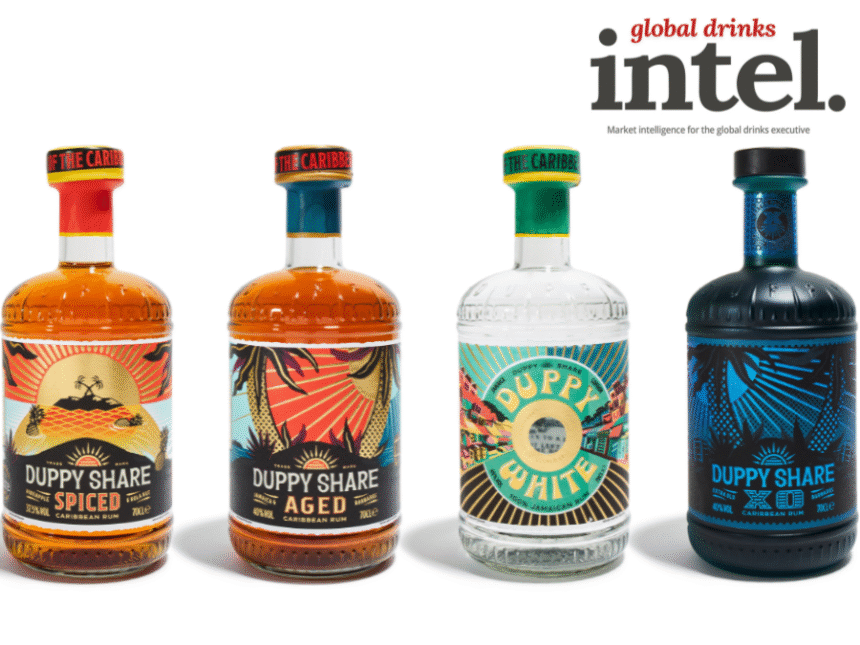
“The on-trade isn’t about looking pretty,” says The Duppy Share Rum CEO Jack Orr-Ewing. “it’s about being in the right cocktails and the speed rail.” That means focusing less on bottle aesthetics and more on where and how your liquid is served.
“Most of the volume comes from being named in cocktails – mojitos, rum punches – and sitting in the speed rail where the bartender reaches first,” he says.
Early on, the London-based Caribbean rum brand secured many listings informally. “You get a WhatsApp from someone saying, ‘Yeah, we’ll take you’,” recalls Orr-Ewing. “But without contracts, you’re one competitor away from losing it.”
The turning point came when the B Corp-certified company partnered with UK-based distributor Proof Drinks. “We dropped high-volume, zero-margin accounts and replaced them with healthier, contracted business,” says Orr-Ewing. “We lost some dross, but gained stability.
“Now we’re ahead of where we were.”
Community is a competitive edge
Orr-Ewing co-founded ‘The Kindred Collective’ to connect indie drinks brands. What began as a 500-member WhatsApp group has evolved into a paid network offering supplier contacts, quarterly insights reports from CGA by NIQ and collaborative marketing opportunities.
“It’s brilliant for finding suppliers or tackling red tape,” says Orr-Ewing. “For solo founders, having that hive mind is invaluable.” Members use the platform to swap everything from bottling contacts to advice on complex packaging regulations. “We’ve always had each other to bounce ideas off,” explains Orr-Ewing. “A lot of founders don’t – Kindred fills that gap.”
Collaboration isn’t just about advice. Brands often pool resources to cut costs, share distribution opportunities or co-host activations. “If you’re about to do a show, finding another brand to split the stand with can halve your expenses,” enthuses Orr-Ewing. “It’s just smart business.”
Sell to the trade, not to the shopper
“One of the hardest things to realise as a young company is that you’re not actually a B2C brand,” says Orr-Ewing. “You’re a B2B brand.”
When The Duppy Share launched, the company looked at what big brands such as Bacardí and Captain Morgan were doing – billboard ads, flashy consumer campaigns – and tried to emulate them. “We used to trick ourselves into behaving like that,” Orr-Ewing admits.
The reality is that the most important audience isn’t the end consumer, but the buyer who decides what’s on the shelf or cocktail list. “Our mantra became, ‘Act like a big brand’. Do things that catch the eye of the people who make the decisions – the Waitroses, the Tescos, the Fullers.”
That thinking informed trade-friendly activations like The Duppy Share’s Guinness World Record for the world’s largest rum punch. “It wasn’t a GBP100,000 (US$133,300) TV campaign, but it cut through in a way that got us noticed – and paid for itself through partnerships.”
Nail your distribution before your marketing
“At heart, we’re a distribution business,” says Orr-Ewing. “Get thousands of points of sale first. Then, turn on the marketing tap.”
For years, The Duppy Share handled its own logistics and selling. The problem? “You lose as many accounts as you win,” he notes. “The cost of additional sales staff, delivery and customer management wipes out the savings.”
Handing over UK distribution to Proof Drinks was a tough call, but one Orr-Ewing maintains they should have made sooner. “A good distributor brings relationships you can’t replicate. Buyers at national accounts want to talk to people with a track record, not a start-up’s sales rep.”
Orr-Ewing also cautions against start-ups putting all their chips on the UK. “It’s a terrible place to build a profitable indie brand,” he says. “I’d have put more money and time into France and Germany – that’s where people build sustainable businesses.”
Chase momentum, not margin
Prestige listings are great, but Orr-Ewing is clear-eyed about what fuels growth. “Nice packaging, sharp price point, great liquid – that’s what wins at scale.”
Even low-margin, high-volume accounts serve a purpose. “Volume builds momentum,” he says. “Momentum gets you funding and funding gets you to the next stage.”
Orr-Ewing points to The Duppy Share’s listing at UK budget on-premise chain Wetherspoons. Margins were razor-thin, but it gave the brand reach. “If Hendrick’s is there, why shouldn’t we be?” he asks. “No one’s scanning the backbar thinking, ‘I saw them in Wetherspoons, so I won’t buy them in Waitrose’.”
“Collaboration is the way forward,” according to Orr-Ewing – the brand’s RTD partnerships with Moth Drinks and Old Jamaica, for example, “halved costs and boosted distribution”.
His final tip? “Do things that make the right people notice you. And make sure your brand is in the right place when they do.”