


Winner – Copalli Rum
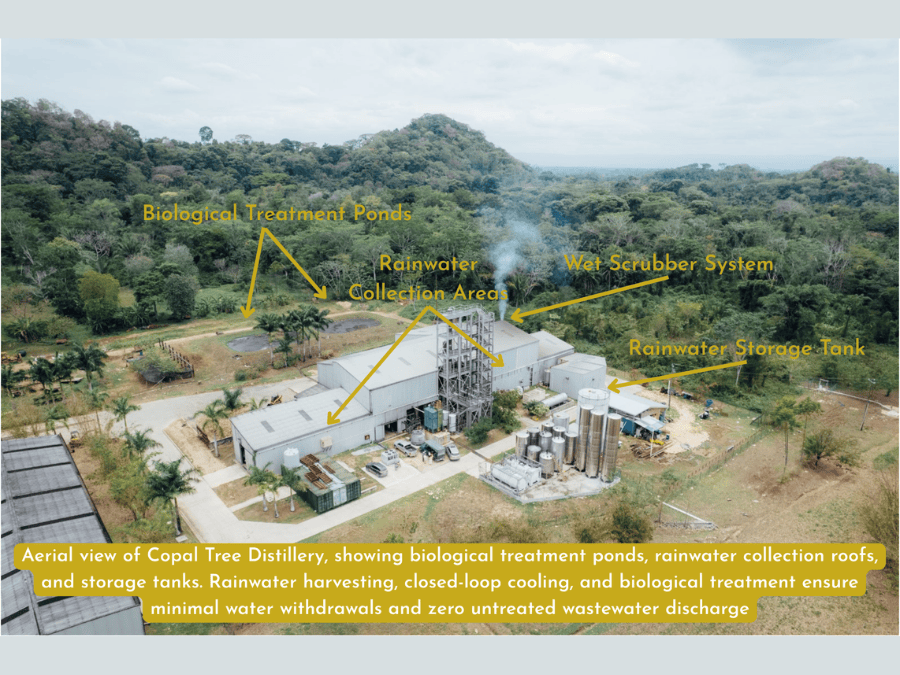
This organic Belizean rum has a multi-layered approach to water stewardship, which encompasses the use of harvested rainwater, closed-loop systems, biological treatment and rainforest protection.
Copalli relies entirely on captured rainwater to proof its rums, without the need to draw on municipal or groundwater resources, collecting rainwater from the roofs of the distillery and other buildings, then filtering it through sand and pumping into 150,000 litres of storage capacity. Before its use in proofing the rums, the water undergoes purification and reverse osmosis to meet food-grade standards.
Distillation requires large volumes of cooling water to condense spirit vapours into liquid. Copalli operates a closed-loop system, continuously circulating water through two cooling towers that release heat through evaporation, returning cooled water to the stills – a much more water-efficient system than conventional designs.
The company also recovers steam condensate – the hot water created when steam naturally condenses during distillation – and feeds it back into the boiler system. Because the water is already hot, less additional fresh water and energy are needed to generate steam again, simultaneously conserving water and reducing energy use.
These measures, along with recent process upgrades, resulted in a 75.5% improvement in water intensity usage during 2024 – even as production volumes increased by 82%.
Copalli also aims to prevent water pollution by collecting all waste water and treating it in two biological ponds, which reduce biological oxygen demand (BOD), chemical oxygen demand (COD) and trace metals before the water is reintroduced into the environment.
Meanwhile, the distillery’s vinasse – a liquid byproduct of distillation – and boiler ash are blended and reused in the cane fields as an organic fertiliser, helping to hydrate the soil and providing nutrients such as organic nitrogen, carbon and minerals essential for soil and crop health.
The company also protects 12,000 acres of rainforest adjacent to its distillery – which plays a vital role in preserving local watersheds, maintaining humidity, reducing soil erosion and sustaining aquifers.
Our judges said: “The visionary activities executed here include utilising canopy water, closed loop systems and no untreated waste water, entailing a holistic approach towards water management, with a 75% water intensity reduction in the distillation process in the last year.”
Gold Medal – Diageo
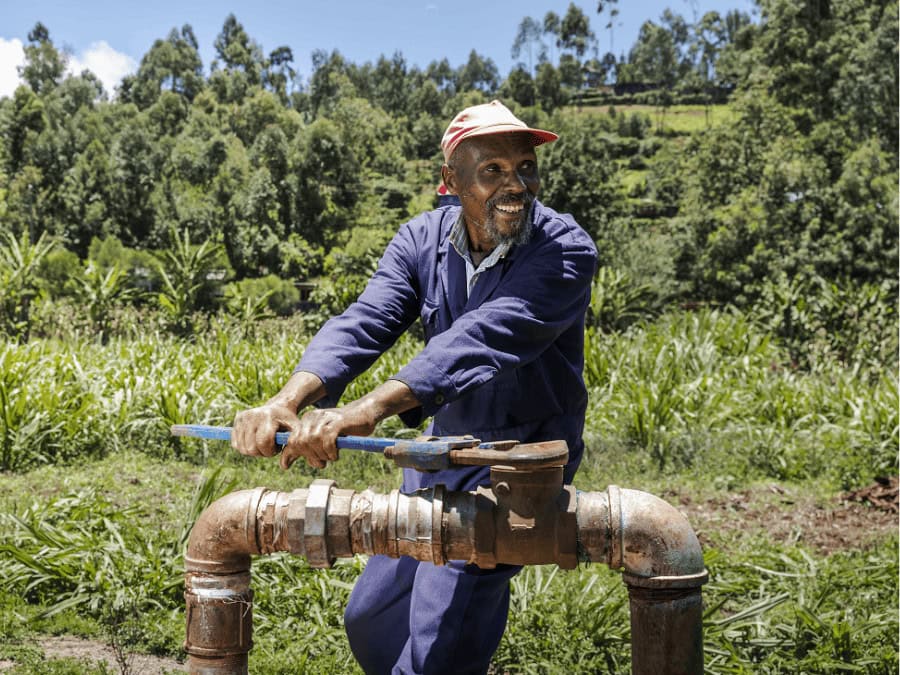
Earlier this year, Diageo launched a refreshed global water strategy, ‘Preserve Water for Life‘, as part of its ‘Spirit of Progress’ ESG action plan. The strategy is built around four pillars: operations, supply chain, communities and advocacy.
Since 2020, Diageo has reduced water use per litre of product by 20.6%, with a goal to improve efficiency by 30% across all of its sites, and by 40% in water-stressed areas, by 2026. The company has also delivered more than 150 water replenishment projects, and is a longstanding member of the UN Global Compact CEO Water Mandate, the Water Resistance Coalition, the Alliance for Water Stewardship and the Beverage Industry Environmental Roundtable.