

It’s long been predicted that advertising on linear broadcast platform would slip behind retail media at some point this decade. According to figures shared by UK multiple retailer Tesco, however, that point is coming sooner rather than later – next year, in fact.
Tesco recently urged its suppliers to invest in the massive upscaling of its retail media network, claiming that digital growth will make the medium bigger than television over the next 18 months. The retail group plans a rapid expansion into new revenue streams, with the number of digital ad screens in its stores more than trebling to 6,000 by the end of this year and the roll-out of next-generation handheld scanners that will use AI to target millions of shoppers with hyper-personalised ads.
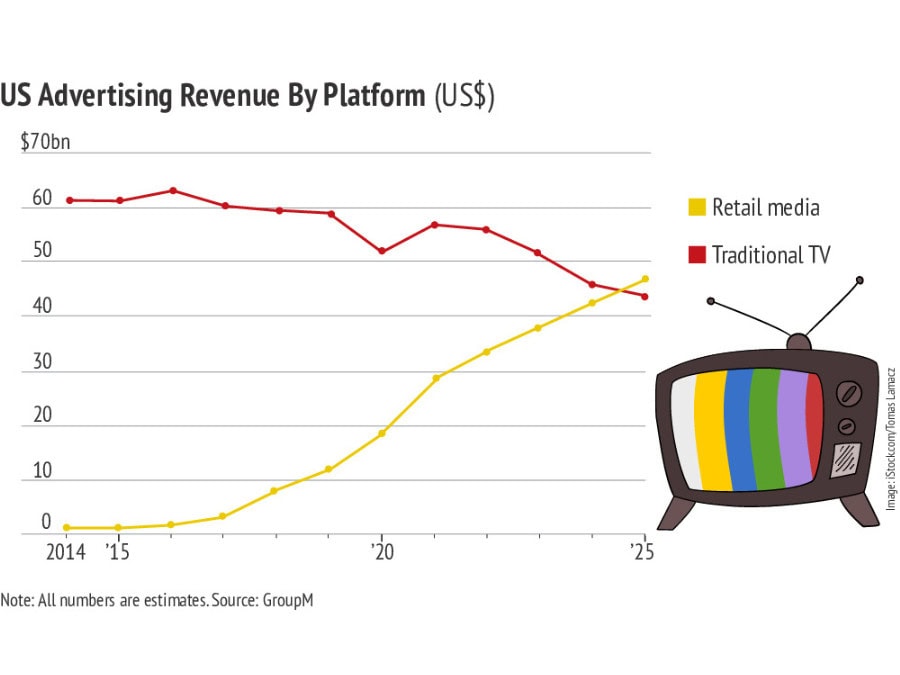
Twelve years since Amazon decided to monetise its huge audience by launching its own retail media platform, global brand investment in the channel is predicted to top US$140bn – 10% up on 2023 (based on WARC Media data). And while some of that growth is coming from market expansion, it’s also thanks to advertisers shifting spend away from traditional media.
Obviously, this leaves the big media agencies staring into the abyss as the bread and butter of their businesses undergoes a significant reduction in size. They may also pause to contemplate the wisdom of years of leaving clients to sort out their own retail media planning, never believing it could possibly become quite such an important part of the marketing mix.
While we wait for the likes of WPP and Publicis to embark on the inevitable acquisition frenzy of retail media expertise (followed, equally inevitably, by endless debates about how to integrate this expertise in a way that’s actually useful for clients), I’ve been thinking about ways it will impact our industry – and whether the account folk who read Global Drinks Intel should be worried about these developments.
Before I get to that, let’s look at two ways in which the retail media boom is going to change the drinks industry’s marketing approach. Firstly, we’re likely to see a shift away from the traditional strategy of launching and building a brand in the on-premise before securing scale it with off-premise sales and marketing.
That’s not to say the highly interconnected brand/on-premise relationship won’t be important. But with all its touchpoints, retail media now gives brands an incredibly rich environment for storytelling along with the opportunity to interact with consumers in ways that previously were only available in the on-premise – creating conditions that are ideal for introducing new products.
Stemming from this pivot is a second trend, which relates to distinctive brand assets. It’s not that the industry is in the habit of slapping an unimaginative logo on a bottle, but the on-premise-first approach to new product launches has often meant that relatively undeveloped brands have succeeded just because they had decent liquid in the bottle.
Whatever the rights and wrongs of this, the fact is that if a brand is both unknown and not very interesting to consumers, it will really struggle to stand out in busy retail environments. That’s because most of us, when we’re in the role of consumer, use heuristic shortcuts to make faster decisions when we’re shopping. For new brands to launch from scratch in the off-premise, they will need to come to market with a fully formed set of distinctive assets – which isn’t cheap and doesn’t happen overnight.
This brings me back to our account friends, and their all-important relationships with retailers. Up until now, that’s been considered separately to those in charge of brand strategy, and rightly so. But as branding becomes more important on the brand owner side, and retailers start behaving more like media owners, those relationships are going to involve a lot more discussion about branding and media strategies.
Should you be worried, just when you’d decided you were safe from AI for now? It might be that a new role emerges to manage the retailer/brand owner relationship; it might be that there’ll be far more collaboration between the account and branding functions.
Either way, it’s always better to be curious than to worry, so why not start a conversation with those marketing strategists and see what they think? We mightn’t be as much fun as retail buyers, but it’s not like we’re accountants either.