

Mumbai, the ‘city that doesn’t sleep’, keeps hustling and evolving. As the country’s financial capital and India’s second largest city (more than 20m people call it home), it caters to everyone, from self-made billionaires, tech unicorns and Bollywood celebrities to expats and wage workers.
The result is a food & beverage scene that is both dynamic and diverse enough to sate all palates – and pockets.
The scene
Mumbaikars tend to live in small houses, so prefer to step out to socialise. This well-travelled cohort appreciates hole-in-the-wall joints, craft breweries and Michelin-worthy restaurants alike. Within the city and its vast suburbs, you’ll find all types of venues from cramped, inexpensive, bia hoi-styled bars – such as Janata in the Bollywood hotspot of Bandra and Gokul in the tourist hub of Colaba – to modern cocktail saloons as good as any international equivalent, often set up by founders who, after sampling some of the world’s best bars while travelling, missed the experience locally.
The city has a visible geographical divide: a line can be drawn at Bandra, north of which is the ‘functional’ Mumbai and to the south the ‘celebratory’ Mumbai. Even within this divide, there are mental boundaries that one is reluctant to cross. Congested roads and choked traffic make travelling a nightmare; hence, high-quality F&B pockets have developed in South Bombay, Lower Parel, Bandra and the Bandra Kurla Complex residential and business district, a recent hotspot.
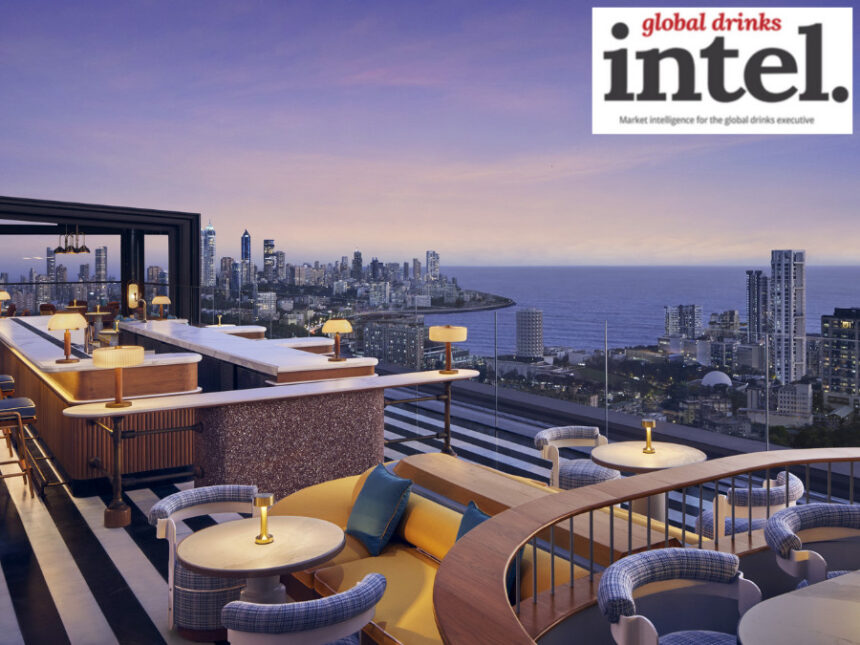
Stand-alone bars and restaurants have ruled Mumbai’s on-premise forever. That said, hotel bars like AER at the Four Seasons Hotel (above), House of Nomad at Taj Lands End and Koi Bar at St Regis have joined the liquid culinary game, stepping up their mixology offerings with expert bar staff and curated drinks programmes.
“Hotel bars are slowly moving away from their comfort zones, and embracing the reality that they were left behind by the boom of standalone bars and restaurants,” says Pankaj Balachandran, the co-founder of F&B consultancy Countertop India.
Food is sacrosanct in India. Mumbai’s street food, such as vada pav, misal or pav bhaji, is held in as high regard as a meal at one of Asia’s best restaurants that call the city their home – Indian Accent, Masque, The Table, Trèsind, Ekaa and The Bombay Canteen, to name a few. A compelling beverage programme is imperative for these culinary gems to exploit their full potential, so it’s to be expected that they also feature among Asia’s Best Bars. Last year, two made it to the top 50 for the first time: The Bombay Canteen and Masque’s The Living Room.
Trends
As is befitting of Asia’s billionaire hub (the city is third globally in terms of numbers of billionaires, according to Hurun Research’s 2024 Global Rich List), Mumbai boasts a modern off-premise channel with established online ordering and delivery. There’s always something happening in terms of drinks – paired wine dinners, cocktail soirées, guided tastings, concerts-meet-drinks fests and bar takeovers fill the city’s calendar enough for one to live in constant FOMO.
With such a progressive and developed liquid understanding, it’s little surprise that Mumbaikars have embraced the premium cocktail trend.
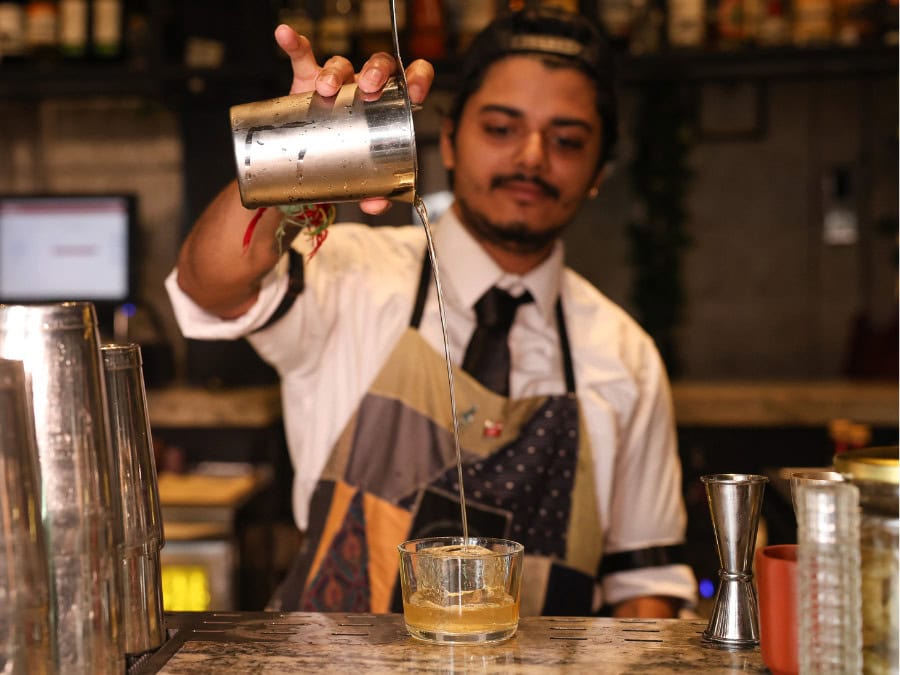
Indians enjoy stories and storytelling, so themed menus prevail in Mumbai’s cocktail bars. These New Age menus are now becoming collectables, bartenders are up-skilling to become actors and orators, and tellers of the history and heritage of the city through their drinks.
PCO (Pass Code Only) Mumbai (above) has a menu dedicated to the textiles of the city, an ode to the lost textile mill where the bar is located. The Bombay Canteen’s ‘Make Mine a Bombay’ menu, meanwhile, celebrates the varied moods of the city throughout the day. Indian Accent has brought back the first cocktails made in the city with its Byculla Club cocktail and Ekaa has an entire study of drinks inspired by the lost recipes and ingredients mentioned in the Ayurveda (Indian system of traditional medicine). Native Bombay’s confident bet sees it serve only negronis prepared in different ways, from sweeter fruit-forward passion sbagliato to the complex and bold Marmite-infused version.
Slink & Bardot and The Living Room at Masque have taken it upon themselves to toy with homemade seltzers, hydrosols, rotovaps, centrifuging and more. And these are just a handful of the innovative menus on offer.
“Gin, agave spirits and whiskies rule the cocktail space,” says Ekaa head mixologist Jishnu AJ. “However, people are emphasising the style, flavour and story of the drink, [rather] than insisting on [a particular] base spirit. You offer them an unparalleled experience with any spirit, [and] they’ll be willing to try it.”
The journey
Mumbai’s cocktail culture isn’t a recent phenomenon. “It started flourishing between 1998 and 2001,” recalls Stir Academy of Bartending founder Shatbhi Basu. “Since then, there’s been a steady rise. We started our bar school in 2000 and that fuelled the fire further. There were good bartenders who knew their drinks and could entertain and educate the consumers. Brands like Smirnoff, Bacardí, Southern Comfort and Malibu came in, which made the cocktail scene even more dynamic.”
The Covid-19 pandemic changed India’s drinks landscape, according to entrepreneur Rakshay Dhariwal, MD of Pass Code Hospitality which has 20-plus F&B venues in its portfolio, founder of India’s first premium agave spirit (Maya Pistola Agavepura) & creator of India Cocktail Week. “The turning point for the modern drinks game was as recent as two and a half years ago,” he says. “The post-Covid push has really amazed us.” There had always been restaurants with good food, explains Dhariwal, but during and after the pandemic, drinks menus evolved to become more discerning.
Beverage specialist & bar consultant Arijit Bose puts some of the changes down to the increase in Indians travelling overseas. “Indian bartenders have worked abroad and returned with a renewed zeal to add to the local scene,” he explains. “Also, bar takeovers have expanded their thinking peripheries. This continuous exposure to global experts is filling them with unprecedented ideas, skills and techniques – and it shows in the growing army of bars making it to the global best [lists].”
Other factors driving change include the graduation of auxiliary services – bar designs like SpeedX, bar equipment and glassware purveyors like Barkraft – and the rise of Indian craft spirits producers.
Local and global players
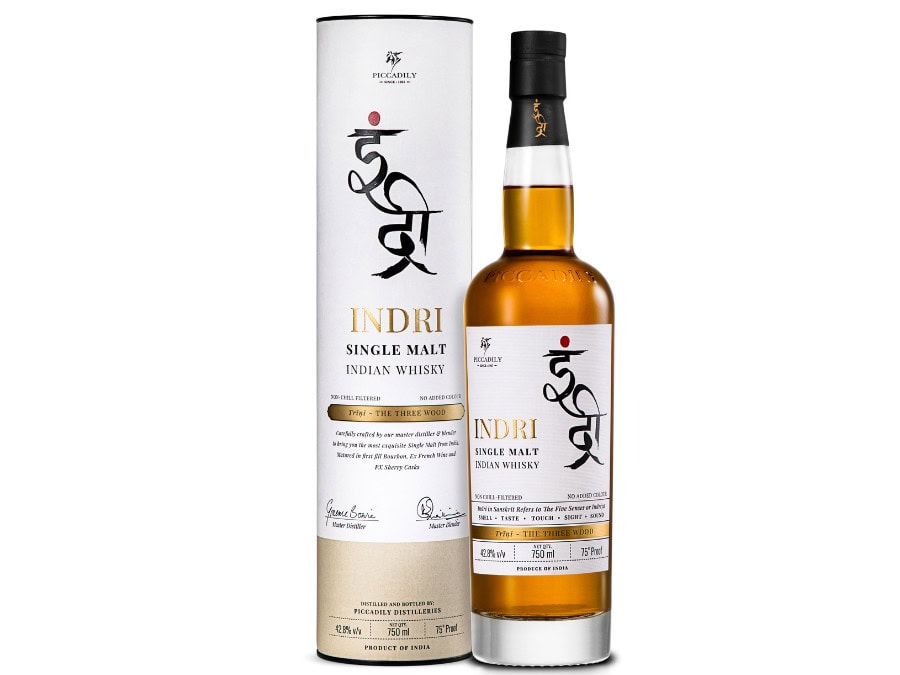
While international brands have played a role, local producers are shaping today’s spirits scene. Indian whiskies such as Amrut, John Distilleries’ Paul John, Radico Khaitan’s Rampur and, more recently, Piccadilly’s Indri (above) have kept the space exciting with limited releases and collectors’ editions, while 2017-18 saw an Indian craft gin revolution.
“[Nao Spirits’] Greater Than and Hapusa, and [Third Eye Distillery’s] Stranger & Sons were the front-runners,” observes Dhariwal. “There’s a regard for Indian craft brands and they’ve enabled consumers to experiment.”
High-quality rums are also demanding space on back bars. Amrut’s Two Indies, Fullarton Distilleries’ Segredo Aldeia, Adinco Distillery’s Alejandro and Nao Spirits’ Pipa are leading the charge. Agave spirits are trending too – 1800, Jose Cuervo, Patrón, Don Julio, Creyente and Clase Azul are spearheading the international pack, while Dhariwal’s Indian agave label, Maya Pistola Agavepura, offers a premium domestic alternative. Though minuscule, there’s a growing regard for heritage spirits like feni (a liquor made from coconut wine or fermented cashew fruit in Goa).
Mumbai is unique in terms of spirits, according to Nao Spirits co-founder Anand Virmani. “Consumers here are curious, experimental and brand loyal,” he says. “While great importance is given to the on-trade, the off-trade is more important. We see people going to bars and trying new spirits and searching for them at stores. We are realising how young Indians react to local brands. They believe we can make good liquids, without looking outside of India.”
While the spirits landscape is evolving, so too is India’s wine industry. India’s annual per-capita wine consumption currently stands at less than 10cl – translating into below 1% of overall alcohol sales (the global average is around 13%) – but that is tipped to change as Millennial consumers seek experience over intoxication, according to a report by Kotak Institutional Equities, with wine expected to grow at a compound annual growth rate (CAGR) of 10% for the next five years.
“Overall, quality wine-drinking has prospered [in] Mumbai, which has rather pro-business policies,” says Vishal Kadakia, founder of import business Wine Park. “On-trade consumption [of wine] has soared and the idea of having an in-house sommelier has helped. Even with modern retail coming in, however, off-trade sales have been stagnant.”
Over the past two decades, Indian wine has reached phenomenal heights, all while swimming against the tide as the country is off the world’s ‘wine belt’. Domestically-produced wine is respected and celebrated, especially under the INR2,000 (US$23.90) per bottle mark; cross this, and the global labels will take over.
Last year, Nashik-based Sula Vineyards, India’s largest winemaker with 50% of the market share, expanded its production capacity, with CEO Rajeev Samant expressing confidence that wine could capture 2% or 3% of the country’s total beverage alcohol market.
Challenges and opportunities
Mumbai’s on-premise is built on solid foundations. Increased attention on local brands has pushed international players to take the market, and its talents, seriously. A sprinkling of stardust keeps things lively as Bollywood actors and celebrities partner on new F&B venues and back alcohol brands.
That said, there are barely any speakeasies in the city. This is because, firstly, rent and overheads are exorbitantly high, and secondly, it’s hard to keep a secret in Mumbai. Hence, there’s an opportunity for new high-volume or high-quality offerings in the city’s on-premise.
The rise in Mumbai bars on global best of lists has brought a tsunami of bar takeovers, both local and international. There are several takeovers through the week, sometimes many on the same day. While they are getting a tad exhausting, bartenders are benefiting from the trend.
At the same time, domestic and international cocktail competitions have gained popularity as well. Indian bartenders are increasingly reaching global finals of the coveted Bacardí Legacy and Diageo World Class competitions. Meanwhile, brand owners have figured out how to bring consumers into the fold with curated bar-hops, finalists roadshows and social media amplification.
It’s a win-win for all.