Global Drinks Intel: You’re a member of the founding family.
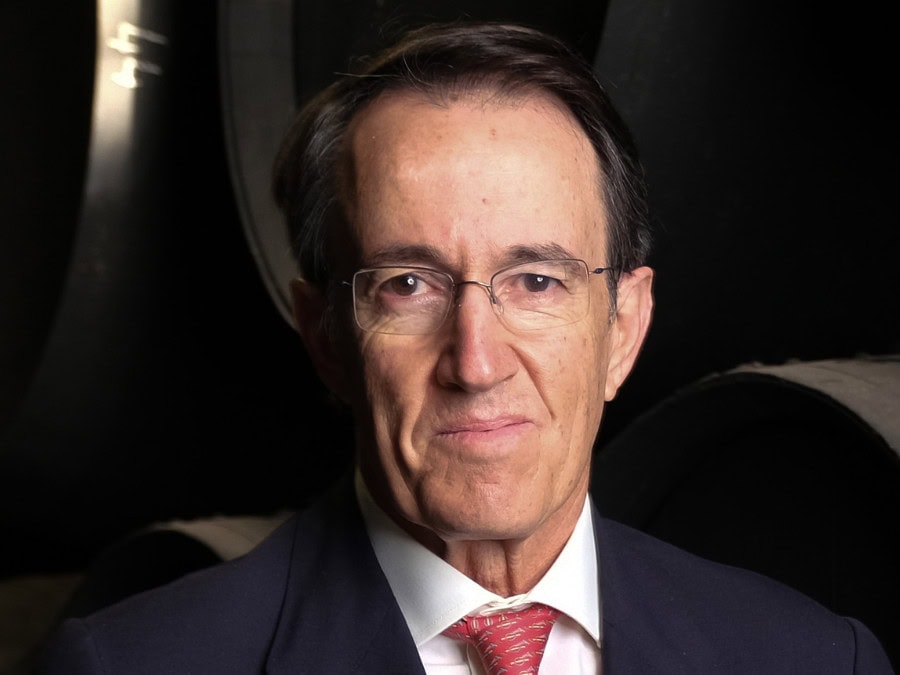
Gonzalez Byass chair Mauricio Gonzalez-Gordon: Our founder was my great-great-grandfather. We’re into the fifth generation of the family. We have 170 family shareholders – When you’re such a large family, you have to have very clear rules on how the family and the company relate to each other, so they can all be good ambassadors.
GDI: Is the company still fully family owned?
MGG: It is 95%. Gonzalez Byass started in 1835 and 20 years later, our founder brought in his UK importer – at the time, the UK was the most important market for sherry – because he needed capital. The two families were 50% shareholders until 1958.
We have two smaller shareholders, which are our importers in Japan and Switzerland.
GDI: What’s the proportion of sales for the group between sherry, wine and spirits?
MGG: Spirits is roughly 50% of our activity and wine – including sherry – is the other 50%. Sherry would be around 15% in volume terms and probably closer to 20% in value.
We come from being fundamentally a sherry producer and importer. In the 1970s, we started to diversify into other winemaking origins. Having invested in a number of origin denominations in Spain and abroad – we’re present in ten origin denominations in Spain, two valleys in Chile and we produce wine in Mexico – we now have 14 wineries and three distilleries.
GDI: Has spirits grown as a priority for Gonzalez Byass?
MGG: Yes. We found there was an opportunity in the top-end spirits niche where we could add value, specifically in categories that have an origin. We feel very comfortable in wines and spirits with an origin.
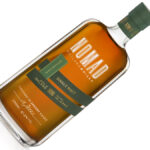
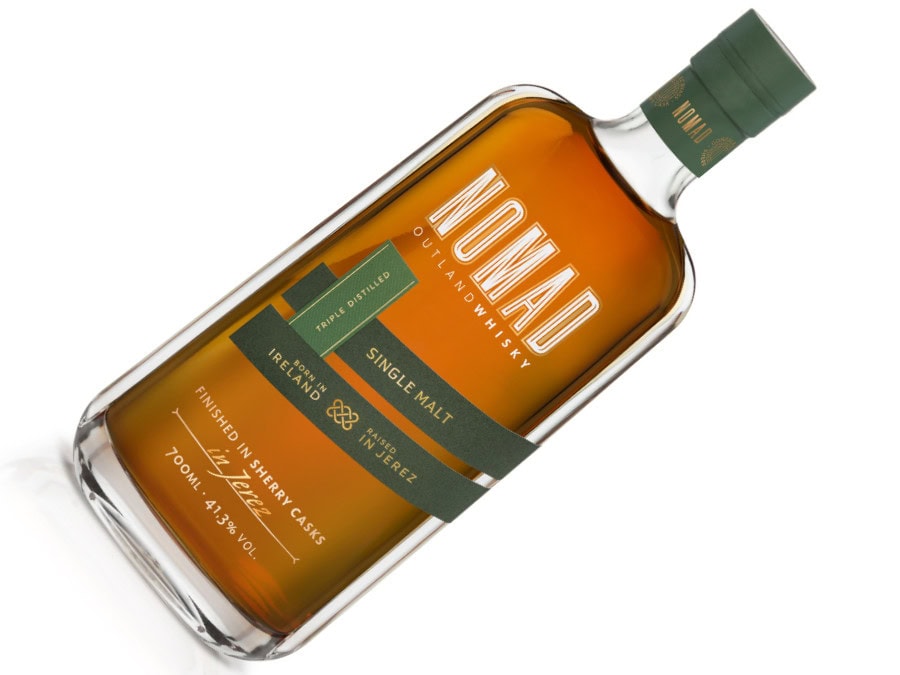
One of our recent projects is the Nomad brand: Rather than sending our casks to Scotland, as we’ve been doing for over 100 years, we thought we’d try bringing the whisky to Jerez (in Spain) to finish it in a sherry cask. More recently, we’ve done it with Irish whiskey, again under the Nomad name, which was launched a couple of months ago (and in the UK this month).
GDI: How has the proportion of sales for Gonzalez Byass changed over the years?
MGG: It’s been evolving. Throughout the ‘90s and the first decade of this century, wine had a very strong position within our portfolio, as we invested in wineries in Spain. Our purchase of the Domecq brand in Mexico [in 2017] brought in a considerable amount of spirit volume for brandy.
Spain is an important market for us, although it’s rather mature. We realised we needed to be more international. To do that, we needed two things. One was to have our own distribution capacity abroad. In some instances, we bought local brands that helped us to create critical mass. Our purchase of Chilean winery Veramonte in 2016, for example, helped us create critical mass in the US.
GDI: Is the company still in inorganic mode?
MGG: Our programme over the last ten or 12 years has covered both acquisitions and investments in launching new products. Now, we’re in the process of developing and building our brands. In the next few years, we want to be more focused on our organic development.
GDI: Where?
MGG: Our current largest market is Mexico, with Spain at number two. Then it’s the UK followed by the US. Put together, these four are roughly 80% of our sales. These are where we have distribution capacity of our own. Where you have to be distributed by a third party, it takes longer.
Our second group of markets where we see potential are Germany, Canada, Japan and Brazil. We have some local team members there.
Tio Pepe [sherry] is present in 110 markets, while our Rioja, Beronia, is in around 80. We put a lot of focus on having qualitative distribution and part of the beauty of these brands is that they’re widely available.
GDI: How are you trying to increase the appeal of sherry to younger LDA consumers?
MGG: We’ve been working to bring interest back and we’ve seen a resurgence in sherry. There’s been a number of elements, one of which has been to get closer to food – not just seeing sherry as an appetiser. Chefs and sommeliers at high-end restaurants have helped us a lot here. This has resulted in much greater interest in some of the lesser-known subcategories, such as amontillado.
We’ve also worked hard on the cocktail side as a way to reach the younger crowd. Our ‘Tio Pepe Challenge’ competition is for mixologists worldwide and the final’s in Jerez in a couple of months.
We’ve also launched some new, interesting styles of sherry, which are bringing value back into the category.
GDI: Sherry could really do with a single serve suggestion that the whole industry could get behind.
MGG: It’s certainly a complex category, but it’s a richness that you can have different styles for different times of the day as well as appeal to different taste preferences. That diversity is an advantage, but requires explanation.
GDI: What will the sherry category look like in 25 years?
MGG: It might not look very different in terms of volume. We’ll see a lot more diversity, but sherry will retain its place as one of the world’s top wines.
The overall trend in wine consumption is not towards greater volume but towards value and quality, so we’re well positioned to take advantage of that in the years to come.
GDI: How’s the casks side of your business performing?
MGG: In value and volume terms, there isn’t a lot of room [for growth]. It’s more likely the business will grow in diversity and specialisations.
We realise there’s a value to certain spirits producers that comes from us being able to understand the effect that time and different products have on the wood in our casks. So, we want to be able to present a reliable set of choices that they can use to enhance the finishing of their products. We have a small team that concentrates on that.
It’s also very important that with the Origin Denomination Council in Jerez, we ensure that sherry’s definition doesn’t get degraded. A sherry cask has contained sherry for at least a year – That helps preserve the name sherry.
GDI: Do you have casks available to buy or do you have a waiting list?
MGG: We don’t have much stock available to sell. Most of the casks have already been used or we need them.
Now and again, we get requests for very special casks, such as those used for our Matusalem (30-Year-Old oloroso) brand. We might be able to sell five or ten, but not more.
It’s a very attractive symbiosis between two origins: I can deliver you this cask, which is useful for you after it’s been useful for me!
This article is available to Global Drinks Intel members only.
Click below for details on how to join the Global Drinks Intel community.
Already a member?
Log in here to read the article in full.
If you work for any of the following corporate subscribers to Global Drinks Intel, head here to activate your access.
- AB InBev
- Bacardi
- Campari Group
- Diageo
- Moët Hennessy
- Pernod Ricard
- Proximo Spirits
- Suntory Global Spirits
- William Grant & Sons