

This article has been available to Global Drinks Intel subscribers since August. For details on how to join them, please click here.
Call it the cost of living crisis, call it the energy crisis, call it a squeeze on disposable incomes; the truth of the matter is that more consumers have less money to spend after a torrid time of pandemic, trade restrictions and war.
That may well sound bleak, because, well ultimately, it is. Consumers are having to make careful choices on how and where they spend their money and, of course, the hospitality sector is at risk of losing out.
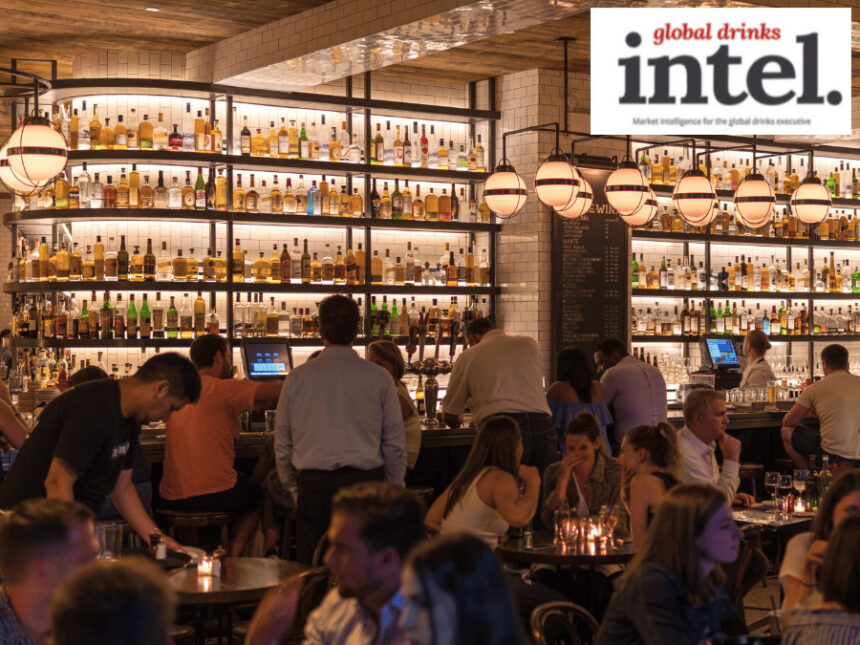
However, walk around any major city, particularly after work on a Thursday or on a Saturday evening, and you will find terraces crammed with drinkers and bars overspilling with guests. Faced with such revelry, it’s a struggle to believe that the damning headlines really are playing out in the on-premise channel.
The reason for this is simple – and two-fold. Firstly, the on-premise is asymmetrical, attracting an audience that isn’t representative of the population at large. Secondly, the nature of the channel is that of an affordable treat; the mini-luxury that a week of hard toil deserves.
These attributes have shielded hospitality somewhat and, along with signs of vibrancy from booming venues, have made the sector an attractive investment proposition, with global investment firms increasingly targeting it as a recession-proof move.
Both of these fundamental reasons for buoyancy offer opportunities in the on-premise, yet both require an in-depth understanding of consumer behaviour to gain an advantage, especially at a time when previously well-defined habits and preferences are becoming increasingly volatile.
At this point, I should probably explain what on earth I mean by the ‘asymmetrical constitution’ of the on-premise user base to which I (partly, at least) attribute the resilience of the on-premise. The nature of visits to bars, restaurants and drinking dens is discretionary – nobody is forced to visit – and, as a result, it is, by and large, those who can afford to do so that choose to. The consumers who visit the sector (and, crucially, the consumers who visit regularly) are fundamentally skewed towards those with higher levels of discretionary income.
When we contrast this to lower-income consumers who have most been impacted by inflationary pressures, we again see a skew. It’s a stain on humanity that the poor have got poorer in recent years while the rich have got richer. For the on-premise, however, this means that while some consumers have had to cut back on eating- and drinking-out visits, the channel has largely been able to avoid cuts from its most valuable consumers: those who visit most frequently.
Data from CGA by NIQ highlights this well. In pretty much every country in which we run research, we see a greater number of consumers planning to decrease their visits than the number planning to increase. However, when we look at who these consumers are, it’s the frequent bar-goers who are planning to increase or maintain visits, while the long tail of infrequent users plan to cut their visit rates further. This is resulting in, at worst, a flat level of visitation.
The second reason for resilience also plays out in our data. When we look at the reasons for drinks choices in the sector, “for a treat” has risen significantly in the past year, while spirits volumes worldwide have continued to shift towards premium offerings over the same period. Indeed, the affordable luxury of a high-quality drink delivered perfectly is a form of escapism, away from the miserable headlines and into a world of hospitality and experience.
So then, how to take advantage of the opportunities facilitated by these resilience factors? For beverage alcohol brands, there needs to be more analysis of who the target consumer is and what they’re looking for. A wide-ranging strategy targeting all consumers equally is increasingly flawed. If, as is the case in the Netherlands, for example, 10% of the population make up over 50% of visits, then there needs to be a deep understanding of what that 10% is looking for – and how your brand can satisfy their needs.
Similarly, understanding how to communicate brand values and quality credentials in the on-premise channel has never been more important. If consumers are looking for a trade-up option, then it’s essential to help them to do so. Our most recent brand data shows “a brand worth paying more for” is the No.2 factor currently in driving loyalty. The No.1? “A brand I trust”.
Faced with uncertain economic times and difficult choices, then, consumers are on the search for reputable and reliable options – especially if they’re looking for a treat.
This article has been available to Global Drinks Intel subscribers since August. For details on how to join them, please click here.